Your Health, We Care
Release date: 2025-05-12 11:32:57 Article From: Lucius Laos Recommended: 430
Understanding drug interactions is an important reference for clinical use.
When the drug is used in combination, it is necessary to pay attention to the synergistic effect with other substances.
Some liver enzyme inducers may lower blood levels, and some antifungal drugs increase the level of drug accumulation in the body. Formulations involving the CYP3A4 enzyme system require special attention, and it is recommended to interval dosing times and enhanced monitoring.
There may be a synergistic effect when used in combination with sedatives, and risks need to be assessed before driving or operating delicate equipment. During the combination period, it is recommended to adjust the daily activity schedule and, if necessary, to perform neurological assessment.
There is a need for dose adjustment of anticoagulants and immunomodulators, and it is recommended to establish an individualized dosing regimen. During the treatment process, it is recommended to adopt a stepwise dose adjustment strategy to dynamically optimize the treatment plan through detection indicators.
A standardized monitoring system can improve the quality of treatment.
Blood counts and liver function tests should be assessed every four weeks, and intervention should be initiated if abnormal fluctuations occur. Establishing a baseline data archive can help you quickly identify trends in numerical changes.
The changes in limb coordination and cognitive function were recorded, and a symptom log was established to facilitate doctor-patient communication. It is recommended that family members participate in daily observation and timely feedback on abnormal behavior patterns.
According to the dynamic adjustment of body weight changes and metabolic status, the plasma concentration was controlled by micro-increment method. In the middle and late stages of treatment, drug concentration monitoring technology can be introduced to achieve precise drug delivery.
Rational drug use needs to take into account individual differences and drug characteristics, and the establishment of a complete monitoring system can help balance efficacy and risk. The medical team should optimize the treatment plan based on real-time data, and the patient should cooperate in completing the full cycle management.
On November 21, 2025, the U.S. Food and Drug Administration (FDA) approved the regimen of pembrolizu···【more】
Recommended:8542025-17-12
Lung cancer is the most rapidly increasing malignant tumor with the fastest increasing morbidity and···【more】
Recommended:10522024-09-07
Recently, Lao Lucius Pharmaceutical (Lucius Pharmaceuticals) issued a solemn statement regarding cou···【more】
Recommended:3402026-10-10
Lucius Pharmaceuticals Version of Vibegron Now Available1.Basic Drug InformationVibegron (generic na···【more】
Recommended:4182026-06-08
In recent years, leveraging the World Trade Organization (WTO) patent waiver for least-developed cou···【more】
Recommended:6152026-05-08
How Can Chinese Patients Access Generic Drugs from Laos?In recent years, generic drugs from Laos hav···【more】
Recommended:5982026-04-08
Lucius Pharmaceuticals version of Ibrutinib is now availableIn a randomized controlled trial of 269 ···【more】
Recommended:4732026-03-08
Leveraging the WTO patent waiver for least-developed countries (extended to 2033), Laos has seen rap···【more】
Recommended:6202026-31-07
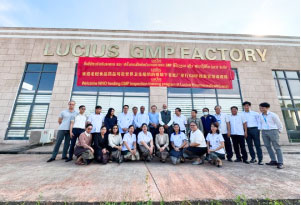
Lucius Pharmaceuticals (Lao) LTD. (Lucius Pharmaceuticals), with its manufacturing campus in Laos located in the capital city of Vientiane in 2020, officially begins its great journey to make effective and affordable medicines available to people in need around the world...More

Lucius Pharmaceutical Co., Ltd., was established in 2020 in Vientiane, the capital of Laos. It aims to offer safe, effective, and affordable medicines globally. With a factory spanning 25,000 square meters, the company manufactures 200+ generic drugs in diverse therapeutic fields.
Address: No.26 Thongmang village, Xaythany district, Vientiane Capital, Laos
E-mail:laoslucius@gmail.com

Name: Lucius
Telegram name: Vira
No.:0085253923643
Telegram name: Vira
No.:0085253923643