Your Health, We Care
Release date: 2025-11-28 13:06:17 Article From: Lucius Laos Recommended: 254
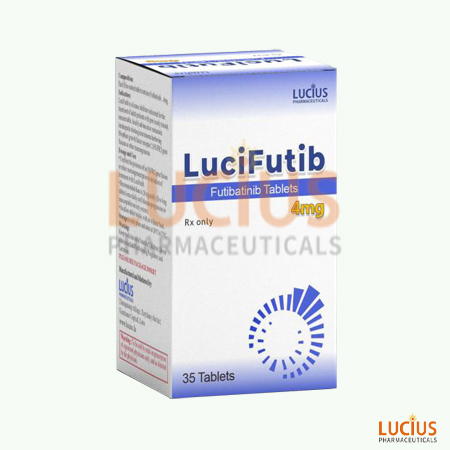
Futibatinib is a kinase inhibitor indicated for the treatment of adult patients with previously treated, unresectable, locally advanced, or metastatic intrahepatic cholangiocarcinoma harboring fibroblast growth factor receptor 2 (FGFR2) gene fusions or other rearrangements.
• Confirm the presence of an FGFR2 gene fusion or other rearrangement prior to initiating Futibatinib therapy.
• The recommended dosage is 20 mg (five 4 mg tablets) taken orally once daily until disease progression or unacceptable toxicity occurs.
• Tablets may be swallowed whole and can be taken with or without food.
Pregnancy: Based on findings from animal studies and its mechanism of action, Futibatinib can cause fetal harm or pregnancy loss when administered to a pregnant woman.
Lactation: There are no data on the presence of Futibatinib or its metabolites in human milk, or their effects on the breastfed child or milk production. Due to the potential for serious adverse reactions in breastfed infants, women are advised not to breastfeed during treatment and for 1 week after the last dose.
Males and Females of Reproductive Potential: Futibatinib can cause fetal harm when administered to a pregnant woman.
Pregnancy Testing: Verify the pregnancy status of females of reproductive potential prior to initiating Futibatinib.
Females: Advise females of reproductive potential to use effective contraception during treatment with Futibatinib and for 1 week after the last dose.
Males: Advise males with female partners of reproductive potential or who are pregnant to use effective contraception during treatment with Futibatinib and for 1 week after the last dose.
Pediatric Use: The safety and effectiveness of Futibatinib in pediatric patients have not been established.
Geriatric Use: Based on available data, no overall differences in safety or effectiveness of Futibatinib were observed between patients aged 65 and older and younger adult patients.
• Ocular Toxicity: Futibatinib can cause retinal pigment epithelial detachment (RPED). Perform comprehensive ophthalmologic examinations, including optical coherence tomography (OCT), prior to initiation, every 2 months for the first 6 months, every 3 months thereafter, and urgently at any time for visual symptoms.
• Hyperphosphatemia and Soft Tissue Mineralization: Elevated phosphate levels can lead to hyperphosphatemia, which may result in soft tissue calcification, calcinosis, non-uremic calciphylaxis, and vascular calcification. Monitor for hyperphosphatemia and interrupt, reduce the dose, or permanently discontinue Futibatinib based on the duration and severity of hyperphosphatemia.
• Embryo-Fetal Toxicity: Can cause fetal harm. Advise patients of reproductive potential of the potential risk to a fetus and to use effective contraception.
Avoid concomitant use of Futibatinib with dual P-gp and strong CYP3A inhibitors.
Concomitant use of Futibatinib with drugs that are dual P-gp and strong CYP3A inhibitors may increase Futibatinib exposure, which may increase the incidence and severity of adverse reactions.
• The most common (≥20%) adverse reactions were nail toxicity, musculoskeletal pain, constipation, diarrhea, fatigue, dry mouth, alopecia, stomatitis, abdominal pain, dry skin, arthralgia, dysgeusia, dry eye, nausea, decreased appetite, urinary tract infection, palmar-plantar erythrodysesthesia syndrome, and vomiting.
• The most common laboratory abnormalities (≥20%) were increased phosphate, increased creatinine, decreased hemoglobin, increased glucose, increased calcium, decreased sodium, decreased phosphate, increased alanine aminotransferase, increased alkaline phosphatase, decreased lymphocytes, increased aspartate aminotransferase, decreased platelets, increased activated partial thromboplastin time, decreased white blood cells, decreased albumin, decreased neutrophils, increased creatine kinase, increased bilirubin, decreased glucose, increased INR, and decreased potassium.
Not yet specified.
Tablets.
Store at 20°C to 25°C (68°F to 77°F); excursions permitted between 15°C to 30°C (59°F to 86°F). Keep from moisture.
On November 21, 2025, the U.S. Food and Drug Administration (FDA) approved the regimen of pembrolizu···【more】
Recommended:[list:visits]2025-17-12
Lung cancer is the most rapidly increasing malignant tumor with the fastest increasing morbidity and···【more】
Recommended:[list:visits]2024-09-07
Lucius Pharmaceuticals Version of Vibegron Now Available1.Basic Drug InformationVibegron (generic na···【more】
Recommended:[list:visits]2026-06-08
In recent years, leveraging the World Trade Organization (WTO) patent waiver for least-developed cou···【more】
Recommended:[list:visits]2026-05-08
How Can Chinese Patients Access Generic Drugs from Laos?In recent years, generic drugs from Laos hav···【more】
Recommended:[list:visits]2026-04-08
Lucius Pharmaceuticals version of Ibrutinib is now availableIn a randomized controlled trial of 269 ···【more】
Recommended:[list:visits]2026-03-08
Leveraging the WTO patent waiver for least-developed countries (extended to 2033), Laos has seen rap···【more】
Recommended:[list:visits]2026-31-07
Alectinib Has Been Launched in LaosAlectinib is an oral targeted therapeutic drug belonging to the c···【more】
Recommended:[list:visits]2026-30-07

Lucius Pharmaceuticals (Lao) LTD. (Lucius Pharmaceuticals), with its manufacturing campus in Laos located in the capital city of Vientiane in 2020, officially begins its great journey to make effective and affordable medicines available to people in need around the world...More

Lucius Pharmaceutical Co., Ltd., was established in 2020 in Vientiane, the capital of Laos. It aims to offer safe, effective, and affordable medicines globally. With a factory spanning 25,000 square meters, the company manufactures 200+ generic drugs in diverse therapeutic fields.
Address: No.26 Thongmang village, Xaythany district, Vientiane Capital, Laos
E-mail:laoslucius@gmail.com

Name: Lucius

Telegram name: Vira
No.:0085253923643
Telegram name: Vira
No.:0085253923643