Your Health, We Care
Release date: 2025-12-04 11:35:59 Article From: Lucius Laos Recommended: 486
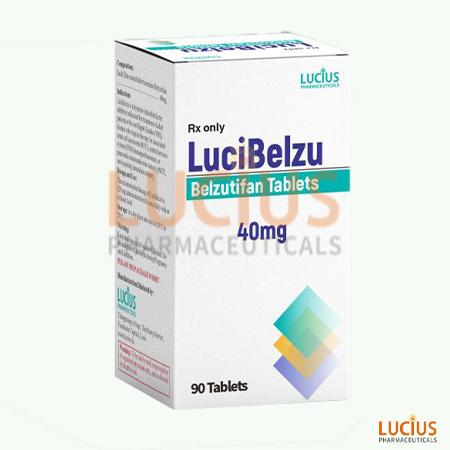
Belzutifan is a hypoxia-inducible factor inhibitor indicated for:
Von Hippel-Lindau (VHL) Disease: Treatment of adult patients with Von Hippel-Lindau (VHL) disease who require therapy for associated renal cell carcinoma (RCC), central nervous system (CNS) hemangioblastomas, or pancreatic neuroendocrine tumors (pNET) that do not require immediate surgery.
Advanced Renal Cell Carcinoma (RCC): Treatment of adult patients with advanced RCC following treatment with a programmed death receptor-1 (PD-1) or programmed death ligand-1 (PD-L1) inhibitor and a vascular endothelial growth factor tyrosine kinase inhibitor (VEGF-TKI).
The recommended dosage of belzutifan is 120 mg taken orally once daily, with or without food.
Risk Summary: Based on animal study results, WELIREG (belzutifan) can cause fetal harm when administered to pregnant women. There are no available data on the drug-related risks of WELIREG use in pregnant women. In an animal reproductive study, pregnant rats were given belzutifan orally during the organogenesis period. When maternal exposure was ≥ 0.2 times the human exposure (AUC) at the recommended daily dose of 120 mg, it resulted in embryofetal death, reduced fetal body weight, and fetal skeletal malformations. Inform pregnant women and females of reproductive potential about the potential risk to the fetus. The background risk of major birth defects and miscarriage in the indicated population is unknown. In the general U.S. population, the estimated background risks of major birth defects and miscarriage in clinically recognized pregnancies are 2-4% and 15-20%, respectively.
Data (Animal Data): In a preliminary embryofetal development study, pregnant rats were given belzutifan at doses of 6, 60, or 200 mg/kg/day orally during the organogenesis period. Belzutifan caused embryofetal death at doses ≥ 60 mg/kg/day (approximately 1 time the human exposure at the recommended dose, based on AUC). At doses of 6 and 60 mg/kg/day (≥ 0.2 times the human exposure at the recommended dose, based on AUC), reduced fetal body weight, fetal rib malformations, and decreased skeletal ossification occurred.
Risk Summary: There are no data on the presence of belzutifan or its metabolites in human milk, or on their effects on breastfed infants or milk production. Due to the potential for serious adverse reactions in breastfed infants, advise women not to breastfeed during WELIREG treatment and for 1 week after the last dose.
WELIREG can cause fetal harm when administered to pregnant women.
Pregnancy Testing: Verify the pregnancy status of females of reproductive potential before initiating WELIREG treatment.
Contraception:
Females: Advise females of reproductive potential to use effective non-hormonal contraception during WELIREG treatment and for 1 week after the last dose. WELIREG may reduce the efficacy of some hormonal contraceptives.
Males: Advise males with female partners of reproductive potential to use effective contraception during WELIREG treatment and for 1 week after the last dose.
Infertility: Based on animal study results, WELIREG may impair fertility in males and females of reproductive potential. The reversibility of the effect on fertility is unknown.
The safety and efficacy of WELIREG in pediatric patients have not been established.
Of the patients who received WELIREG in Study 004, 3.3% were ≥ 65 years of age. WELIREG clinical trials did not include a sufficient number of patients aged 65 years and older to determine whether their response differs from that of younger patients.
No dosage adjustment of WELIREG is recommended in patients with mild (estimated eGFR 60-89 mL/min/1.73 m², based on MDRD) or moderate (eGFR 30-59 mL/min/1.73 m²) renal impairment. WELIREG has not been studied in patients with severe renal impairment (eGFR 15-29 mL/min/1.73 m²).
No dosage adjustment of WELIREG is recommended in patients with mild hepatic impairment [total bilirubin ≤ upper limit of normal (ULN) and aspartate aminotransferase (AST) > ULN, or total bilirubin > 1-1.5 × ULN and any AST]. WELIREG has not been studied in patients with moderate or severe hepatic impairment (total bilirubin > 1.5 × ULN and any AST).
Patients who are poor metabolizers of both UGT2B17 and CYP2C19 have higher belzutifan exposure, which may increase the incidence and severity of WELIREG-associated adverse reactions. Closely monitor patients who are poor metabolizers of both UGT2B17 and CYP2C19 for adverse reactions.
Monitor for anemia before initiating belzutifan and periodically throughout treatment.
Hold belzutifan until hemoglobin ≥ 8 g/dL, then resume at the same or reduced dose, or discontinue.
For life-threatening anemia or anemia requiring urgent intervention, hold belzutifan until hemoglobin ≥ 8 g/dL, then resume at a reduced dose or discontinue permanently.
Monitor oxygen saturation before initiating belzutifan and periodically throughout treatment.
For hypoxia at rest, hold until resolution, resume at a reduced dose, or discontinue based on severity.
For life-threatening hypoxia, discontinue belzutifan permanently.
Monitor for signs and symptoms of anemia and hypoxia, and reduce the dose of belzutifan as recommended.
VHL Disease: The most common adverse reactions (incidence ≥ 25%), including laboratory abnormalities, are decreased hemoglobin, fatigue, increased creatinine, headache, dizziness, increased blood glucose, and nausea.
Advanced RCC: The most common adverse reactions (incidence ≥ 25%), including laboratory abnormalities, are decreased hemoglobin, fatigue, musculoskeletal pain, increased creatinine, lymphopenia, increased alanine aminotransferase, decreased sodium, increased potassium, and increased aspartate aminotransferase.
No specific contraindications have been identified.
Tablets.
Store belzutifan at room temperature between 68°F and 77°F (20°C and 25°C).Belzutifan bottles contain 2 desiccant canisters to help keep the drug dry. Do not consume the desiccant canisters.Keep belzutifan and all medications out of the reach of children.
On November 21, 2025, the U.S. Food and Drug Administration (FDA) approved the regimen of pembrolizu···【more】
Recommended:[list:visits]2025-17-12
Lung cancer is the most rapidly increasing malignant tumor with the fastest increasing morbidity and···【more】
Recommended:[list:visits]2024-09-07
Lucius Pharmaceuticals Version of Vibegron Now Available1.Basic Drug InformationVibegron (generic na···【more】
Recommended:[list:visits]2026-06-08
In recent years, leveraging the World Trade Organization (WTO) patent waiver for least-developed cou···【more】
Recommended:[list:visits]2026-05-08
How Can Chinese Patients Access Generic Drugs from Laos?In recent years, generic drugs from Laos hav···【more】
Recommended:[list:visits]2026-04-08
Lucius Pharmaceuticals version of Ibrutinib is now availableIn a randomized controlled trial of 269 ···【more】
Recommended:[list:visits]2026-03-08
Leveraging the WTO patent waiver for least-developed countries (extended to 2033), Laos has seen rap···【more】
Recommended:[list:visits]2026-31-07
Alectinib Has Been Launched in LaosAlectinib is an oral targeted therapeutic drug belonging to the c···【more】
Recommended:[list:visits]2026-30-07

Lucius Pharmaceuticals (Lao) LTD. (Lucius Pharmaceuticals), with its manufacturing campus in Laos located in the capital city of Vientiane in 2020, officially begins its great journey to make effective and affordable medicines available to people in need around the world...More

Lucius Pharmaceutical Co., Ltd., was established in 2020 in Vientiane, the capital of Laos. It aims to offer safe, effective, and affordable medicines globally. With a factory spanning 25,000 square meters, the company manufactures 200+ generic drugs in diverse therapeutic fields.
Address: No.26 Thongmang village, Xaythany district, Vientiane Capital, Laos
E-mail:laoslucius@gmail.com

Name: Lucius

Telegram name: Vira
No.:0085253923643
Telegram name: Vira
No.:0085253923643