Your Health, We Care
Release date: 2025-12-05 10:56:48 Article From: Lucius Laos Recommended: 319
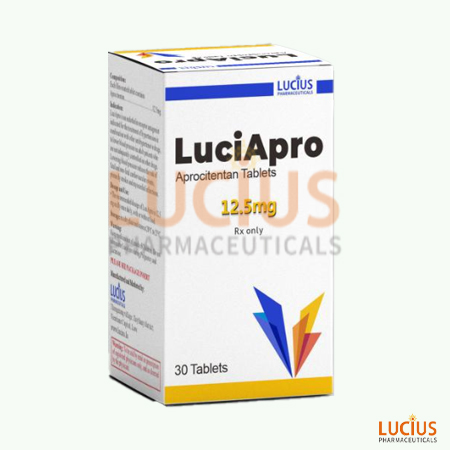
Aprocitentan is an endothelin receptor antagonist. Used in combination with other antihypertensive drugs, it treats hypertension and lowers blood pressure in adult patients whose blood pressure cannot be adequately controlled with other medications. Lowering blood pressure reduces the risk of fatal and non-fatal cardiovascular events, primarily stroke and myocardial infarction.
The recommended dose of Aprocitentan is 12.5 mg orally once daily, which can be taken with or without food.
Pregnancy: Pregnancy data from clinical trials are insufficient to rule out the risk that this drug may cause major birth defects, miscarriage, or other adverse maternal or fetal outcomes. Pregnant patients should be fully informed of the potential risks of the drug to the fetus and carefully consider whether to use it under the guidance of a doctor.
Lactation: Currently, there are no data on the presence of Aprocitentan in human milk during lactation, its effects on breastfed infants, or its impact on milk production. Aprocitentan is excreted into milk in animal studies and may have similar effects in humans. Due to the risk of severe adverse reactions in infants, breastfeeding is not recommended during treatment.
Males and Females of Reproductive Potential: Administration of Aprocitentan to pregnant patients may cause fetal harm, including birth defects and fetal death. Patients of reproductive potential should use effective contraceptive methods before treatment, during treatment, and for one month after discontinuing the drug. The patient's pregnancy status should be verified before starting treatment.
Pediatric Patients: The therapeutic effect of Aprocitentan in pediatric patients has not been established.
Geriatric Patients: In clinical studies of geriatric patients, approximately 44% of patients were 65 years of age or older, and 10% were 75 years of age or older. Swelling and fluid retention were more common in these patients than in younger patients, but no dosage adjustment is required.
Patients with Renal Impairment: Use of Aprocitentan (Tryvio) is not recommended in patients with renal failure (eGFR < 15 mL/min) or those on dialysis. No dosage adjustment is required for patients with mild to severe renal impairment (eGFR ≥ 15 mL/min).
Patients with Hepatic Impairment: Use of Aprocitentan is not recommended in patients with moderate and severe hepatic impairment (Child-Pugh Class B and C), as the risk of adverse outcomes due to hepatotoxicity is increased. No dosage adjustment is required for patients with mild hepatic impairment (Child-Pugh Class A).
Endothelin receptor antagonists can cause hepatotoxicity and hepatic failure. Measure serum aminotransferase levels and total bilirubin before starting treatment, and repeat measurements regularly during treatment and when clinically indicated.
Fluid retention may require intervention.
Decreased hemoglobin.
Decreased sperm count.
Clinical trials or in vitro studies have shown that there are no significant clinical differences in pharmacokinetics when Aprocitentan is used concomitantly with midazolam or lovastatin.Aprocitentan can inhibit CYP3A4 and all members of the CYP2C family, but does not inhibit other CYP450 enzyme family members such as CYP1A2, CYP2A6, CYP2B6, CYP2D6, and CYP2E1.Aprocitentan is a substrate and inhibitor of UGT1A1 and UGT2B7.
A single excessive dose can be up to 600 mg, which is 48 times the recommended dose. This significant increase in dose may cause a series of adverse reactions, including but not limited to headache, nasal congestion, nausea, and upper respiratory tract infection. For multiple excessive doses, the maximum daily dose can be up to 100 mg, which is 8 times the recommended dose.Even if it is not a single large dose, long-term excessive intake may accumulate adverse reactions and cause adverse effects on the patient's health. Aprocitentan is highly bound to proteins, and its distribution in the blood is tightly bound to plasma proteins, making it difficult to be removed by dialysis.
The most common adverse reactions (more common than placebo and with an incidence of ≥ 2% in patients treated with Aprocitentan) are edema/fluid retention and anemia.
Aprocitentan is contraindicated in the following patients:
Pregnancy: Strictly contraindicated during pregnancy. For female patients of reproductive potential, effective contraceptive measures should be taken before starting Aprocitentan treatment, during treatment, and for one month after stopping treatment to prevent unintended pregnancy.
Allergic Reactions: Patients with allergic reactions to aprotinin or any of its excipients should avoid using Aprocitentan.
Tablets.
Store at a temperature of 20°C to 25°C (68°F to 77°F). Short-term transportation between 15°C and 30°C (59°F and 86°F) is permitted. Protect from moisture.
On November 21, 2025, the U.S. Food and Drug Administration (FDA) approved the regimen of pembrolizu···【more】
Recommended:[list:visits]2025-17-12
Lung cancer is the most rapidly increasing malignant tumor with the fastest increasing morbidity and···【more】
Recommended:[list:visits]2024-09-07
Lucius Pharmaceuticals Version of Vibegron Now Available1.Basic Drug InformationVibegron (generic na···【more】
Recommended:[list:visits]2026-06-08
In recent years, leveraging the World Trade Organization (WTO) patent waiver for least-developed cou···【more】
Recommended:[list:visits]2026-05-08
How Can Chinese Patients Access Generic Drugs from Laos?In recent years, generic drugs from Laos hav···【more】
Recommended:[list:visits]2026-04-08
Lucius Pharmaceuticals version of Ibrutinib is now availableIn a randomized controlled trial of 269 ···【more】
Recommended:[list:visits]2026-03-08
Leveraging the WTO patent waiver for least-developed countries (extended to 2033), Laos has seen rap···【more】
Recommended:[list:visits]2026-31-07
Alectinib Has Been Launched in LaosAlectinib is an oral targeted therapeutic drug belonging to the c···【more】
Recommended:[list:visits]2026-30-07

Lucius Pharmaceuticals (Lao) LTD. (Lucius Pharmaceuticals), with its manufacturing campus in Laos located in the capital city of Vientiane in 2020, officially begins its great journey to make effective and affordable medicines available to people in need around the world...More

Lucius Pharmaceutical Co., Ltd., was established in 2020 in Vientiane, the capital of Laos. It aims to offer safe, effective, and affordable medicines globally. With a factory spanning 25,000 square meters, the company manufactures 200+ generic drugs in diverse therapeutic fields.
Address: No.26 Thongmang village, Xaythany district, Vientiane Capital, Laos
E-mail:laoslucius@gmail.com

Name: Lucius

Telegram name: Vira
No.:0085253923643
Telegram name: Vira
No.:0085253923643