Your Health, We Care
Release date: 2026-09-29 17:48:02 Article From: Lucius Laos Recommended: 10
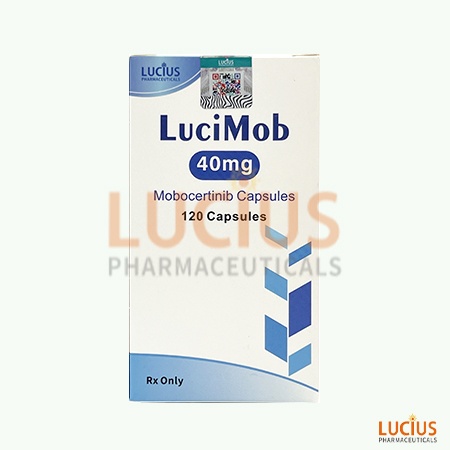
Cobimetinib (Cotellic) is an oral, highly selective MEK1/2 inhibitor. Cobimetinib reversibly inhibits the catalytic activity of MEK1 and MEK2, blocking the phosphorylation and activation of downstream ERK2, thereby inhibiting tumor cell proliferation and inducing apoptosis.
Indicated in combination with vemurafenib for the treatment of adult patients with unresectable or metastatic melanoma with a BRAF V600E or V600K mutation.
Confirm the presence of a BRAF V600E or V600K mutation using an FDA-approved in vitro diagnostic test (e.g., cobas 4800 BRAF V600 Mutation Test) prior to initiating therapy.
Indicated as a single agent for the treatment of adult patients with histiocytic neoplasms.
Confirm the presence of a BRAF V600E or V600K mutation prior to initiating cobimetinib in combination with vemurafenib in patients with melanoma.
Perform dermatologic evaluations prior to initiating cobimetinib.
Evaluate left ventricular ejection fraction (LVEF) prior to initiating cobimetinib.
Monitor liver function tests prior to initiating cobimetinib.
Obtain baseline serum CPK and Scr concentrations prior to initiating cobimetinib.
Perform dermatologic evaluations every 2 months during treatment with cobimetinib as monotherapy or in combination with vemurafenib. When used in combination with vemurafenib, continue monitoring for 6 months after discontinuation of cobimetinib.
Monitor for new non-dermatologic malignancies during combination therapy with cobimetinib and vemurafenib.
Evaluate LVEF at 1 month after initiating cobimetinib, and then every 3 months during treatment. For patients restarting cobimetinib after dose reduction or interruption, evaluate LVEF at 2 weeks, 4 weeks, 10 weeks, 16 weeks, and as clinically indicated thereafter.
Perform ophthalmologic evaluations periodically during treatment and as clinically indicated (e.g., upon new or worsening visual disturbances).
Perform liver function tests monthly during treatment, or more frequently as clinically indicated.
Evaluate serum CPK and creatinine concentrations periodically during treatment and as clinically indicated.
Avoid sun exposure during treatment.
When used in combination with vemurafenib, consider the general precautions, warnings, and contraindications associated with vemurafenib in addition to cobimetinib-related precautions.
Administer orally once daily, with or without food.
Supplied as cobimetinib fumarate; dosages are expressed in terms of cobimetinib base.
Melanoma
60 mg orally once daily for Days 1–21 of each 28-day cycle; in combination with vemurafenib. Continue treatment until disease progression or unacceptable toxicity.
Histiocytic Neoplasms
60 mg orally once daily for 21 consecutive days followed by 7 days off (in 28-day cycles); as monotherapy. Continue treatment until disease progression or unacceptable toxicity.
1. In patients receiving cobimetinib in combination with vemurafenib for BRAF V600E or V600K mutation-positive unresectable or metastatic melanoma, adverse reactions (≥20%) included diarrhea, photosensitivity reaction, nausea, pyrexia, and vomiting.
2. In patients receiving cobimetinib in combination with vemurafenib, Grade 3 or 4 laboratory abnormalities (≥5%) included increased CPK, increased aminotransferases (i.e., AST, ALT), lymphopenia, increased alkaline phosphatase, hypophosphatemia, increased GGT, and hyponatremia.
3. In patients receiving cobimetinib monotherapy for histiocytic neoplasms, adverse reactions (≥20%) included acneiform dermatitis, diarrhea, infection, fatigue, nausea, edema, dry skin, maculopapular rash, pruritus, dyspepsia, vomiting, dyspnea, and urinary tract infection.
4. In patients receiving cobimetinib monotherapy for histiocytic neoplasms, Grade 3 or 4 laboratory abnormalities (≥5%) included hyponatremia, increased CPK, hypokalemia, increased Scr, increased AST, hypocalcemia, lymphopenia, leukopenia, and anemia.
Photosensitivity reactions, including severe cases, have been reported. Avoid sun exposure during cobimetinib treatment. If photosensitivity occurs, interrupt treatment, reduce the dose, or permanently discontinue the drug.
When used in combination with vemurafenib, consider the warnings, precautions, and contraindications of vemurafenib.
Cutaneous squamous cell carcinoma, keratoacanthoma, basal cell carcinoma, and new primary melanoma have been reported in patients treated with cobimetinib in combination with vemurafenib. Perform dermatologic evaluations at baseline and every 2 months during treatment; continue monitoring for 6 months after cobimetinib discontinuation when used with vemurafenib. Initiate appropriate management and excise suspicious skin lesions for pathological evaluation.
Monitor for new non-cutaneous malignancies during cobimetinib treatment in combination with vemurafenib.
Hemorrhage, including major hemorrhagic events (i.e., symptomatic bleeding in critical locations or organs), has been reported. If bleeding events occur, interrupt treatment, reduce the dose, or permanently discontinue the drug.
Cardiomyopathy (i.e., symptomatic or asymptomatic decrease in LVEF) has been reported, sometimes requiring temporary interruption, dose modification, or permanent treatment discontinuation. Safety has not been established in patients with a baseline LVEF below the lower limit of normal or <50%.
Evaluate LVEF prior to initiating treatment, at 1 month after treatment initiation, and every 3 months thereafter during treatment. If left ventricular dysfunction occurs, interrupt treatment, reduce the dose, or permanently discontinue the drug. Re-evaluate LVEF at approximately 2, 4, 10, and 16 weeks after restarting the drug, and as clinically indicated thereafter.
Severe dermatologic reactions (e.g., severe rash) have been reported, sometimes requiring hospitalization. If skin reactions occur, interrupt treatment, reduce the dose, or permanently discontinue the drug.
Ocular toxicities (e.g., serous retinopathy, retinal vein occlusion) have been reported. Perform periodic ophthalmologic evaluations during treatment and as clinically indicated (e.g., upon new or worsening visual disturbances). If ocular toxicity occurs, interrupt treatment, reduce the dose, or permanently discontinue the drug.
Abnormal liver function tests have been reported. Perform liver function tests prior to initiating treatment and monthly thereafter, or more frequently as clinically indicated. If liver function abnormalities occur, interrupt treatment, reduce the dose, or permanently discontinue the drug.
Rhabdomyolysis (Grade 3 or 4 elevations in serum CPK, including asymptomatic increases over baseline) has been reported. Evaluate serum CPK and Scr concentrations at baseline, periodically during treatment, and as clinically indicated. If elevated CPK levels occur, evaluate for signs of rhabdomyolysis and other potential causes. If CPK elevation occurs, interrupt treatment, reduce the dose, or permanently discontinue the drug.
May cause fetal harm. Embryotoxicity and teratogenicity have been demonstrated in animals. Avoid pregnancy during cobimetinib treatment and for ≥2 weeks following discontinuation. Apprise pregnant women or female patients of childbearing potential of the potential hazard to a fetus.
May cause fetal harm.
It is unknown whether cobimetinib is present in human milk. Discontinue breastfeeding during treatment and for 2 weeks after the final dose.
May impair fertility in females and males. Avoid pregnancy during cobimetinib treatment and for ≥2 weeks following discontinuation. Advise females of reproductive potential to use effective contraception during cobimetinib treatment and for ≥2 weeks after the final dose.
Safety and effectiveness have not been established. Cobimetinib exposure at the maximum tolerated dose in pediatric patients was lower than that in adult patients receiving the recommended dose.
Clinical experience in patients aged ≥65 years is insufficient to determine whether they respond differently from younger adults.
Hepatic impairment did not significantly affect systemic exposure to cobimetinib; no dose adjustment is required for these patients.
No formal pharmacokinetic studies have been conducted in patients with renal impairment; however, renal elimination of cobimetinib is minimal.
In population pharmacokinetic analyses, mild or moderate renal impairment did not alter systemic exposure; no dose adjustment is required for these patients.
Cobimetinib has not been studied in patients with severe renal impairment.
Store at room temperature (<30°C) is recommended.
On November 21, 2025, the U.S. Food and Drug Administration (FDA) approved the regimen of pembrolizu···【more】
Recommended:[list:visits]2025-17-12
Lung cancer is the most rapidly increasing malignant tumor with the fastest increasing morbidity and···【more】
Recommended:[list:visits]2024-09-07
Lucius Pharmaceuticals Version of Vibegron Now Available1.Basic Drug InformationVibegron (generic na···【more】
Recommended:[list:visits]2026-06-08
In recent years, leveraging the World Trade Organization (WTO) patent waiver for least-developed cou···【more】
Recommended:[list:visits]2026-05-08
How Can Chinese Patients Access Generic Drugs from Laos?In recent years, generic drugs from Laos hav···【more】
Recommended:[list:visits]2026-04-08
Lucius Pharmaceuticals version of Ibrutinib is now availableIn a randomized controlled trial of 269 ···【more】
Recommended:[list:visits]2026-03-08
Leveraging the WTO patent waiver for least-developed countries (extended to 2033), Laos has seen rap···【more】
Recommended:[list:visits]2026-31-07
Alectinib Has Been Launched in LaosAlectinib is an oral targeted therapeutic drug belonging to the c···【more】
Recommended:[list:visits]2026-30-07

Lucius Pharmaceuticals (Lao) LTD. (Lucius Pharmaceuticals), with its manufacturing campus in Laos located in the capital city of Vientiane in 2020, officially begins its great journey to make effective and affordable medicines available to people in need around the world...More

Lucius Pharmaceutical Co., Ltd., was established in 2020 in Vientiane, the capital of Laos. It aims to offer safe, effective, and affordable medicines globally. With a factory spanning 25,000 square meters, the company manufactures 200+ generic drugs in diverse therapeutic fields.
Address: No.26 Thongmang village, Xaythany district, Vientiane Capital, Laos
E-mail:laoslucius@gmail.com

Name: Lucius

Telegram name: Vira
No.:0085253923643
Telegram name: Vira
No.:0085253923643