Your Health, We Care
Release date: 2026-09-28 17:23:19 Article From: Lucius Laos Recommended: 21
In the field of cancer therapy, the emergence of targeted medications has brought new hope to many patients with advanced cancer. Sunitinib (Sunitinib, Sutent) is precisely such an important multi-target tyrosine kinase inhibitor.
By precisely interfering with cancer cell growth signals and tumor blood supply, it has demonstrated significant efficacy across various refractory solid tumors.
Based on official drug information, this article systematically outlines the indications, usage, mechanism of action, study data, and safety profile of sunitinib to help you gain a comprehensive understanding of this anticancer medication.
This is a type of tumor characterized by uncontrolled cell proliferation originating in the supportive tissue (stroma) of the stomach and intestines. Sunitinib is indicated for patients with unresectable or distant metastatic GIST after disease progression on or intolerance to imatinib (another targeted drug).
Refers to kidney cancer that has spread to other parts of the body.
These tumors arise from hormone-secreting cells in the pancreas. Sunitinib is indicated when the tumors are metastatic or unresectable, disease-progressive, and well-differentiated (meaning the tumor cells closely resemble normal pancreatic cells).
A 6-week treatment cycle is adopted. The recommended dose is 50 mg taken orally once daily for 4 consecutive weeks, followed by a 2-week rest period (i.e., the "4 weeks on, 2 weeks off" schedule). Depending on individual patient tolerance and efficacy, the dose may be adjusted in increments or decrements within the range of 25 mg to 75 mg daily.
A continuous daily dosing regimen of 37.5 mg is used without a rest period. Dose adjustments can likewise be made based on individual clinical evaluation.
Throughout the entire treatment course, physicians will closely monitor patient response and adjust dosing regimens in a timely manner to balance efficacy and safety.
Sunitinib belongs to the class of protein kinase inhibitors. Its therapeutic targets are multiple protein kinases located on tumor cell surface receptors and tumor neovasculature—these enzymes are critical signaling molecules driving cancer cell proliferation, migration, and angiogenesis.
By blocking the activity of these enzymes, sunitinib directly inhibits tumor cell growth and dissemination on one hand, while cutting off the blood and nutrient supply essential for tumor survival on the other, thereby "starving" cancer cells to achieve a dual antitumor effect.
Anticancer medications inevitably carry potential adverse reactions, and sunitinib is no exception. According to clinical data, more than 1 in 10 patients may experience the following common side effects:
Systemic: Fatigue, asthenia, decreased appetite, insomnia, dizziness, headache;
Gastrointestinal System: Diarrhea, nausea, stomatitis/mucosal inflammation, dyspepsia, vomiting;
Respiratory System: Shortness of breath, cough, epistaxis (nosebleeds);
Skin and Hair: Yellowing or depigmentation of the skin, dry skin, rash, hair color changes (whitening or yellowing), hand-foot syndrome (palmar-plantar erythrodysesthesia), taste perversion;
Hematologic: Neutropenia, thrombocytopenia, anemia, leukopenia;
Endocrine and Metabolic: Hypothyroidism (requires regular monitoring);
Cardiovascular: Hypertension (requires blood pressure monitoring).
More severe risks with a lower incidence include: Heart failure, renal failure, pulmonary embolism (blood clots in pulmonary vessels), gastrointestinal perforation (perforation of the intestinal wall), and internal hemorrhage. Immediate medical attention is required if any severe discomfort occurs.
For a complete list of side effects and contraindications, please carefully read the drug package insert and follow the guidance of your attending physician.
As a multi-target kinase inhibitor, sunitinib has established an important place in the treatment of gastrointestinal stromal tumors, metastatic renal cell carcinoma, and pancreatic neuroendocrine tumors. Its clear overall survival benefit and manageable safety profile make it a standard first-line or second-line choice in these settings.
However, the use of this medication requires rigorous medical evaluation, individualized dose adjustment, and continuous adverse event monitoring throughout therapy. Patients should never self-medicate or alter their dosing schedule independently; close collaboration with an experienced oncology team is essential to maximize therapeutic efficacy while ensuring safety. Scientific understanding and standardized treatment serve as solid cornerstones in overcoming cancer.
On November 21, 2025, the U.S. Food and Drug Administration (FDA) approved the regimen of pembrolizu···【more】
Recommended:[list:visits]2025-17-12
Lung cancer is the most rapidly increasing malignant tumor with the fastest increasing morbidity and···【more】
Recommended:[list:visits]2024-09-07
Lucius Pharmaceuticals Version of Vibegron Now Available1.Basic Drug InformationVibegron (generic na···【more】
Recommended:[list:visits]2026-06-08
In recent years, leveraging the World Trade Organization (WTO) patent waiver for least-developed cou···【more】
Recommended:[list:visits]2026-05-08
How Can Chinese Patients Access Generic Drugs from Laos?In recent years, generic drugs from Laos hav···【more】
Recommended:[list:visits]2026-04-08
Lucius Pharmaceuticals version of Ibrutinib is now availableIn a randomized controlled trial of 269 ···【more】
Recommended:[list:visits]2026-03-08
Leveraging the WTO patent waiver for least-developed countries (extended to 2033), Laos has seen rap···【more】
Recommended:[list:visits]2026-31-07
Alectinib Has Been Launched in LaosAlectinib is an oral targeted therapeutic drug belonging to the c···【more】
Recommended:[list:visits]2026-30-07
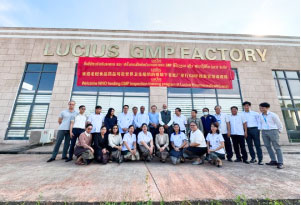
Lucius Pharmaceuticals (Lao) LTD. (Lucius Pharmaceuticals), with its manufacturing campus in Laos located in the capital city of Vientiane in 2020, officially begins its great journey to make effective and affordable medicines available to people in need around the world...More

Lucius Pharmaceutical Co., Ltd., was established in 2020 in Vientiane, the capital of Laos. It aims to offer safe, effective, and affordable medicines globally. With a factory spanning 25,000 square meters, the company manufactures 200+ generic drugs in diverse therapeutic fields.
Address: No.26 Thongmang village, Xaythany district, Vientiane Capital, Laos
E-mail:laoslucius@gmail.com

Name: Lucius

Telegram name: Vira
No.:0085253923643
Telegram name: Vira
No.:0085253923643