Your Health, We Care
Release date: 2026-04-15 16:30:44 Article From: Lucius Laos Recommended: 259
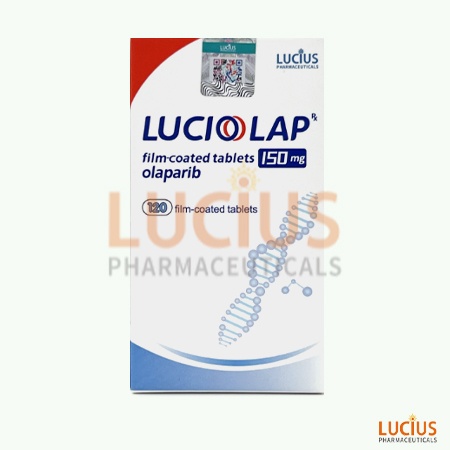
Olaparib is approved for the treatment of adult patients with advanced ovarian cancer, fallopian tube cancer, or primary peritoneal cancer. It is indicated in three specific settings: first, as maintenance therapy for patients who have responded to platinum‑based chemotherapy and carry an abnormal BRCA gene (hereditary or acquired); second, in combination with bevacizumab for patients with advanced HRD‑positive disease (determined by BRCA mutation or genomic instability testing); and third, as maintenance therapy for patients with recurrent disease carrying an abnormal BRCA gene who have responded to platinum‑based chemotherapy. Approximately 70% of women with advanced ovarian cancer may relapse within three years after initial chemotherapy, and maintenance therapy can help extend progression‑free survival.
For HER2‑negative breast cancer, olaparib is indicated for patients with a hereditary BRCA mutation: in early breast cancer with a high risk of recurrence, it may be used as adjuvant therapy for one year after preoperative or postoperative chemotherapy; in metastatic breast cancer, it may be used in patients who have already received chemotherapy. For patients with hormone receptor‑positive disease, hormone therapy should be given concurrently. In pancreatic cancer, olaparib is indicated as maintenance therapy for patients with metastatic pancreatic cancer carrying a hereditary BRCA mutation, provided the cancer has not progressed after at least 16 weeks of first‑line platinum‑based chemotherapy. Studies have shown that the median progression‑free survival in the olaparib group was nearly double that of the placebo group.
Olaparib has two applications in metastatic castration‑resistant prostate cancer. Option 1: In combination with abiraterone and prednisone (or prednisolone) for patients with a BRCA mutation (hereditary or acquired) whose cancer has spread and no longer responds to testosterone‑lowering therapy. Clinical data show that the combination therapy reduced the risk of disease progression or death by 76% in patients with BRCA mutations. Option 2: As monotherapy for patients with HRR gene mutations (including BRCA1, BRCA2, ATM, etc.) whose disease has progressed after prior treatment with enzalutamide or abiraterone. The median progression‑free survival was 7.4 months in the monotherapy group versus 3.6 months in the control group, with a 31% reduction in the risk of death.
On November 21, 2025, the U.S. Food and Drug Administration (FDA) approved the regimen of pembrolizu···【more】
Recommended:8472025-17-12
Lung cancer is the most rapidly increasing malignant tumor with the fastest increasing morbidity and···【more】
Recommended:10452024-09-07
Recently, Lao Lucius Pharmaceutical (Lucius Pharmaceuticals) issued a solemn statement regarding cou···【more】
Recommended:2812026-10-10
Lucius Pharmaceuticals Version of Vibegron Now Available1.Basic Drug InformationVibegron (generic na···【more】
Recommended:3972026-06-08
In recent years, leveraging the World Trade Organization (WTO) patent waiver for least-developed cou···【more】
Recommended:5872026-05-08
How Can Chinese Patients Access Generic Drugs from Laos?In recent years, generic drugs from Laos hav···【more】
Recommended:5512026-04-08
Lucius Pharmaceuticals version of Ibrutinib is now availableIn a randomized controlled trial of 269 ···【more】
Recommended:4452026-03-08
Leveraging the WTO patent waiver for least-developed countries (extended to 2033), Laos has seen rap···【more】
Recommended:6022026-31-07
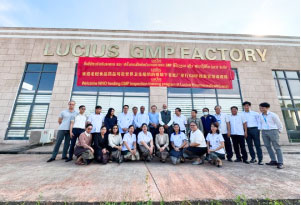
Lucius Pharmaceuticals (Lao) LTD. (Lucius Pharmaceuticals), with its manufacturing campus in Laos located in the capital city of Vientiane in 2020, officially begins its great journey to make effective and affordable medicines available to people in need around the world...More

Lucius Pharmaceutical Co., Ltd., was established in 2020 in Vientiane, the capital of Laos. It aims to offer safe, effective, and affordable medicines globally. With a factory spanning 25,000 square meters, the company manufactures 200+ generic drugs in diverse therapeutic fields.
Address: No.26 Thongmang village, Xaythany district, Vientiane Capital, Laos
E-mail:laoslucius@gmail.com

Name: Lucius

Telegram name: Vira
No.:0085253923643
Telegram name: Vira
No.:0085253923643