Your Health, We Care
Release date: 2026-04-15 16:30:21 Article From: Lucius Laos Recommended: 309
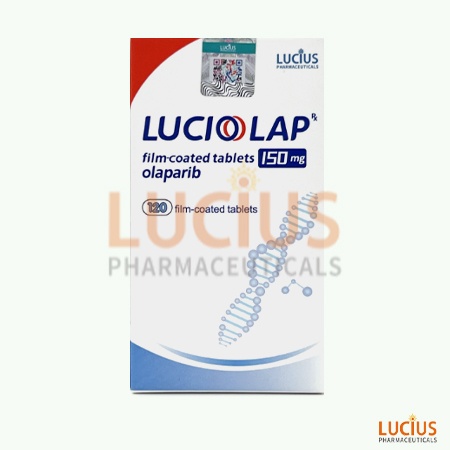
Olaparib is an oral prescription medication used to treat certain types of cancer. It is a targeted therapy that works by precisely interfering with the survival pathways of cancer cells. Specifically, olaparib is a poly (ADP-ribose) polymerase inhibitor, or PARP inhibitor. This drug is indicated for various advanced or metastatic cancers, including ovarian cancer, fallopian tube cancer, primary peritoneal cancer, HER2-negative breast cancer, pancreatic cancer, and metastatic castration-resistant prostate cancer. Before use, doctors will conduct specific genetic tests (such as BRCA mutation or HRR gene mutation testing) to determine whether a patient is suitable for treatment with olaparib.
PARP is a protein present in all cells, including cancer cells. Its primary function is to help repair DNA damage within cells, thereby supporting cell survival and growth. In cancer cells, this repair mechanism contributes to continuous tumor proliferation and resistance to chemotherapy. Therefore, it is medically desirable to block PARP's repair activity, causing cancer cells to die from unrepaired DNA damage. Olaparib works by inhibiting the function of the PARP protein to kill cancer cells. It should be noted that healthy cells also contain PARP, so olaparib may have some effects on normal cells, which explains some of its side effects.
Olaparib’s unique mechanism of action is known as the "synthetic lethality" effect. When cancer cells harbor a BRCA gene mutation, their own DNA repair pathway (homologous recombination repair) is already defective. Adding a PARP inhibitor to block another repair pathway leaves the cancer cells unable to repair any DNA damage, ultimately leading to cell death. For cancer cells without BRCA mutations, olaparib may also exert anti-tumor effects by inhibiting PARP activity in combination with other chemotherapy drugs. Clinical trial data show that in patients with metastatic pancreatic cancer carrying hereditary BRCA mutations, olaparib reduced the risk of disease progression or death by 47%, with a median progression‑free survival of 7.4 months, compared to 3.8 months in the placebo group.
On November 21, 2025, the U.S. Food and Drug Administration (FDA) approved the regimen of pembrolizu···【more】
Recommended:8472025-17-12
Lung cancer is the most rapidly increasing malignant tumor with the fastest increasing morbidity and···【more】
Recommended:10452024-09-07
Recently, Lao Lucius Pharmaceutical (Lucius Pharmaceuticals) issued a solemn statement regarding cou···【more】
Recommended:2812026-10-10
Lucius Pharmaceuticals Version of Vibegron Now Available1.Basic Drug InformationVibegron (generic na···【more】
Recommended:3972026-06-08
In recent years, leveraging the World Trade Organization (WTO) patent waiver for least-developed cou···【more】
Recommended:5872026-05-08
How Can Chinese Patients Access Generic Drugs from Laos?In recent years, generic drugs from Laos hav···【more】
Recommended:5512026-04-08
Lucius Pharmaceuticals version of Ibrutinib is now availableIn a randomized controlled trial of 269 ···【more】
Recommended:4452026-03-08
Leveraging the WTO patent waiver for least-developed countries (extended to 2033), Laos has seen rap···【more】
Recommended:6022026-31-07

Lucius Pharmaceuticals (Lao) LTD. (Lucius Pharmaceuticals), with its manufacturing campus in Laos located in the capital city of Vientiane in 2020, officially begins its great journey to make effective and affordable medicines available to people in need around the world...More

Lucius Pharmaceutical Co., Ltd., was established in 2020 in Vientiane, the capital of Laos. It aims to offer safe, effective, and affordable medicines globally. With a factory spanning 25,000 square meters, the company manufactures 200+ generic drugs in diverse therapeutic fields.
Address: No.26 Thongmang village, Xaythany district, Vientiane Capital, Laos
E-mail:laoslucius@gmail.com

Name: Lucius

Telegram name: Vira
No.:0085253923643
Telegram name: Vira
No.:0085253923643