Your Health, We Care
Release date: 2026-03-12 16:53:47 Article From: Lucius Laos Recommended: 211
Ibrutinib is a small molecule that acts as a potent, irreversible inhibitor of Bruton's tyrosine kinase. It is used to treat chronic lymphocytic leukemia, mantle cell lymphoma, and Waldenström's macroglobulinemia.
420 mg orally once daily. Continue until disease progression or unacceptable toxicity.
420 mg orally once daily. Continue until disease progression or unacceptable toxicity.
420 mg orally once daily. Continue until progression of chronic graft-versus-host disease (cGVHD), recurrence of underlying malignancy, or unacceptable toxicity.
Usual Dosage for Graft-Versus-Host Disease
Children aged 1 year to less than 12 years: 240 mg orally once daily. Continue until chronic graft-versus-host disease (cGVHD) progression, recurrence of underlying malignancy, or unacceptable toxicity.
(1) Oral Suspension
Dosage based on Body Surface Area (BSA) (to achieve 240 mg/m²):
BSA greater than 0.3 to 0.4 m²: 84 mg orally once daily.
BSA greater than 0.4 to 0.5 m²: 105 mg orally once daily.
BSA greater than 0.5 to 0.6 m²: 133 mg orally once daily.
BSA greater than 0.6 to 0.7 m²: 154 mg orally once daily.
BSA greater than 0.7 to 0.8 m²: 182 mg orally once daily.
BSA greater than 0.8 to 0.9 m²: 203 mg orally once daily.
BSA greater than 0.9 to 1 m²: 231 mg orally once daily.
BSA greater than 1 to 1.1 m²: 252 mg orally once daily.
BSA greater than 1.1 to 1.2 m²: 280 mg orally once daily.
BSA greater than 1.2 to 1.3 m²: 301 mg orally once daily.
BSA greater than 1.3 to 1.4 m²: 322 mg orally once daily.
BSA greater than 1.4 to 1.5 m²: 350 mg orally once daily.
BSA greater than 1.5 to 1.6 m²: 371 mg orally once daily.
BSA greater than 1.6 m²: 420 mg orally once daily.
(2) Capsules/Tablets
Dosage based on Body Surface Area (BSA) (to achieve 240 mg/m²):
BSA greater than 0.7 to 1 m²: 210 mg orally once daily.
BSA greater than 1 to 1.3 m²: 280 mg orally once daily.
BSA greater than 1.3 to 1.6 m²: 350 mg orally once daily.
BSA greater than 1.6 m²: 420 mg orally once daily.
Age 12 years and older: 420 mg orally once daily.
(1) Take at approximately the same time each day.
(2) Swallow capsules or tablets whole with a glass of water.
(3) Do not open, break, or chew capsules.
(4) Do not cut, crush, or chew tablets.
(5) Discard any remaining oral suspension 60 days after first opening the bottle.
(6) Avoid grapefruit, Seville oranges, and their products during treatment.
(1) Cardiovascular: Assess cardiac history and function (at baseline); monitor for cardiac rhythm and function; monitor blood pressure.
(2) Hematology: Monitor for bleeding symptoms; perform complete blood count (CBC) monthly.
(3) Infection: Monitor for signs of infection and fever.
(4) Metabolic: Monitor for tumor lysis syndrome.
Diarrhea: Diarrhea may occur; contact doctor if diarrhea persists. Maintain adequate hydration.
Missed Dose: If a dose is missed, take it as soon as possible on the same day and resume the regular schedule the next day. Do not take an extra dose to make up for a missed dose.
Capsules: Store bottles at 20°C to 25°C; excursions permitted to 15°C to 30°C. Keep in original package until dispensing.
Oral Suspension: Store bottle at 2°C to 25°C; do not freeze. Dispense in original sealed container.
Tablets: Store in original package at 20°C to 25°C; brief excursions permitted to 15°C to 30°C.
Mild and Moderate Renal Impairment (creatinine clearance > 25 mL/min): No dosage adjustment recommended.
Severe Renal Impairment (creatinine clearance < 25 mL/min): No data available.
(1) Adult Patients with B-Cell Malignancies
Mild Hepatic Impairment (Child-Pugh Class A): 140 mg orally once daily.
Moderate Hepatic Impairment (Child-Pugh Class B): 70 mg orally once daily.
Severe Hepatic Impairment (Child-Pugh Class C): Not recommended.
(2) Patients with Chronic Graft-Versus-Host Disease
Total bilirubin > 1.5 to 3 x ULN (unless non-hepatic or due to Gilbert's syndrome):
Patients 12 years and older: 140 mg orally once daily.
Patients 1 year to less than 12 years: 80 mg/m² orally once daily.
Total bilirubin > 3 x ULN (unless non-hepatic or due to Gilbert's syndrome): Not recommended.
Treatment with this product should be interrupted upon occurrence of adverse reactions. Once the adverse reaction has improved to Grade 1 or baseline level (recovery), follow the recommended dose adjustment schedule. Details should be followed according to physician's instructions.
On November 21, 2025, the U.S. Food and Drug Administration (FDA) approved the regimen of pembrolizu···【more】
Recommended:[list:visits]2025-17-12
Lung cancer is the most rapidly increasing malignant tumor with the fastest increasing morbidity and···【more】
Recommended:[list:visits]2024-09-07
Lucius Pharmaceuticals Version of Vibegron Now Available1.Basic Drug InformationVibegron (generic na···【more】
Recommended:[list:visits]2026-06-08
In recent years, leveraging the World Trade Organization (WTO) patent waiver for least-developed cou···【more】
Recommended:[list:visits]2026-05-08
How Can Chinese Patients Access Generic Drugs from Laos?In recent years, generic drugs from Laos hav···【more】
Recommended:[list:visits]2026-04-08
Lucius Pharmaceuticals version of Ibrutinib is now availableIn a randomized controlled trial of 269 ···【more】
Recommended:[list:visits]2026-03-08
Leveraging the WTO patent waiver for least-developed countries (extended to 2033), Laos has seen rap···【more】
Recommended:[list:visits]2026-31-07
Alectinib Has Been Launched in LaosAlectinib is an oral targeted therapeutic drug belonging to the c···【more】
Recommended:[list:visits]2026-30-07
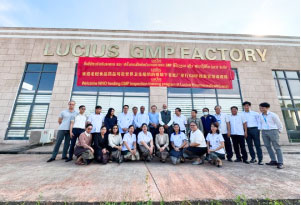
Lucius Pharmaceuticals (Lao) LTD. (Lucius Pharmaceuticals), with its manufacturing campus in Laos located in the capital city of Vientiane in 2020, officially begins its great journey to make effective and affordable medicines available to people in need around the world...More

Lucius Pharmaceutical Co., Ltd., was established in 2020 in Vientiane, the capital of Laos. It aims to offer safe, effective, and affordable medicines globally. With a factory spanning 25,000 square meters, the company manufactures 200+ generic drugs in diverse therapeutic fields.
Address: No.26 Thongmang village, Xaythany district, Vientiane Capital, Laos
E-mail:laoslucius@gmail.com

Name: Lucius

Telegram name: Vira
No.:0085253923643
Telegram name: Vira
No.:0085253923643