Your Health, We Care
Release date: 2026-04-30 15:27:55 Article From: Lucius Laos Recommended: 205
FINEARTS-HF was a randomized, double-blind, placebo-controlled, multicenter Phase III trial that enrolled 6001 adult patients with heart failure and LVEF ≥40%, with a median follow-up of 2.7 years. The trial results showed that adding finerenone to standard therapy significantly reduced the composite endpoint of cardiovascular death and total heart failure events. Total heart failure events were defined as first or recurrent hospitalization for heart failure or urgent heart failure visit. Compared with placebo, finerenone reduced the relative risk of total heart failure events by 18% and the relative risk of cardiovascular death by 7%. According to a prespecified sensitivity analysis, at 36 months, the number needed to treat (NNT) to prevent one primary composite endpoint event was a certain number of patients. These data establish finerenone as a core treatment pillar in this patient population.
In a prespecified exploratory subgroup analysis, finerenone showed consistent treatment effects across all key subgroups, including different levels of left ventricular ejection fraction, time since most recent heart failure event, eGFR level, and New York Heart Association (NYHA) functional class. Of particular note, finerenone provided consistent benefit regardless of baseline use of sodium-glucose cotransporter 2 inhibitors (SGLT2i). Although the number of patients in the SGLT2i subgroup was limited, the results showed no clear conflict with combination therapy. In addition, consistent efficacy was observed across other subgroups such as age, sex, race, and geographic region. All subgroup analyses are exploratory and the results should be interpreted with caution, but these data support the applicability of finerenone in a broad population of patients with heart failure.
In the FINEARTS-HF trial, finerenone was generally well tolerated. Adverse reactions occurring at an incidence of ≥1% and higher than placebo included: hyperkalemia (9.7% vs 4.2%), hypotension (7.6% vs 4.7%), and hyponatremia (1.9% vs 0.9%). Worsening renal function-related events were more common in the finerenone group (18%) than in the placebo group (12%), specifically including renal impairment (7% vs 4%), eGFR decrease (5% vs 4%), acute kidney injury (4% vs 2%), and renal failure (3% vs 2%). Most events were mild to moderate; dose adjustments due to renal function worsening were made in 9% of patients in the finerenone group compared with 4% in the placebo group. Hospitalization for worsening renal function occurred in 2.0% and 1.3% of patients, respectively. An initial small increase in serum creatinine and a small decrease in eGFR may be observed after starting treatment, but these typically stabilize within 4 weeks and are reversible upon discontinuation. The incidence of sex hormone-related adverse reactions (e.g., breast tenderness, uterine bleeding) was similar between the two groups, and the permanent discontinuation rate due to adverse events was also similar (3.2% vs 2.8%).
On November 21, 2025, the U.S. Food and Drug Administration (FDA) approved the regimen of pembrolizu···【more】
Recommended:[list:visits]2025-17-12
Lung cancer is the most rapidly increasing malignant tumor with the fastest increasing morbidity and···【more】
Recommended:[list:visits]2024-09-07
Lucius Pharmaceuticals Version of Vibegron Now Available1.Basic Drug InformationVibegron (generic na···【more】
Recommended:[list:visits]2026-06-08
In recent years, leveraging the World Trade Organization (WTO) patent waiver for least-developed cou···【more】
Recommended:[list:visits]2026-05-08
How Can Chinese Patients Access Generic Drugs from Laos?In recent years, generic drugs from Laos hav···【more】
Recommended:[list:visits]2026-04-08
Lucius Pharmaceuticals version of Ibrutinib is now availableIn a randomized controlled trial of 269 ···【more】
Recommended:[list:visits]2026-03-08
Leveraging the WTO patent waiver for least-developed countries (extended to 2033), Laos has seen rap···【more】
Recommended:[list:visits]2026-31-07
Alectinib Has Been Launched in LaosAlectinib is an oral targeted therapeutic drug belonging to the c···【more】
Recommended:[list:visits]2026-30-07
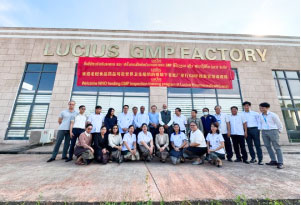
Lucius Pharmaceuticals (Lao) LTD. (Lucius Pharmaceuticals), with its manufacturing campus in Laos located in the capital city of Vientiane in 2020, officially begins its great journey to make effective and affordable medicines available to people in need around the world...More

Lucius Pharmaceutical Co., Ltd., was established in 2020 in Vientiane, the capital of Laos. It aims to offer safe, effective, and affordable medicines globally. With a factory spanning 25,000 square meters, the company manufactures 200+ generic drugs in diverse therapeutic fields.
Address: No.26 Thongmang village, Xaythany district, Vientiane Capital, Laos
E-mail:laoslucius@gmail.com

Name: Lucius

Telegram name: Vira
No.:0085253923643
Telegram name: Vira
No.:0085253923643