Your Health, We Care
Release date: 2026-07-06 16:47:16 Article From: Lucius Laos Recommended: 361
Elagolix sodium (generic name: elagolix) is a prescription oral tablet specifically indicated for the management of moderate to severe pain associated with endometriosis. It is not a painkiller, hormonal drug, injection, or surgical option, nor does it contain any hormonal ingredients. Unlike as-needed pain relievers, elagolix sodium must be taken regularly every day, even if you start to feel better, to ensure continuous drug action throughout the menstrual cycle. Since its FDA approval in 2018, it has been prescribed to over 125,000 women. Elagolix sodium is available in two dosage options: 150 mg once daily or 200 mg twice daily. Gynecologists will recommend the lowest effective dose based on each patient's specific symptoms and individual response. During treatment, patients may experience changes in menstrual bleeding patterns (e.g., irregular bleeding, reduced flow, or complete cessation of menses), but this does not mean the drug induces early menopause – in clinical trials, about 60% of women resumed menses within one month after stopping treatment, and 95% did so within six months. It is important to note that elagolix sodium is not a contraceptive, and effective non-hormonal birth control must be used during treatment and for 28 days after stopping the drug.
The essence of endometriosis is that endometrial tissue, which normally lines the uterine cavity, grows abnormally outside the uterus (e.g., on the ovaries, pelvic peritoneum, etc.), forming ectopic lesions. These lesions, like normal endometrial tissue, are highly sensitive to circulating estrogen levels in women. During each menstrual cycle, as estrogen levels naturally rise, these ectopic lesions proliferate and thicken; when menstruation occurs, the lesion tissue breaks down and sheds, triggering intense inflammatory responses and pain that can persist throughout the month, not just during the menstrual period. Elagolix sodium is a gonadotropin-releasing hormone (GnRH) receptor antagonist. It blocks the pituitary gland's secretion of gonadotropins, thereby suppressing ovarian production of estrogen, leading to a reversible reduction in circulating estrogen levels. With reduced estrogen, the ectopic lesions lose their "nutritional support," grow more slowly, and pain symptoms diminish. Within 24 hours of dosing, elagolix sodium begins to lower estrogen in the body, but significant pain relief typically requires continuous treatment for about 3 months to become apparent. The two dosage strengths suppress estrogen to different extents, so efficacy and side-effect profiles may vary; the physician will select the dose according to individualized treatment goals.
The efficacy of elagolix sodium is based on the largest clinical trial program in endometriosis to date, comprising two 6‑month studies that enrolled 1,686 women aged 18–49 with moderate to severe pain. In Study 1, at 3 months of treatment, 46% of women in the 150 mg once‑daily group reported significant reduction in menstrual pain, while 76% in the 200 mg twice‑daily group achieved this, compared with 20% in the placebo group. For non‑menstrual pelvic pain between periods, 50% in the 150 mg group experienced relief, 55% in the 200 mg group, and 36% in the placebo group. Study 2 yielded highly similar results: menstrual pain relief rates were 43% (150 mg), 72% (200 mg), and 23% (placebo); pelvic pain relief rates were 50% (150 mg), 58% (200 mg), and 37% (placebo). These data demonstrate that elagolix sodium is significantly superior to placebo in alleviating both core types of endometriosis‑associated pain, with the 200 mg dose generally providing better efficacy. Moreover, rescue analgesics (e.g., opioids, naproxen, etc.) were permitted in the studies, but the elagolix treatment groups did not show confounding effects on efficacy evaluation due to increased analgesic use, indicating that the drug independently provides clinically meaningful pain improvement.
On November 21, 2025, the U.S. Food and Drug Administration (FDA) approved the regimen of pembrolizu···【more】
Recommended:[list:visits]2025-17-12
Lung cancer is the most rapidly increasing malignant tumor with the fastest increasing morbidity and···【more】
Recommended:[list:visits]2024-09-07
Lucius Pharmaceuticals Version of Vibegron Now Available1.Basic Drug InformationVibegron (generic na···【more】
Recommended:[list:visits]2026-06-08
In recent years, leveraging the World Trade Organization (WTO) patent waiver for least-developed cou···【more】
Recommended:[list:visits]2026-05-08
How Can Chinese Patients Access Generic Drugs from Laos?In recent years, generic drugs from Laos hav···【more】
Recommended:[list:visits]2026-04-08
Lucius Pharmaceuticals version of Ibrutinib is now availableIn a randomized controlled trial of 269 ···【more】
Recommended:[list:visits]2026-03-08
Leveraging the WTO patent waiver for least-developed countries (extended to 2033), Laos has seen rap···【more】
Recommended:[list:visits]2026-31-07
Alectinib Has Been Launched in LaosAlectinib is an oral targeted therapeutic drug belonging to the c···【more】
Recommended:[list:visits]2026-30-07
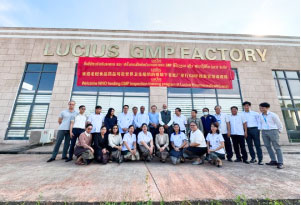
Lucius Pharmaceuticals (Lao) LTD. (Lucius Pharmaceuticals), with its manufacturing campus in Laos located in the capital city of Vientiane in 2020, officially begins its great journey to make effective and affordable medicines available to people in need around the world...More

Lucius Pharmaceutical Co., Ltd., was established in 2020 in Vientiane, the capital of Laos. It aims to offer safe, effective, and affordable medicines globally. With a factory spanning 25,000 square meters, the company manufactures 200+ generic drugs in diverse therapeutic fields.
Address: No.26 Thongmang village, Xaythany district, Vientiane Capital, Laos
E-mail:laoslucius@gmail.com

Name: Lucius

Telegram name: Vira
No.:0085253923643
Telegram name: Vira
No.:0085253923643