Your Health, We Care
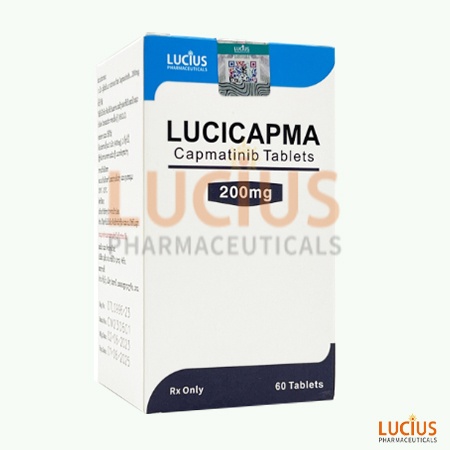
Capmatinib is primarily metabolized by CYP3A4 and aldehyde oxidase. In vitro studies have demonstrated that capmatinib reversibly inhibits multidrug and toxin extrusion (MATE) 1 and 2K, but does not inhibit organic anion-transporting polypeptide (OATP) 1B1 or 1B3, organic cation transporter (OCT) 1, organic anion transporter (OAT) 1 or 3, or multidrug resistance-associated protein 2 (MRP2). In vitro studies have also indicated that capmatinib is a substrate of P-glycoprotein (P-gp); it is not a substrate of breast cancer resistance protein (BCRP) or MRP2.
Strong CYP3A inhibitors: May increase the systemic exposure and risk of adverse reactions to capmatinib. Monitor closely for adverse reactions.
Moderate or strong CYP3A inducers: May decrease the plasma concentration of capmatinib and reduce its efficacy. Avoid concomitant use.
CYP1A2 substrates: May increase the plasma concentration and risk of adverse reactions to CYP1A2 substrates. Avoid concomitant use of capmatinib with CYP1A2 substrates that have a narrow therapeutic window. If concomitant use is unavoidable, reduce the dosage of the substrate drug.
CYP3A substrates: No clinically significant effect on the pharmacokinetics of sensitive CYP3A substrates.
P-gp substrates: May increase the plasma concentration and risk of adverse reactions to P-gp substrates. Avoid concomitant use of capmatinib with P-gp substrates that have a narrow therapeutic window. If concomitant use is unavoidable, reduce the dosage of the substrate drug.
BCRP substrates: May increase the plasma concentration and risk of adverse reactions to BCRP substrates. Avoid concomitant use of capmatinib with BCRP substrates that have a narrow therapeutic window. If concomitant use is unavoidable, reduce the dosage of the substrate drug.
MATE1 or MATE2K substrates: May increase the plasma concentration and risk of adverse reactions to MATE1 or MATE2K substrates. Avoid concomitant use of capmatinib with MATE1 or MATE2K substrates that have a narrow therapeutic window. If concomitant use is unavoidable, reduce the dosage of the substrate drug.
Caffeine: Capmatinib increased the AUC of caffeine (a CYP1A2 substrate) by 134%.
Digoxin: Capmatinib increased the AUC and peak concentration of digoxin (a P-gp substrate) by 47% and 74%, respectively. Recommendation: Avoid concomitant use; if unavoidable, reduce the dosage of digoxin.
Efavirenz: Efavirenz (a moderate CYP3A inducer) is predicted to decrease the AUC and peak concentration of capmatinib by 44% and 34%, respectively. Recommendation: Avoid concomitant use.
Itraconazole: Itraconazole (a strong CYP3A inhibitor) increased the AUC of capmatinib by 42%. Recommendation: Monitor closely for capmatinib-related adverse reactions.
Midazolam: No substantial effect on the exposure of midazolam (a CYP3A substrate).
Rabeprazole: Rabeprazole (a gastric acid inhibitor) decreased the AUC and peak concentration of capmatinib by 25% and 38%, respectively.
Rifampicin: Rifampicin (a strong CYP3A inducer) decreased the AUC and peak concentration of capmatinib by 67% and 56%, respectively. Recommendation: Avoid concomitant use.
Rosuvastatin: Capmatinib increased the AUC and peak concentration of rosuvastatin (a BCRP substrate) by 108% and 204%, respectively. Recommendation: Avoid concomitant use; if unavoidable, reduce the dosage of rosuvastatin.
from FDA,2023.03
Capmatinib slows down or inhibits the spread of cancer cells by blocking a key protein that promotes···【more】
Recommended:582026-09-01
The mechanism of action of capmatinib lies in targeting and blocking the specific proteins that driv···【more】
Recommended:632026-09-01
Capmatinib slows down or inhibits the spread of cancer cells by blocking a key protein that promotes the growth and proliferation of cancer cells.Which drugs interact with Capmatin···【more】
Article source:Lucius LaosRelease date:2026-01-09Recommended:58
The mechanism of action of capmatinib lies in targeting and blocking the specific proteins that drive the growth and proliferation of cancer cells, thereby inhibiting cancer progre···【more】
Article source:Lucius LaosRelease date:2026-01-09Recommended:63
Capmatinib is a targeted drug manufactured by Novartis for the treatment of patients with non-small cell lung cancer (NSCLC) with mutations in the MET gene. It stops the growth and···【more】
Article source:Lucius LaosRelease date:2024-08-09Recommended:315
Capmatinib, trade name Tabrecta. It is an oral MET inhibitor mainly used for the treatment of non-small cell lung cancer with MET exon 14 skipping mutations. The drug can effective···【more】
Article source:Lucius LaosRelease date:2024-08-09Recommended:295
Capmatinib is an oral, selective, ATP-competitive c-Met kinase inhibitor that inhibits c-Met kinase for the treatment of metastatic non-small cell lung cancer with mutations in MET···【more】
Article source:Lucius LaosRelease date:2024-08-09Recommended:322
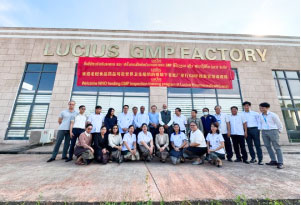
Lucius Pharmaceuticals (Lao) LTD. (Lucius Pharmaceuticals), with its manufacturing campus in Laos located in the capital city of Vientiane in 2020, officially begins its great journey to make effective and affordable medicines available to people in need around the world...More

Lucius Pharmaceutical Co., Ltd., was established in 2020 in Vientiane, the capital of Laos. It aims to offer safe, effective, and affordable medicines globally. With a factory spanning 25,000 square meters, the company manufactures 200+ generic drugs in diverse therapeutic fields.
Address:No.26 Thongmang village, Xaythany district, Vientiane Capital, Laos
E-mail:laoslucius@gmail.com
Whatsapp: