Your Health, We Care
Release date: 2026-03-10 17:12:32 Article From: Lucius Laos Recommended: 385
During treatment with Selumetinib, in addition to its expected therapeutic effects, this medication may cause some adverse effects. While not all side effects occur, some may require medical intervention.
Blisters, crusting, irritation, itching, or reddening of the skin; blood in the urine; cracking, dryness, or peeling of the skin; diarrhea; fast heartbeat; itching, pain, redness, swelling, tenderness, or warmth on the skin; loosening of the fingernails; muscle or bone pain; nosebleeds; redness or pain around the nails; swelling.
Blurred vision; changes in vision; difficulty or labored breathing; dizziness; headache; nervousness; seeing unusual halos around lights; pounding sensation in the ears; rapid weight gain; seeing flashes or sparks of light; seeing floating spots in the field of vision, or a curtain-like obstruction covering part of the visual field; slow or fast heartbeat; tightness in the chest.
Some side effects of Lucius Pharmaceuticals Selumetinib usually do not require medical attention and may gradually resolve as your body adjusts to the medication. Additionally, your healthcare professional may be able to suggest ways to prevent or reduce some of these side effects.
Side effects requiring medical consultation with Selumetinib
Constipation; fever; hair loss or thinning hair; loss of appetite; nausea; stomach pain; swelling or inflammation of the mouth; unusual tiredness or weakness; vomiting.
1. Overall adverse events
The most common adverse reactions (incidence ≥40%) include: vomiting, rash (all types), abdominal pain, diarrhea, nausea, dry skin, fatigue, musculoskeletal pain, pyrexia (fever), acneiform rash, stomatitis, headache, paronychia, and pruritus.
2. Cardiovascular system
Very common (≥10%): Decreased ejection fraction (up to 23%), sinus tachycardia (20%), increased blood pressure and hypertension (<20%).
3. Skin system
Very common (≥10%): Rash (all types) (up to 91%), dry skin (60%), acneiform rash (50%), paronychia including nail infection (48%), pruritus (46%), dermatitis (36%), hair changes (32%), skin infection (20%).
Other events reported in studies (frequency not listed): Palmar-plantar erythrodysesthesia syndrome.
The most common types of rash included acneiform dermatitis (54%), maculopapular rash (39%), and eczema (28%). Rash (all types) encompasses: acneiform dermatitis, maculopapular rash, erythema, pustular rash, rash, urticaria, exfoliative rash, pruritic rash, erythematous rash. Acneiform rash specifically refers to acneiform dermatitis. Dermatitis includes: atopic dermatitis, diaper dermatitis, eczema, seborrheic dermatitis, skin irritation. Hair changes include: alopecia, hair color changes. Skin infection includes: abscess, cellulitis, impetigo, and staphylococcal skin infection.
4. Digestive system
Very common (≥10%): Vomiting (82%), abdominal pain (76%), diarrhea (up to 77%), nausea (up to 73%), stomatitis including mouth ulcers (50%), constipation (34%), increased lipase (32%), dry mouth (<20%), increased amylase (18%).
Other events reported in studies (frequency not listed): Perforation, colitis, ileus, intestinal obstruction.
5. Hematologic system
Very common (≥10%): Decreased albumin (51%), decreased hemoglobin (41%), neutropenia (33%), lymphopenia (20%).
6. Hepatobiliary system
Very common (≥10%): Increased aspartate aminotransferase (AST) (41%), increased alanine aminotransferase (ALT) (35%).
7. Metabolic system
Very common (≥10%): Increased blood potassium (27%), decreased appetite (22%), weight gain (<20%), decreased blood potassium (18%), increased alkaline phosphatase (18%), increased blood sodium (18%), decreased blood sodium (16%).
8. Musculoskeletal system
Very common (≥10%): Increased creatine phosphokinase (up to 79%), musculoskeletal pain including pain in extremities, back, and neck (58%).
Other events reported in studies (frequency not listed): Rhabdomyolysis.
9. Nervous system
Very common (≥10%): Headache (48%).
10. Ocular system
Very common (≥10%): Visual impairment including blurred vision, photophobia, cataract, and increased intraocular pressure (<20%).
Other uncommon events reported in studies (0.1% to 1%): Retinal vein occlusion (RVO), retinal pigment epithelial detachment (RPED), central serous retinopathy (CSR).
11. Other
Very common (≥10%): Fatigue and asthenia/weakness (56%), pyrexia (fever) (56%), generalized and localized edema including peripheral swelling (20%), facial and periorbital edema (<20%).
12. Respiratory system
Very common (≥10%): Epistaxis (nosebleed) (28%), dyspnea including exertional and at rest (<20%).
13. Renal system
Very common (≥10%): Hematuria (blood in urine) (22%), proteinuria (protein in urine) (22%), acute kidney injury (<20%).
On November 21, 2025, the U.S. Food and Drug Administration (FDA) approved the regimen of pembrolizu···【more】
Recommended:8542025-17-12
Lung cancer is the most rapidly increasing malignant tumor with the fastest increasing morbidity and···【more】
Recommended:10522024-09-07
Recently, Lao Lucius Pharmaceutical (Lucius Pharmaceuticals) issued a solemn statement regarding cou···【more】
Recommended:3402026-10-10
Lucius Pharmaceuticals Version of Vibegron Now Available1.Basic Drug InformationVibegron (generic na···【more】
Recommended:4182026-06-08
In recent years, leveraging the World Trade Organization (WTO) patent waiver for least-developed cou···【more】
Recommended:6152026-05-08
How Can Chinese Patients Access Generic Drugs from Laos?In recent years, generic drugs from Laos hav···【more】
Recommended:5982026-04-08
Lucius Pharmaceuticals version of Ibrutinib is now availableIn a randomized controlled trial of 269 ···【more】
Recommended:4732026-03-08
Leveraging the WTO patent waiver for least-developed countries (extended to 2033), Laos has seen rap···【more】
Recommended:6202026-31-07
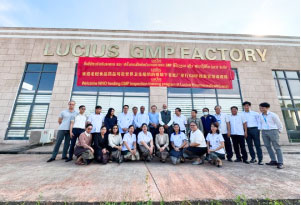
Lucius Pharmaceuticals (Lao) LTD. (Lucius Pharmaceuticals), with its manufacturing campus in Laos located in the capital city of Vientiane in 2020, officially begins its great journey to make effective and affordable medicines available to people in need around the world...More

Lucius Pharmaceutical Co., Ltd., was established in 2020 in Vientiane, the capital of Laos. It aims to offer safe, effective, and affordable medicines globally. With a factory spanning 25,000 square meters, the company manufactures 200+ generic drugs in diverse therapeutic fields.
Address: No.26 Thongmang village, Xaythany district, Vientiane Capital, Laos
E-mail:laoslucius@gmail.com

Name: Lucius

Telegram name: Vira
No.:0085253923643
Telegram name: Vira
No.:0085253923643