Your Health, We Care
Release date: 2026-03-10 17:00:50 Article From: Lucius Laos Recommended: 287
During treatment with Enasidenib, in addition to the expected therapeutic effects, some adverse effects may also occur. While not all side effects happen, some may require medical intervention. If patients experience any of the following side effects while taking the medication, it is recommended to contact a doctor immediately.
These include agitation, bluish discoloration of the lips, nails, or skin (cyanosis), bone pain, chest pain, chills, confusion, cough, coughing up pink frothy sputum, decreased responsiveness, decreased urine output, depression, difficulty breathing, rapid or noisy breathing, dizziness, eye pain, fainting, fast heartbeat, fever, general feeling of discomfort, headache, hostility, increased sweating, irregular breathing (too fast, too slow, or shallow), irritability, lightheadedness, loss of consciousness, muscle or joint pain, muscle twitching, nausea, pale skin, rapid weight gain, shallow breathing, seizures, severe drowsiness, sore throat, swelling in the neck, groin, or armpits, swelling of the arms, feet, or lower legs, swelling of the face, ankles, or hands, unusual sleepiness, lethargy, tiredness, weakness, or feeling sluggish, and yellowing of the skin or eyes.
Some side effects of Enasidenib typically do not require medical attention and may gradually resolve as the body adjusts to the medication.
Side effects requiring medical consultation with Enasidenib
These include changes in taste, decreased appetite, diarrhea, loss of taste, and vomiting.
Side effect management for healthcare professionals
The most common adverse reactions (incidence ≥30%) of any grade include elevated bilirubin, decreased blood calcium and potassium, nausea, diarrhea, vomiting, and decreased appetite.
Very common (≥10%): Elevated total bilirubin (81%).
Very common (≥10%): Decreased blood calcium (74%), decreased blood potassium (41%), decreased appetite (34%), decreased blood phosphorus (27%).
Common (1%-10%): Tumor lysis syndrome, weight loss.
Very common (≥10%): Nausea (50%), diarrhea (43%), vomiting (34%).
Common (1%-10%): Abdominal pain.
Very common (≥10%): Differentiation syndrome (14%), non-infectious leukocytosis (12%).
Very common (≥10%): Dysgeusia (taste disturbance) (12%).
Common (1%-10%): Rash.
Common (1%-10%): Elevated uric acid.
Common (1%-10%): Fever, peripheral edema.
Common (1%-10%): Renal insufficiency.
Common (1%-10%): Respiratory failure, dyspnea (difficulty breathing), hypoxemia (low blood oxygen), pulmonary edema, acute respiratory distress syndrome.
On November 21, 2025, the U.S. Food and Drug Administration (FDA) approved the regimen of pembrolizu···【more】
Recommended:[list:visits]2025-17-12
Lung cancer is the most rapidly increasing malignant tumor with the fastest increasing morbidity and···【more】
Recommended:[list:visits]2024-09-07
Lucius Pharmaceuticals Version of Vibegron Now Available1.Basic Drug InformationVibegron (generic na···【more】
Recommended:[list:visits]2026-06-08
In recent years, leveraging the World Trade Organization (WTO) patent waiver for least-developed cou···【more】
Recommended:[list:visits]2026-05-08
How Can Chinese Patients Access Generic Drugs from Laos?In recent years, generic drugs from Laos hav···【more】
Recommended:[list:visits]2026-04-08
Lucius Pharmaceuticals version of Ibrutinib is now availableIn a randomized controlled trial of 269 ···【more】
Recommended:[list:visits]2026-03-08
Leveraging the WTO patent waiver for least-developed countries (extended to 2033), Laos has seen rap···【more】
Recommended:[list:visits]2026-31-07
Alectinib Has Been Launched in LaosAlectinib is an oral targeted therapeutic drug belonging to the c···【more】
Recommended:[list:visits]2026-30-07
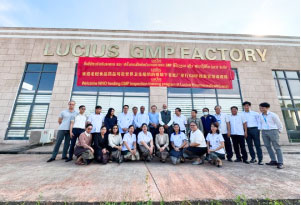
Lucius Pharmaceuticals (Lao) LTD. (Lucius Pharmaceuticals), with its manufacturing campus in Laos located in the capital city of Vientiane in 2020, officially begins its great journey to make effective and affordable medicines available to people in need around the world...More

Lucius Pharmaceutical Co., Ltd., was established in 2020 in Vientiane, the capital of Laos. It aims to offer safe, effective, and affordable medicines globally. With a factory spanning 25,000 square meters, the company manufactures 200+ generic drugs in diverse therapeutic fields.
Address: No.26 Thongmang village, Xaythany district, Vientiane Capital, Laos
E-mail:laoslucius@gmail.com

Name: Lucius

Telegram name: Vira
No.:0085253923643
Telegram name: Vira
No.:0085253923643