Your Health, We Care
Release date: 2026-02-04 17:14:21 Article From: Lucius Laos Recommended: 258
Pirfenidone is an oral antifibrotic medication primarily used for the treatment of idiopathic pulmonary fibrosis (IPF).
Concomitant use of pirfenidone with potent CYP1A2 inhibitors (e.g., fluvoxamine) is not recommended. CYP1A2 inhibitors increase the systemic exposure to pirfenidone. If discontinuation of CYP1A2 inhibitors is not feasible prior to initiating pirfenidone therapy, the dose of pirfenidone should be reduced. Monitor for adverse reactions and consider discontinuing pirfenidone if necessary.
Concomitant use of ciprofloxacin (a moderate CYP1A2 inhibitor, 750 mg twice daily) with pirfenidone is not recommended. If ciprofloxacin at this dose cannot be avoided, reduce the dose of pirfenidone and monitor the patient closely.
Concomitant use of medications that exert moderate or strong inhibitory effects on both CYP1A2 and other CYP isoenzymes involved in pirfenidone metabolism should be avoided during treatment.
Concomitant use of pirfenidone with potent CYP1A2 inducers should be avoided, as these inducers may reduce the exposure to and efficacy of pirfenidone.
Pirfenidone should be used with caution in patients with Child-Pugh Class A and B hepatic impairment. Monitor for adverse reactions and consider dose adjustment or discontinuation of pirfenidone as needed.
Pirfenidone is not recommended for use in patients with Child-Pugh Class C hepatic impairment. No studies have been conducted in this patient population.
Pirfenidone should be used with caution in patients with mild (CLcr 50–80 mL/min), moderate (CLcr 30–50 mL/min), or severe (CLcr < 30 mL/min) renal impairment. Monitor for adverse reactions and consider dose adjustment or discontinuation of pirfenidone as needed.
Pirfenidone is not recommended for use in patients with end-stage renal disease requiring dialysis. No studies have been conducted in this patient population.
Smoking reduces the exposure to pirfenidone and may compromise its efficacy. Counsel patients to quit smoking prior to treatment and avoid smoking during pirfenidone administration.
Contact your healthcare provider immediately if the patient experiences any of the following serious side effects:
Yellowing of the skin or whites of the eyes;
Dark or brown-colored urine (e.g., tea-colored);
Pain in the right upper abdomen;
Easy bleeding or bruising than usual;
Fatigue.
Liver function can be monitored via blood tests during pirfenidone treatment.
Pirfenidone may make the skin more susceptible to sunburn.
Pirfenidone may trigger severe skin reactions, such as skin blisters, rashes, oral ulcers, urticaria, or other serious skin manifestations.
Pirfenidone may cause nausea, vomiting, diarrhea, dyspepsia, heartburn, and abdominal pain.
On November 21, 2025, the U.S. Food and Drug Administration (FDA) approved the regimen of pembrolizu···【more】
Recommended:[list:visits]2025-17-12
Lung cancer is the most rapidly increasing malignant tumor with the fastest increasing morbidity and···【more】
Recommended:[list:visits]2024-09-07
Lucius Pharmaceuticals Version of Vibegron Now Available1.Basic Drug InformationVibegron (generic na···【more】
Recommended:[list:visits]2026-06-08
In recent years, leveraging the World Trade Organization (WTO) patent waiver for least-developed cou···【more】
Recommended:[list:visits]2026-05-08
How Can Chinese Patients Access Generic Drugs from Laos?In recent years, generic drugs from Laos hav···【more】
Recommended:[list:visits]2026-04-08
Lucius Pharmaceuticals version of Ibrutinib is now availableIn a randomized controlled trial of 269 ···【more】
Recommended:[list:visits]2026-03-08
Leveraging the WTO patent waiver for least-developed countries (extended to 2033), Laos has seen rap···【more】
Recommended:[list:visits]2026-31-07
Alectinib Has Been Launched in LaosAlectinib is an oral targeted therapeutic drug belonging to the c···【more】
Recommended:[list:visits]2026-30-07
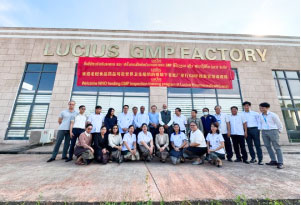
Lucius Pharmaceuticals (Lao) LTD. (Lucius Pharmaceuticals), with its manufacturing campus in Laos located in the capital city of Vientiane in 2020, officially begins its great journey to make effective and affordable medicines available to people in need around the world...More

Lucius Pharmaceutical Co., Ltd., was established in 2020 in Vientiane, the capital of Laos. It aims to offer safe, effective, and affordable medicines globally. With a factory spanning 25,000 square meters, the company manufactures 200+ generic drugs in diverse therapeutic fields.
Address: No.26 Thongmang village, Xaythany district, Vientiane Capital, Laos
E-mail:laoslucius@gmail.com

Name: Lucius

Telegram name: Vira
No.:0085253923643
Telegram name: Vira
No.:0085253923643