Your Health, We Care
Release date: 2026-03-30 17:42:24 Article From: Lucius Laos Recommended: 290
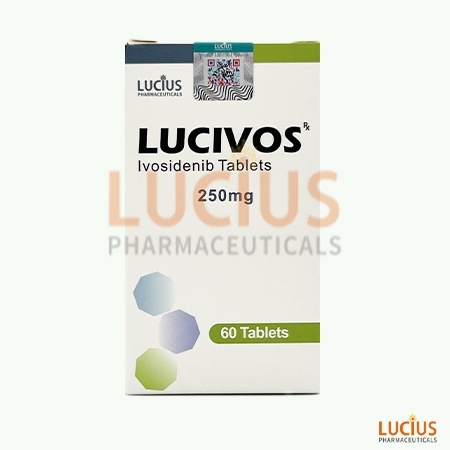
Ivosidenib is a prescription medication. Patients should fully understand the drug information before use. The Ivosidenib Medication Guide covers key aspects such as patient selection, dosage regimen, and management of adverse reactions.
Patients receiving treatment with ivosidenib should be selected based on the presence of an IDH1 mutation.
The recommended dosage of ivosidenib is 500 mg orally once daily until disease progression or unacceptable toxicity occurs.
For patients with acute myeloid leukemia (AML) or myelodysplastic syndromes (MDS) who have not experienced disease progression or unacceptable toxicity, ivosidenib should be continued for at least 6 months to ensure sufficient time to observe clinical response.
Ivosidenib may be taken with or without food.
Avoid concomitant intake with high-fat meals.
Do not split, crush, or chew ivosidenib tablets.
Take ivosidenib orally at approximately the same time each day.
Administer ivosidenib starting on Day 1 in combination with azacitidine (75 mg/m² subcutaneously or intravenously once daily) on Days 1–7 (or Days 1–5 and 8–9) of each 28-day treatment cycle. For additional dosage information regarding azacitidine, please refer to its prescribing information.
If vomiting occurs after taking ivosidenib, do not take a replacement dose; wait until the next scheduled dose.
If a dose of ivosidenib is missed or not taken at the usual time, take the missed dose as soon as possible, ensuring at least 12 hours before the next scheduled dose. Resume the normal schedule the following day. Do not take two doses within 12 hours.
Perform an electrocardiogram (ECG) before initiating treatment. Monitor ECG at least weekly during the first 3 weeks of treatment, then at least monthly throughout the treatment period. If abnormalities are detected, manage promptly. In the event of toxicity, withhold dosing or reduce the dose.
If differentiation syndrome is suspected, administer systemic corticosteroids and initiate hemodynamic monitoring until symptom resolution and for at least 3 days thereafter. If severe signs and/or symptoms persist for more than 48 hours after initiating systemic corticosteroids, withhold ivosidenib; resume ivosidenib when signs and symptoms have improved to Grade 2 or lower.
Administer hydroxyurea according to institutional standards and perform leukapheresis if clinically indicated. Taper hydroxyurea only after leukocytosis improves or resolves. If leukocytosis does not improve with hydroxyurea, withhold ivosidenib; resume ivosidenib at 500 mg once daily after leukocytosis resolves.
Monitor and correct electrolyte levels as clinically indicated, review and adjust concomitant medications known to prolong the QTc interval, and withhold ivosidenib. Resume ivosidenib at 500 mg once daily when the QTc interval has recovered to ≤ 480 ms, and monitor ECG at least weekly for 2 weeks after resolution of the QTc interval prolongation.
Monitor and correct electrolyte levels as clinically indicated, review and adjust concomitant medications known to prolong the QTc interval, and withhold ivosidenib. Resume ivosidenib at 250 mg once daily when the QTc interval has recovered to within 30 ms of baseline or to ≤ 480 ms, and monitor ECG at least weekly for 2 weeks after resolution of the QTc interval prolongation. If an alternative cause for QTc interval prolongation can be identified, consider escalating the ivosidenib dose to 500 mg once daily.
QTc Interval Prolongation with Life-Threatening Arrhythmias Signs/Symptoms
Permanently discontinue ivosidenib.
Permanently discontinue ivosidenib.
For monotherapy use in acute myeloid leukemia (AML) and myelodysplastic syndromes (MDS)
Withhold ivosidenib until toxicity resolves to Grade 2 or lower; upon resumption, initiate at 250 mg once daily, and if toxicity resolves to Grade 1 or lower, may increase to 500 mg once daily; if Grade 3 or higher toxicity recurs, discontinue ivosidenib.
For use in cholangiocarcinoma or in combination with azacitidine for acute myeloid leukemia (AML)
Withhold ivosidenib until toxicity resolves to Grade 1 or lower or baseline, then resume at 500 mg once daily for Grade 3 toxicity; for Grade 4 toxicity, resume at 250 mg once daily. If Grade 3 toxicity recurs (second occurrence), reduce the ivosidenib dose to 250 mg once daily until toxicity resolves, then resume at 500 mg once daily; if Grade 3 toxicity recurs a third time, or Grade 4 toxicity recurs, discontinue ivosidenib.
On November 21, 2025, the U.S. Food and Drug Administration (FDA) approved the regimen of pembrolizu···【more】
Recommended:[list:visits]2025-17-12
Lung cancer is the most rapidly increasing malignant tumor with the fastest increasing morbidity and···【more】
Recommended:[list:visits]2024-09-07
Lucius Pharmaceuticals Version of Vibegron Now Available1.Basic Drug InformationVibegron (generic na···【more】
Recommended:[list:visits]2026-06-08
In recent years, leveraging the World Trade Organization (WTO) patent waiver for least-developed cou···【more】
Recommended:[list:visits]2026-05-08
How Can Chinese Patients Access Generic Drugs from Laos?In recent years, generic drugs from Laos hav···【more】
Recommended:[list:visits]2026-04-08
Lucius Pharmaceuticals version of Ibrutinib is now availableIn a randomized controlled trial of 269 ···【more】
Recommended:[list:visits]2026-03-08
Leveraging the WTO patent waiver for least-developed countries (extended to 2033), Laos has seen rap···【more】
Recommended:[list:visits]2026-31-07
Alectinib Has Been Launched in LaosAlectinib is an oral targeted therapeutic drug belonging to the c···【more】
Recommended:[list:visits]2026-30-07
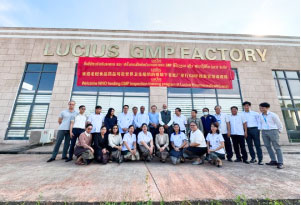
Lucius Pharmaceuticals (Lao) LTD. (Lucius Pharmaceuticals), with its manufacturing campus in Laos located in the capital city of Vientiane in 2020, officially begins its great journey to make effective and affordable medicines available to people in need around the world...More

Lucius Pharmaceutical Co., Ltd., was established in 2020 in Vientiane, the capital of Laos. It aims to offer safe, effective, and affordable medicines globally. With a factory spanning 25,000 square meters, the company manufactures 200+ generic drugs in diverse therapeutic fields.
Address: No.26 Thongmang village, Xaythany district, Vientiane Capital, Laos
E-mail:laoslucius@gmail.com

Name: Lucius

Telegram name: Vira
No.:0085253923643
Telegram name: Vira
No.:0085253923643