Your Health, We Care
Release date: 2026-07-06 16:58:51 Article From: Lucius Laos Recommended: 338
Lucius Pharmaceuticals (Lao) Co., Ltd. has launched a generic version of elagolix sodium (trade name LuciElag) for the treatment of moderate to severe pain associated with endometriosis.
Because elagolix sodium works by reducing estrogen levels, its side effects are closely related to a low-estrogen state. In clinical trials, at least 5% of women taking either dose of elagolix reported the following common side effects: hot flushes (24% in the 150 mg group, 46% in the 200 mg group, 9% placebo), headache (17%, 20%, 12%), nausea (11%, 16%, 13%), insomnia (6%, 9%, 3%), mood changes/swings (6%, 5%, 3%), amenorrhea (4%, 7%, <1%), depressed mood/tearfulness (3%, 6%, 2%), anxiety (3%, 5%, 3%), and joint pain (3%, 5%, 3%). It is evident that the 200 mg dose, due to stronger estrogen suppression, has a higher overall incidence of side effects, especially hot flushes and amenorrhea. In addition, about 5.5% (150 mg) and 9.6% (200 mg) of patients discontinued treatment prematurely because of side effects, compared with 6% in the placebo group. The proportions of patients who discontinued due to hot flushes, headache, or nausea were all below 2%. Overall, about 1 in 10 treated patients stops treatment due to intolerable side effects, but most patients can complete the 6‑month course. All side effects should be closely monitored during treatment, and patients should promptly communicate with their doctor to adjust the dose or adopt supportive measures (e.g., calcium supplementation, improving sleep habits, etc.).
Estrogen is crucial for bone health; it participates in regulating the balance between bone resorption and bone formation. When estrogen levels are low for a prolonged period, bone resorption may outpace bone formation, leading to a decrease in bone mineral density (BMD), i.e., bone loss. Because elagolix sodium lowers estrogen, it may cause BMD reduction, and although bone density may partially recover after stopping the drug, it may not fully return to pre‑treatment levels. There are currently no long‑term data to definitively determine whether this bone loss increases future fracture risk, especially with advancing age. Therefore, physicians usually limit the continuous duration of elagolix sodium use and may recommend dual‑energy X‑ray absorptiometry (DXA scanning) to monitor BMD changes during treatment. To reduce skeletal risks, patients should proactively inform their doctor if they have a history of osteoporosis, prior fractures, or are using other medications that may cause bone loss. Doctors may also recommend vitamin D and calcium supplementation as adjunctive measures to a healthy lifestyle. It is important to note that patients with osteoporosis are prohibited from using elagolix sodium. If you have concerns about bone health, be sure to discuss them in detail with your gynaecologist before starting treatment, and attend regular follow‑up evaluations. Do not stop the medication or adjust the dose on your own due to fear of side effects.
In addition to menstrual pain and pelvic pain, endometriosis often causes dyspareunia, which severely affects patients' quality of life and intimate relationships. In clinical trials of elagolix sodium, the research team specifically evaluated the drug's effect on improving dyspareunia. The results showed that only the 200 mg twice‑daily dose of elagolix sodium was statistically proven to effectively reduce dyspareunia; the 150 mg once‑daily dose did not achieve a significant effect on this endpoint. Therefore, for patients whose primary complaint is dyspareunia, physicians may preferentially consider the 200 mg regimen. Notably, these women achieved relief from dyspareunia without an increase in analgesic use, indicating that elagolix sodium's analgesic effect is specific and does not rely on additional painkillers to mask symptoms. This finding provides a non‑surgical, non‑hormonal oral treatment option for endometriosis‑associated dyspareunia. Patients using this dose should be aware of the potentially higher side effects from stronger estrogen suppression (e.g., hot flushes, amenorrhea, etc.), and physicians will weigh the balance between efficacy and safety. If you are experiencing dyspareunia due to endometriosis, it is recommended that you clearly inform your doctor during the visit so that they can assess whether the 200 mg dose regimen is appropriate for you.
Lucius Pharmaceuticals Version of Vibegron Now Available1.Basic Drug InformationVibegron (generic name: vibegron) is an oral, once-daily β3-adrenergic receptor agonist approved by ···【more】
Recommended:322Release date: 2026-08-06
Lucius Pharmaceuticals version of Ibrutinib is now availableIn a randomized controlled trial of 269 previously untreated CLL/SLL patients aged 65 years and older, ibrutinib demonst···【more】
Recommended:363Release date: 2026-08-03
Alectinib Has Been Launched in LaosAlectinib is an oral targeted therapeutic drug belonging to the class of ALK inhibitors. Unlike traditional chemotherapy, it does not act by kill···【more】
Recommended:280Release date: 2026-07-30
Lucius Pharmaceuticals Quizartinib (Quizartinib) Has Been Launched(1) Quizartinib is an oral tablet. The recommended dose is once daily, one tablet per day (the specific dose is de···【more】
Recommended:296Release date: 2026-07-29
Lucius version of Dacomitinib is now availableCutaneous adverse reactions and management strategies for DacomitinibRash and exfoliative skin reactions are highly characteristic adv···【more】
Recommended:324Release date: 2026-07-21
Lao PDR: Filgotinib Has Been LaunchedBefore initiating filgotinib treatment, strict screening for the following contraindications is mandatory; the presence of any one of these con···【more】
Recommended:296Release date: 2026-07-13
Lucius Pharmaceuticals' Pirtobrutinib Has Been LaunchedPirtobrutinib is an oral anticancer drug whose active ingredient is pirtobrutinib, belonging to the class of Bruton's···【more】
Recommended:326Release date: 2026-07-10
Lucius Pharmaceuticals (Lao) Co., Ltd. has launched a generic version of elagolix sodium (trade name LuciElag) for the treatment of moderate to severe pain associated with endometr···【more】
Recommended:339Release date: 2026-07-06
Contraindications for Bempedoic Acid (Nilemdo)Bempedoic acid (Nilemdo) is strictly contraindicated in the following situations: ①hypersensitivity to bempedoic acid or any excipient···【more】
Recommended:309Release date: 2026-07-03
MONDAY, June 15, 2026 — A study published online June 8 in Nature Medicine has found that apitegromab, through its selective inhibition of myostatin, can maintain lean body mass wh···【more】
Recommended:389Release date: 2026-06-24
On May 28, 2026, AstraZeneca announced that its immunotherapy drug Imfinzi (durvalumab) in combination with BCG (Bacillus Calmette-Guérin) induction and maintenance regimen has rec···【more】
Recommended:465Release date: 2026-06-01
On November 21, 2025, the U.S. Food and Drug Administration (FDA) approved the regimen of pembrolizumab (Keytruda, Merck & Co., Inc.) or pembrolizumab and berahyaluronidase alf···【more】
Recommended:790Release date: 2025-12-17
Dr. Louis, a microbiologist at the World Health Organization (WHO), recently made a technical visit to Lucius Pharmaceuticals in Laos. The purpose of the visit was to learn more ab···【more】
Recommended:1047Release date: 2024-07-09
Lung cancer is the most rapidly increasing malignant tumor with the fastest increasing morbidity and mortality, which has been troubling medical workers. Clinical studies have foun···【more】
Recommended:991Release date: 2024-07-09
In recent years, leveraging the World Trade Organization (WTO) patent waiver for least-developed countries (extended to July 1, 2033), Laos has been legally permitted to produce ge···【more】
Recommended:482Release date: 2026-08-05
How Can Chinese Patients Access Generic Drugs from Laos?In recent years, generic drugs from Laos have gradually entered the view of Chinese cancer and chronic disease patients due ···【more】
Recommended:445Release date: 2026-08-04
Leveraging the WTO patent waiver for least-developed countries (extended to 2033), Laos has seen rapid growth in its generic pharmaceutical industry in recent years. Lucius Pharmac···【more】
Recommended:512Release date: 2026-07-31
Lucius Pharmaceutical is a modern pharmaceutical enterprise headquartered in Vientiane, the capital of Laos. The company was established in 2020, with its R&D and operational s···【more】
Recommended:360Release date: 2026-07-28
Lucius Pharmaceuticals Relocates from India to Laos: A Five-Year Development Journey of a Generic Drug CompanyRelocation Background and Strategic ShiftLucius Pharmaceuticals was fo···【more】
Recommended:553Release date: 2026-07-24
In recent years, Laos has gradually become a major global supply source for generic drugs, leveraging the WTO-granted patent exemption for least-developed countries. Among them, Lu···【more】
Recommended:369Release date: 2026-07-22
Company Overview: Industrial Migration from India to LaosLucius Pharmaceuticals (Laos) Co., Ltd. was established in 2020, with its headquarters located at No. 26, Thongmang Village···【more】
Recommended:414Release date: 2026-07-20
Lucius Pharmaceutical is one of the representative generic drug enterprises in Laos. The company was established in Vientiane, the capital of Laos, in 2020 and has been in operatio···【more】
Recommended:410Release date: 2026-07-17
Industrial Rise: From Zero to a "World Pharmacy" CandidateThe explosive growth of Laos' generic drug industry is rooted in unique international rule dividends. As a U···【more】
Recommended:512Release date: 2026-07-16
In recent years, Laos generic drugs have gradually come into view of oncology and chronic disease patients in China due to their significant price advantage. Leveraging the WTO pat···【more】
Recommended:353Release date: 2026-07-15
Regulatory System: From "One Ministry, One Department" to Legal AmendmentsLao drug regulation adopts a centralized "one ministry, one department" management mod···【more】
Recommended:457Release date: 2026-07-14
Overview of Lao generic drug industryThe Lao generic drug industry started late but has developed rapidly in recent years. Relying on the WTO's patent waiver for least develope···【more】
Recommended:485Release date: 2026-07-09
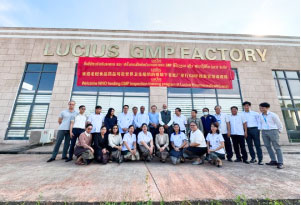
Lucius Pharmaceuticals (Lao) LTD. (Lucius Pharmaceuticals), with its manufacturing campus in Laos located in the capital city of Vientiane in 2020, officially begins its great journey to make effective and affordable medicines available to people in need around the world...More

Lucius Pharmaceutical Co., Ltd., was established in 2020 in Vientiane, the capital of Laos. It aims to offer safe, effective, and affordable medicines globally. With a factory spanning 25,000 square meters, the company manufactures 200+ generic drugs in diverse therapeutic fields.
Address: No.26 Thongmang village, Xaythany district, Vientiane Capital, Laos
E-mail:laoslucius@gmail.com

Name: Lucius

Telegram name: Vira
No.:0085253923643
Telegram name: Vira
No.:0085253923643