Your Health, We Care
Release date: 2026-03-20 17:05:44 Article From: Lucius Laos Recommended: 191
Cabozantinib is a small-molecule multi-targeted tyrosine kinase inhibitor developed by Exelixis, Inc. (USA). It was first approved by the FDA in November 2012 for progressive metastatic medullary thyroid cancer, with subsequent expansions of approved indications, earning it a reputation as a "broad‑spectrum targeted therapy".
Usual Doses Recommended by the FDA (Prescribing Information):
(1) Cabozantinib capsules
140 mg orally once daily until the patient no longer derives clinical benefit or until unacceptable toxicity occurs.
(2) Cabozantinib tablets
Body Surface Area (BSA) ≥ 1.2 m²: 60 mg orally once daily until disease progression or unacceptable toxicity.
Cabozantinib tablets
Monotherapy: 60 mg orally once daily until the patient no longer derives clinical benefit or until unacceptable toxicity.
Combination therapy: 40 mg once daily in combination with nivolumab, until disease progression or unacceptable toxicity.
Tablets: 60 mg orally once daily until the patient no longer derives clinical benefit or until unacceptable toxicity.
Cabozantinib tablets
BSA ≥ 1.2 m²: 60 mg once daily until disease progression or unacceptable toxicity.
BSA < 1.2 m²: 40 mg once daily until disease progression or unacceptable toxicity.
The above information is sourced from Drugs.com and reflects the dosage ranges approved in countries outside mainland China only. It does not represent the approved use in mainland China. Do not make any treatment decisions based on this information.
Cabozantinib tablets and capsules are not interchangeable.
Cabozantinib should be taken on an empty stomach, at least 2 hours before or 1 hour after a meal.
Do not open, break, crush, or chew tablets or capsules. Swallow whole with a full glass of water.
If the next dose is due in less than 12 hours, skip the missed dose; do not double the dose.
During treatment with cabozantinib, avoid foods known to inhibit or induce CYP450 activity (e.g., grapefruit) or nutritional supplements (e.g., St. John’s Wort).
Cardiovascular system: Blood pressure (baseline and periodic monitoring during treatment)
Musculoskeletal system: Oral examination (due to risk of osteonecrosis of the jaw; baseline and periodic monitoring)
Renal function: Urinary protein (periodic monitoring during treatment)
Endocrine system: Thyroid function (baseline and periodic monitoring during treatment)
Metabolism: Serum calcium (periodic monitoring during treatment)
Cabozantinib capsules/tablets
Mild to moderate renal impairment: No dose adjustment recommended.
Severe renal impairment: No data available.
(1) Cabozantinib capsules (for medullary thyroid cancer)
Mild to moderate hepatic impairment: 80 mg orally once daily.
Severe hepatic impairment: Not recommended.
(2) Cabozantinib tablets (for medullary thyroid cancer)
Mild hepatic impairment: No dose adjustment recommended.
Moderate hepatic impairment: 40 mg once daily; for pediatric patients with BSA < 1.2 m², reduce from 40 mg to 20 mg once daily.
Severe hepatic impairment: Not recommended.
(3) Cabozantinib tablets (for renal cell carcinoma)
Mild to moderate hepatic impairment: 40 mg orally once daily.
Severe hepatic impairment: Not recommended.
(1) If ALT or AST > 3 × ULN but ≤ 10 × ULN and total bilirubin < 2 × ULN:
Hold cabozantinib and nivolumab until toxicity resolves to Grade 0 or 1; consider corticosteroid therapy as appropriate. One or both agents may be resumed after recovery.
(2) If ALT or AST > 10 × ULN, or > 3 × ULN with total bilirubin ≥ 2 × ULN:
Permanently discontinue cabozantinib and nivolumab. Corticosteroid therapy may be considered if an immune‑mediated reaction is suspected.
On November 21, 2025, the U.S. Food and Drug Administration (FDA) approved the regimen of pembrolizu···【more】
Recommended:[list:visits]2025-17-12
Lung cancer is the most rapidly increasing malignant tumor with the fastest increasing morbidity and···【more】
Recommended:[list:visits]2024-09-07
Lucius Pharmaceuticals Version of Vibegron Now Available1.Basic Drug InformationVibegron (generic na···【more】
Recommended:[list:visits]2026-06-08
In recent years, leveraging the World Trade Organization (WTO) patent waiver for least-developed cou···【more】
Recommended:[list:visits]2026-05-08
How Can Chinese Patients Access Generic Drugs from Laos?In recent years, generic drugs from Laos hav···【more】
Recommended:[list:visits]2026-04-08
Lucius Pharmaceuticals version of Ibrutinib is now availableIn a randomized controlled trial of 269 ···【more】
Recommended:[list:visits]2026-03-08
Leveraging the WTO patent waiver for least-developed countries (extended to 2033), Laos has seen rap···【more】
Recommended:[list:visits]2026-31-07
Alectinib Has Been Launched in LaosAlectinib is an oral targeted therapeutic drug belonging to the c···【more】
Recommended:[list:visits]2026-30-07
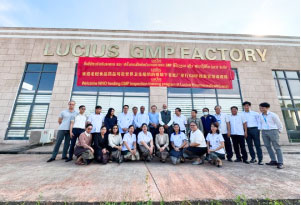
Lucius Pharmaceuticals (Lao) LTD. (Lucius Pharmaceuticals), with its manufacturing campus in Laos located in the capital city of Vientiane in 2020, officially begins its great journey to make effective and affordable medicines available to people in need around the world...More

Lucius Pharmaceutical Co., Ltd., was established in 2020 in Vientiane, the capital of Laos. It aims to offer safe, effective, and affordable medicines globally. With a factory spanning 25,000 square meters, the company manufactures 200+ generic drugs in diverse therapeutic fields.
Address: No.26 Thongmang village, Xaythany district, Vientiane Capital, Laos
E-mail:laoslucius@gmail.com

Name: Lucius
Telegram name: Vira
No.:0085253923643
Telegram name: Vira
No.:0085253923643