Your Health, We Care
Release date: 2026-03-31 17:04:51 Article From: Lucius Laos Recommended: 258
As a targeted therapeutic agent, the dosage and administration of afatinib should be individually adjusted based on the patient’s specific condition, body surface area and tolerability. It must be used under the guidance of a physician experienced in antineoplastic therapy.
The standard dosage for adult patients with non-small cell lung cancer is 40 mg orally once daily, with continuous administration until disease progression or unacceptable toxicity occurs.
Afatinib should be taken on an empty stomach, at least 1 hour before or 2 hours after a meal.
The epidermal growth factor receptor (EGFR) mutation status of the patient should be confirmed prior to initiation of treatment.
If a dose is missed, the missed dose should not be taken if the next scheduled dose is due in less than 12 hours.
Dosage adjustment for patients with renal impairment is determined based on creatinine clearance (CrCl):
No dosage adjustment is required for mild to moderate renal impairment (CrCl ≥30 mL/min).
For severe renal impairment (CrCl 15–29 mL/min), the dosage should be reduced to 30 mg orally once daily.
No data are available in patients with end-stage renal disease (CrCl <15 mL/min) or those requiring dialysis; the dosage should be determined by a physician after comprehensive evaluation.
Dosage adjustment for patients with hepatic impairment is based on the Child-Pugh classification:
No dosage adjustment is required for mild (Child-Pugh Class A) to moderate (Child-Pugh Class B) hepatic impairment.
For severe hepatic impairment (Child-Pugh Class C), close monitoring of the patient’s condition is recommended, and prompt dosage adjustment should be made if intolerable adverse reactions occur.
Situations Requiring Treatment Interruption
Treatment should be interrupted if adverse events of Grade 3 or higher according to the National Cancer Institute Common Terminology Criteria for Adverse Events (NCI CTCAE) occur.
Treatment should be interrupted if Grade 2 or higher diarrhea persists for 2 or more days despite the use of antidiarrheal medication.
Treatment should be interrupted if Grade 2 skin reactions persist for more than 7 days or are intolerable to the patient.
Treatment should be interrupted if Grade 2 or higher renal impairment occurs.
Requirements for Resuming Treatment
Treatment may be resumed when adverse reactions resolve completely, return to baseline pretreatment levels, or improve to Grade 1. The dosage should be reduced by 10 mg per day from the dose at which the adverse reaction occurred when resuming treatment.
Situations Requiring Permanent Discontinuation
Permanent discontinuation is required if life-threatening bullous, blistering or exfoliative skin lesions occur.
Permanent discontinuation is required if interstitial lung disease (ILD) is diagnosed.
Permanent discontinuation is required if severe drug-induced hepatic impairment occurs.
Permanent discontinuation is required if persistent ulcerative keratitis occurs.
Permanent discontinuation is required if symptomatic left ventricular dysfunction occurs.
Permanent discontinuation is required if severe or intolerable adverse reactions occur at a daily dosage of 20 mg.
Concomitant Use with P-glycoprotein (P-gp) Inhibitors
If a patient requires concomitant treatment with a P-gp inhibitor and intolerable adverse reactions occur, the daily dosage of afatinib should be reduced by 10 mg. The previous dosage of afatinib may be resumed upon discontinuation of the P-gp inhibitor if tolerated by the patient.
Concomitant Use with P-glycoprotein (P-gp) Inducers
If a patient requires long-term concomitant treatment with a P-gp inducer, the daily dosage of afatinib may be increased by 10 mg if tolerated. The previous dosage of afatinib may be resumed 2–3 days after discontinuation of the P-gp inducer.
On November 21, 2025, the U.S. Food and Drug Administration (FDA) approved the regimen of pembrolizu···【more】
Recommended:[list:visits]2025-17-12
Lung cancer is the most rapidly increasing malignant tumor with the fastest increasing morbidity and···【more】
Recommended:[list:visits]2024-09-07
Lucius Pharmaceuticals Version of Vibegron Now Available1.Basic Drug InformationVibegron (generic na···【more】
Recommended:[list:visits]2026-06-08
In recent years, leveraging the World Trade Organization (WTO) patent waiver for least-developed cou···【more】
Recommended:[list:visits]2026-05-08
How Can Chinese Patients Access Generic Drugs from Laos?In recent years, generic drugs from Laos hav···【more】
Recommended:[list:visits]2026-04-08
Lucius Pharmaceuticals version of Ibrutinib is now availableIn a randomized controlled trial of 269 ···【more】
Recommended:[list:visits]2026-03-08
Leveraging the WTO patent waiver for least-developed countries (extended to 2033), Laos has seen rap···【more】
Recommended:[list:visits]2026-31-07
Alectinib Has Been Launched in LaosAlectinib is an oral targeted therapeutic drug belonging to the c···【more】
Recommended:[list:visits]2026-30-07
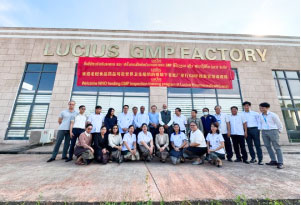
Lucius Pharmaceuticals (Lao) LTD. (Lucius Pharmaceuticals), with its manufacturing campus in Laos located in the capital city of Vientiane in 2020, officially begins its great journey to make effective and affordable medicines available to people in need around the world...More

Lucius Pharmaceutical Co., Ltd., was established in 2020 in Vientiane, the capital of Laos. It aims to offer safe, effective, and affordable medicines globally. With a factory spanning 25,000 square meters, the company manufactures 200+ generic drugs in diverse therapeutic fields.
Address: No.26 Thongmang village, Xaythany district, Vientiane Capital, Laos
E-mail:laoslucius@gmail.com

Name: Lucius

Telegram name: Vira
No.:0085253923643
Telegram name: Vira
No.:0085253923643