Your Health, We Care
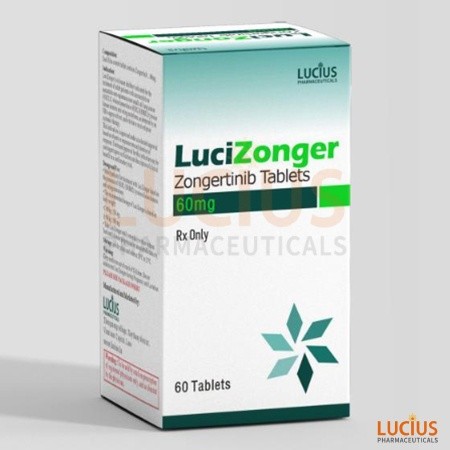
Another NameHernexeos、宗格替尼
Indications
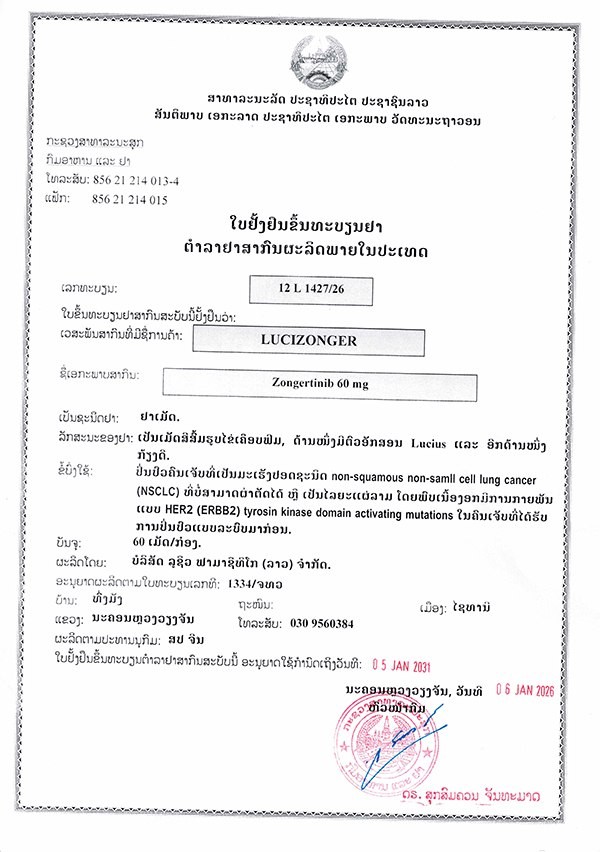
for adult patients with unresectable or metastatic non-squamous non-small cell lung cancer (NSCLC) harboring activating mutations in the HER2 (ERBB2) tyrosine kinase domain.
Specs

Factory:Lucius Pharmaceuticals
Reg No.:12 L 1427/26
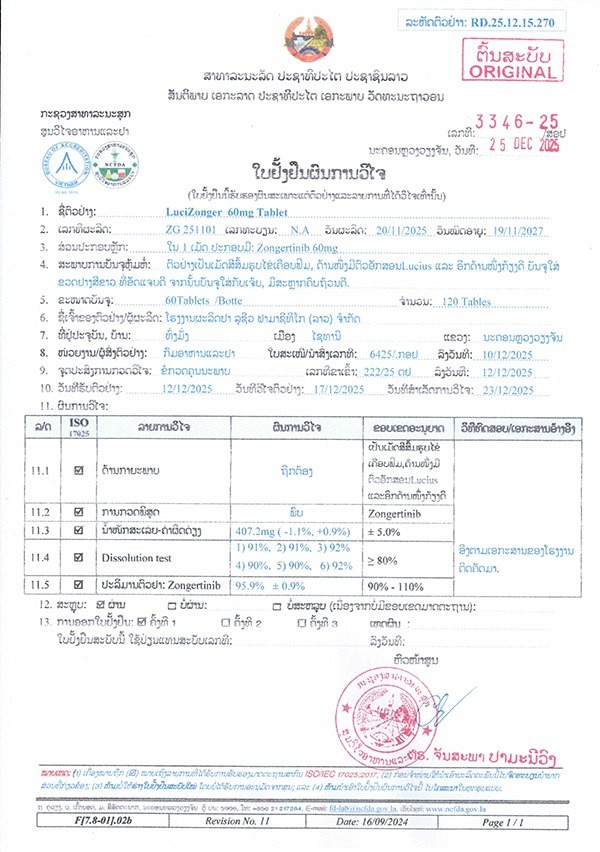
Inspection No.:3346-25
Dosage form:Tablet
Indate:24 months
Zongertinib (LuciZonger) is a kinase inhibitor and an oral, irreversible human epidermal growth factor receptor 2 (HER2/ERBB2) tyrosine kinase inhibitor (TKI) that selectively inhibits HER2 without inhibiting wild-type EGFR. It is administered orally once daily, with or without food.
Patients should be selected for treatment with Zongertinib (LuciZonger) based on the presence of an activating mutation in the HER2 (ERBB2) tyrosine kinase domain in tumor specimens or plasma specimens.
If the mutation is not detected in a plasma specimen, tumor tissue should be tested.
Monitor liver function tests, including ALT, AST, and total bilirubin, at baseline before dosing, every 2 weeks during the first 12 weeks, and monthly thereafter (or as clinically indicated); patients with transaminase elevations should be tested more frequently.
LVEF should be assessed before initiating treatment, monitored periodically during treatment, and monitored as clinically indicated.
Monitor for new or worsening symptoms suggestive of interstitial lung disease (ILD)/pneumonitis, such as dyspnea, cough, and fever.
Zongertinib (LuciZonger) is administered orally once daily, with or without food. Tablets should be swallowed whole with water and must not be split, crushed, or chewed. Continue treatment until disease progression or unacceptable toxicity.
The recommended dosage of Zongertinib (LuciZonger) is determined by body weight and must be strictly differentiated by weight category; categories must not be combined:
Patients weighing less than 90 kg: 120 mg once daily, i.e., 2 × 60 mg tablets per dose.
Patients weighing 90 kg or more: 180 mg once daily, i.e., 3 × 60 mg tablets per dose.
If a missed dose is recognized within 12 hours, take the missed dose as soon as possible.
If more than 12 hours have elapsed since the missed dose, skip the missed dose and take the next dose at the originally scheduled time.
If vomiting occurs after taking a dose, do not take an additional dose; take the next dose at the originally scheduled time.
Zongertinib (LuciZonger) may cause fetal harm when administered to pregnant women. Inform pregnant women and women of reproductive potential of the potential risk to the fetus. Verify pregnancy status in women of reproductive potential before initiating Zongertinib (LuciZonger) treatment.
Because of the potential for serious adverse reactions in breastfed children, advise women not to breastfeed during treatment with Zongertinib (LuciZonger) and for 2 weeks after the last dose.
Contraception (females): Advise women of reproductive potential to use effective contraception during treatment with Zongertinib (LuciZonger) and for 2 weeks after the last dose.
Fertility (females): Based on animal study results, Zongertinib (LuciZonger) may impair female fertility; the effect in female animals was reversible.
Fertility (males): Based on animal study results, Zongertinib (LuciZonger) may impair fertility in males of reproductive potential; testicular effects in male animals were irreversible within the 4-week recovery period.
The safety and efficacy of Zongertinib (LuciZonger) in pediatric patients have not been established.
Among 292 patients with HER2 (ERBB2)-mutated non-squamous non-small cell lung cancer who received Zongertinib (LuciZonger) in clinical studies, 47% were 65 years of age and older and 13% were 75 years of age and older. No overall differences in the safety or efficacy of Zongertinib (LuciZonger) were observed between geriatric patients and younger adult patients.
No clinically significant differences in the pharmacokinetics of Zongertinib (LuciZonger) were observed in patients with mild hepatic impairment (AST > ULN and total bilirubin ≤ ULN; or total bilirubin > 1 to 1.5 times ULN with any AST).
The effect of moderate hepatic impairment (total bilirubin > 1.5 to 3 times ULN with any AST) or severe hepatic impairment (total bilirubin > 3 times ULN with any AST) on the pharmacokinetics of Zongertinib (LuciZonger) has not been studied.
No clinically significant differences in the pharmacokinetics of Zongertinib (LuciZonger) were observed in patients with mild renal impairment (estimated glomerular filtration rate [eGFR] 60 to < 90 mL/min).
The effect of moderate renal impairment (eGFR 30 to < 60 mL/min), severe renal impairment (eGFR 15 to < 30 mL/min), or end-stage renal disease (eGFR < 15 mL/min) on the pharmacokinetics of Zongertinib (LuciZonger) has not been studied.
1. Dose Reduction Schedule
For patients whose current dose is 180 mg: first reduce to 120 mg, second reduce to 60 mg, and permanently discontinue thereafter.
For patients whose current dose is 120 mg: first reduce to 60 mg, and the second reduction is permanent discontinuation.
Patients who cannot tolerate 60 mg once daily should permanently discontinue Zongertinib (LuciZonger).
2. Dose Adjustment for Hepatotoxicity
For Grade 3 or 4 ALT and/or AST elevation without total bilirubin elevation, interrupt Zongertinib (LuciZonger) until recovery to Grade 1 or lower or baseline, then resume at a reduced dose level.
For Grade 3 total bilirubin elevation, interrupt Zongertinib (LuciZonger) until recovery to Grade 1 or lower or baseline, then resume at a reduced dose level.
For Grade 4 total bilirubin elevation, permanently discontinue Zongertinib (LuciZonger).
For ALT or AST ≥ 3 times ULN with total bilirubin ≥ 2 times ULN, permanently discontinue Zongertinib (LuciZonger).
3. Dose Adjustment for Left Ventricular Dysfunction
For LVEF 40% to 50% with a 10% to 19% decrease from baseline, interrupt Zongertinib (LuciZonger) until recovery to Grade 1 or lower or within 10% of baseline; if recovery to Grade 1 or lower occurs within 4 weeks, resume at the same dose level; if recovery to Grade 1 or lower does not occur within 4 weeks, permanently discontinue Zongertinib (LuciZonger).
For LVEF 20% to 39%, or a decrease from baseline of ≥ 20%, interrupt Zongertinib (LuciZonger) until recovery to Grade 1 or lower or within 10% of baseline; if recovery to Grade 1 or lower occurs within 4 weeks, resume at a reduced dose level; if recovery to Grade 1 or lower does not occur within 4 weeks, permanently discontinue Zongertinib (LuciZonger); for symptomatic congestive heart failure, permanently discontinue Zongertinib (LuciZonger).
4. Dose Adjustment for Interstitial Lung Disease/Pneumonitis
For Grade 2 ILD/pneumonitis, withhold Zongertinib (LuciZonger) until resolution, then resume at a reduced dose level; if ILD/pneumonitis recurs, permanently discontinue Zongertinib (LuciZonger).
For Grade 3 or 4 ILD/pneumonitis, permanently discontinue Zongertinib (LuciZonger).
5. Dose Adjustment for Diarrhea
For Grade 2 diarrhea, maintain the Zongertinib (LuciZonger) dose and initiate antidiarrheal treatment; for Grade 2 diarrhea that persists for ≥ 2 days despite antidiarrheal treatment, interrupt Zongertinib (LuciZonger) until recovery to Grade 1 or lower, then resume at a reduced dose level.
For Grade 3 or 4 diarrhea, interrupt Zongertinib (LuciZonger) until recovery to Grade 1 or lower, then resume at a reduced dose level; if diarrhea does not resolve to Grade 1 or lower within 14 days despite optimal supportive care (including antidiarrheal treatment) and treatment interruption, permanently discontinue Zongertinib (LuciZonger).
6. Dose Adjustment for Other Adverse Reactions
For Grade 3 adverse reactions, interrupt Zongertinib (LuciZonger) until recovery to Grade 1 or lower or baseline, then resume at a reduced dose level.
For Grade 4 adverse reactions, permanently discontinue Zongertinib (LuciZonger).
Avoid concomitant use of Zongertinib (LuciZonger) with strong CYP3A inducers. If concomitant use cannot be avoided, increase the Zongertinib (LuciZonger) dose according to body weight:
Patients weighing less than 90 kg: increase from 120 mg to 240 mg.
Patients weighing 90 kg or more: increase from 180 mg to 360 mg.
After discontinuation of the CYP3A inducer, resume the Zongertinib (LuciZonger) dose that was taken before initiation of the CYP3A inducer 7 to 14 days after discontinuation of the CYP3A inducer.
Most common adverse reactions (≥ 20%): diarrhea, rash, hepatotoxicity, fatigue, nausea, musculoskeletal pain, and upper respiratory tract infection.
Most common laboratory abnormalities (≥ 20%): lymphopenia, alanine aminotransferase increased, hemoglobin decreased, leukopenia, aspartate aminotransferase increased, creatine kinase increased, calcium decreased, albumin decreased, bilirubin increased, lipase increased, triglycerides increased, activated partial thromboplastin time prolonged, sodium decreased, bicarbonate decreased, magnesium decreased, potassium decreased, thrombocytopenia, and alkaline phosphatase increased.
Most common Grade 3 or 4 laboratory abnormalities (≥ 2%): lymphopenia, alanine aminotransferase increased, aspartate aminotransferase increased, gamma-glutamyl transferase increased, potassium decreased, and neutropenia.
Zongertinib (LuciZonger) can cause severe and life-threatening hepatotoxicity, including drug-induced liver injury.
Monitor liver function tests, including ALT, AST, and total bilirubin, at baseline before dosing, every 2 weeks during the first 12 weeks, and monthly thereafter (or as clinically indicated); patients with transaminase elevations should be tested more frequently; interrupt, reduce, or permanently discontinue Zongertinib (LuciZonger) based on the severity of adverse reactions.
Zongertinib (LuciZonger) can cause severe left ventricular dysfunction. Decreased LVEF can occur with anti-HER2 therapy, including Zongertinib (LuciZonger). Zongertinib (LuciZonger) has not been studied in patients with a history of clinically significant cardiac disease or with LVEF below 50% before initiating treatment.
Assess LVEF before initiating Zongertinib (LuciZonger) treatment, monitor periodically during treatment, and monitor as clinically indicated; interrupt, reduce, or permanently discontinue Zongertinib (LuciZonger) based on the severity of adverse reactions.
Zongertinib (LuciZonger) can cause severe and life-threatening ILD/pneumonitis.
Monitor for new or worsening symptoms suggestive of ILD/pneumonitis, such as dyspnea, cough, and fever; interrupt, reduce, or permanently discontinue Zongertinib (LuciZonger) based on the severity of confirmed ILD/pneumonitis.
Zongertinib (LuciZonger) may cause fetal harm when administered to pregnant women. Pregnant women and women of reproductive potential are high-risk populations.
Inform pregnant women and women of reproductive potential of the potential risk to the fetus; advise women of reproductive potential to use effective contraception during treatment with Zongertinib (LuciZonger) and for 2 weeks after the last dose.
Avoid concomitant use of Zongertinib (LuciZonger) with strong CYP3A inducers. If concomitant use cannot be avoided, increase the Zongertinib (LuciZonger) dose.
Zongertinib (LuciZonger) is a substrate of cytochrome P450 (CYP) 3A. Strong CYP3A4 inducers can decrease Zongertinib (LuciZonger) exposure and may reduce the efficacy of Zongertinib (LuciZonger). The effect of moderate CYP3A inducers on the Cmax and AUC of Zongertinib (LuciZonger) when coadministered with Zongertinib (LuciZonger) is not known.
No clinically significant differences in the pharmacokinetics of Zongertinib (LuciZonger) were observed when coadministered with strong CYP3A inhibitors, P-glycoprotein (P-gp) inhibitors, breast cancer resistance protein (BCRP) inhibitors, or rabeprazole (a proton pump inhibitor, a gastric acid-reducing agent).
Zongertinib (LuciZonger) is a BCRP inhibitor. Zongertinib (LuciZonger) can increase exposure to BCRP substrates and may increase the risk of adverse reactions associated with these substrates.
Avoid concomitant use of Zongertinib (LuciZonger) with certain BCRP substrates for which small increases in concentration may lead to serious adverse reactions; use alternative treatments. If concomitant use cannot be avoided, monitor patients closely for adverse reactions.
For other BCRP substrates, monitor for increased adverse reactions and adjust the dose of these substrates as clinically needed.
Target: Zongertinib (LuciZonger) is a human epidermal growth factor receptor 2 (HER2) kinase inhibitor that selectively inhibits HER2 without inhibiting wild-type EGFR.
Binding Mode: Zongertinib (LuciZonger) is an oral, irreversible HER2 tyrosine kinase inhibitor that exerts its effect by binding to the HER2 tyrosine kinase domain and inhibiting its phosphorylation. Zongertinib (LuciZonger) is itself the active drug and not a prodrug; total radioactivity in human plasma is predominantly unchanged Zongertinib (LuciZonger), accounting for 75%.
In vitro, Zongertinib (LuciZonger) inhibits HER2 phosphorylation, inhibits downstream HER2 signaling (phosphorylation of extracellular signal-regulated kinase [ERK]), and inhibits the proliferation of lung cancer cells harboring activating mutations in the HER2 tyrosine kinase domain.

Lucius Pharmaceuticals (Lao) LTD. (Lucius Pharmaceuticals), with its manufacturing campus in Laos located in the capital city of Vientiane in 2020, officially begins its great journey to make effective and affordable medicines available to people in need around the world...More

Lucius Pharmaceutical Co., Ltd., was established in 2020 in Vientiane, the capital of Laos. It aims to offer safe, effective, and affordable medicines globally. With a factory spanning 25,000 square meters, the company manufactures 200+ generic drugs in diverse therapeutic fields.
Address: No.26 Thongmang village, Xaythany district, Vientiane Capital, Laos
E-mail:laoslucius@gmail.com
Name: Lucius
Telegram name: Vira
No.:0085253923643
Telegram name: Vira
No.:0085253923643