Your Health, We Care
Release date: 2026-05-25 15:16:14 Article From: Lucius Laos Recommended: 302
The efficacy and safety of tucatinib are based on a clinical study called HER2CLIMB. This study enrolled 612 adult patients with HER2-positive breast cancer whose cancer was not removable by surgery or had spread to the liver, lungs, bones, and/or brain. All patients had previously received treatment with trastuzumab, pertuzumab, and ado-trastuzumab emtansine before enrollment. Notably, 48% (291 patients) of the enrolled patients already had brain metastases at baseline, of which 60% were active (growing or spreading) and 40% were stable. This makes the HER2CLIMB study distinct from many other trials and more reflective of real-world complex disease scenarios.
Results showed that patients receiving tucatinib in combination with trastuzumab and capecitabine had a median progression-free survival of 7.8 months, compared to 5.6 months for those receiving only trastuzumab and capecitabine. This means the tucatinib regimen reduced the risk of disease progression or death by 46%. In terms of overall survival, the median overall survival was 21.9 months in the tucatinib group versus 17.4 months in the control group, representing an average of 4.5 months longer lived. Subsequent exploratory follow-up analysis (conducted 24 months after the last patient enrollment) showed that the median overall survival in the tucatinib group further extended to 24.7 months, while the control group was 19.2 months. These data demonstrate that the tucatinib regimen provides clinically meaningful survival benefits for patients.
For patients with baseline brain metastases, the tucatinib regimen also performed well. In this subgroup, the median progression-free survival for tucatinib combined with trastuzumab and capecitabine was 7.6 months, compared to only 5.4 months in the control group. Compared to the control group, the tucatinib regimen reduced the risk of disease progression or death by 52% in patients with brain metastases. This result is particularly important because brain metastases are often difficult to treat and have a poor prognosis. The study also included different types of brain metastases (including untreated, progressive after treatment, and stable after treatment), further confirming the potential of tucatinib in controlling intracranial disease.
On November 21, 2025, the U.S. Food and Drug Administration (FDA) approved the regimen of pembrolizu···【more】
Recommended:[list:visits]2025-17-12
Lung cancer is the most rapidly increasing malignant tumor with the fastest increasing morbidity and···【more】
Recommended:[list:visits]2024-09-07
Lucius Pharmaceuticals Version of Vibegron Now Available1.Basic Drug InformationVibegron (generic na···【more】
Recommended:[list:visits]2026-06-08
In recent years, leveraging the World Trade Organization (WTO) patent waiver for least-developed cou···【more】
Recommended:[list:visits]2026-05-08
How Can Chinese Patients Access Generic Drugs from Laos?In recent years, generic drugs from Laos hav···【more】
Recommended:[list:visits]2026-04-08
Lucius Pharmaceuticals version of Ibrutinib is now availableIn a randomized controlled trial of 269 ···【more】
Recommended:[list:visits]2026-03-08
Leveraging the WTO patent waiver for least-developed countries (extended to 2033), Laos has seen rap···【more】
Recommended:[list:visits]2026-31-07
Alectinib Has Been Launched in LaosAlectinib is an oral targeted therapeutic drug belonging to the c···【more】
Recommended:[list:visits]2026-30-07
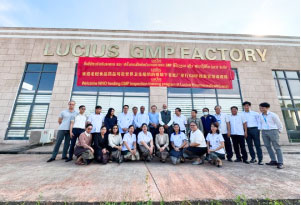
Lucius Pharmaceuticals (Lao) LTD. (Lucius Pharmaceuticals), with its manufacturing campus in Laos located in the capital city of Vientiane in 2020, officially begins its great journey to make effective and affordable medicines available to people in need around the world...More

Lucius Pharmaceutical Co., Ltd., was established in 2020 in Vientiane, the capital of Laos. It aims to offer safe, effective, and affordable medicines globally. With a factory spanning 25,000 square meters, the company manufactures 200+ generic drugs in diverse therapeutic fields.
Address: No.26 Thongmang village, Xaythany district, Vientiane Capital, Laos
E-mail:laoslucius@gmail.com

Name: Lucius

Telegram name: Vira
No.:0085253923643
Telegram name: Vira
No.:0085253923643