Your Health, We Care
Administer orally at approximately the same time each day, either on an empty stomach or with a low-fat meal (e.g., a meal containing approximately 400 calories with fat accounting for less than 25% of the total energy).
The tablets should be swallowed whole. Alternatively, the tablets can be crushed, mixed with water, and administered within 2 hours.
The dosage shall be determined based on the patient's body weight and concurrent use of strong CYP3A4 inhibitors.
If a strong CYP3A4 inhibitor is discontinued, wait for at least 5 half-lives of the inhibitor to elapse in the body before increasing the dose of Revumenib to the standard recommended dose for patients not receiving strong CYP3A4 inhibitors.
If a dose is missed, take the missed dose as soon as possible on the same day, with an interval of at least 12 hours between the missed dose and the next scheduled dose. Resume the regular dosing schedule the following day. Do not take two doses within 12 hours.
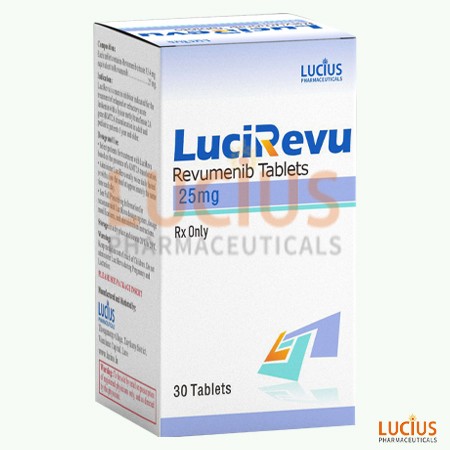
The marketed formulation of this product is Revumenib Citrate, and the dosage is calculated as Revumenib base.
Relapsed or Refractory Acute Leukemia with KMT2A Gene Translocation
Pediatric patients aged ≥ 1 year, weighing < 40 kg, not receiving strong CYP3A4 inhibitors: The recommended dose is 160 mg/m² body surface area (BSA), twice daily. For the total recommended tablet dose based on BSA in patients weighing < 40 kg, refer to the package insert.
Pediatric patients aged ≥ 1 year, weighing < 40 kg, receiving strong CYP3A4 inhibitors: The recommended dose is 95 mg/m² BSA, twice daily. For the total recommended tablet dose based on BSA in patients weighing < 40 kg, refer to the package insert.
Pediatric patients aged ≥ 1 year, weighing ≥ 40 kg, not receiving strong CYP3A4 inhibitors: The recommended dose is 270 mg, twice daily.
Pediatric patients aged ≥ 1 year, weighing ≥ 40 kg, receiving strong CYP3A4 inhibitors: The recommended dose is 160 mg, twice daily.
Treatment with Revumenib should continue until disease progression or unacceptable toxicity occurs. In the absence of the above two conditions, the treatment duration should be at least 6 months to ensure that the patient has sufficient time to achieve a clinical response.
Relapsed or Refractory Acute Leukemia with KMT2A Gene Translocation
Adult patients weighing < 40 kg, not receiving strong CYP3A4 inhibitors: The recommended dose is 160 mg/m² BSA, twice daily. For the total recommended tablet dose based on BSA in patients weighing < 40 kg, refer to the package insert.
Adult patients weighing < 40 kg, receiving strong CYP3A4 inhibitors: The recommended dose is 95 mg/m² BSA, twice daily. For the total recommended tablet dose based on BSA in patients weighing < 40 kg, refer to the package insert.
Adult patients weighing ≥ 40 kg, not receiving strong CYP3A4 inhibitors: The recommended dose is 270 mg, twice daily.
Adult patients weighing ≥ 40 kg, receiving strong CYP3A4 inhibitors: The recommended dose is 160 mg, twice daily.
Treatment with Revumenib should continue until disease progression or unacceptable toxicity occurs. In the absence of the above two conditions, the treatment duration should be at least 6 months to ensure that the patient has sufficient time to achieve a clinical response.
If a patient experiences adverse reactions, consider treatment interruption, dose reduction, or permanent discontinuation based on the severity of the adverse reactions.
For the adverse reaction dose adjustment scheme and dose reduction gradient recommended in the package insert, refer to the Principles of Dose Adjustment for Adverse Reactions, as well as the Dose Reduction Standards for Patients Not Receiving Strong CYP3A4 Inhibitors and Dose Reduction Standards for Patients Receiving Strong CYP3A4 Inhibitors below, respectively.
When differentiation syndrome is suspected, initiate systemic glucocorticoid therapy immediately and monitor the patient's hemodynamic parameters until symptoms are completely resolved, with monitoring lasting for at least 3 days. If severe symptoms persist for more than 48 hours despite systemic glucocorticoid therapy, or if the patient develops life-threatening symptoms (e.g., pulmonary symptoms requiring ventilator support), discontinue Revumenib administration. Resume the original dose when symptoms improve to Grade ≤ 1.
If the patient's white blood cell count increases or rises rapidly, initiate hydroxyurea therapy; consider concomitant leukapheresis if clinically indicated. The dose of hydroxyurea can be gradually reduced only after leukocytosis is improved or resolved.
QT Interval Prolongation (480–500 ms):Discontinue Revumenib administration, test electrolyte levels, and correct hypokalemia and hypomagnesemia. Resume the original dose when the QT interval returns to ≤ 480 ms.
QT Interval Prolongation (> 500 ms, Grade 3):Discontinue Revumenib administration, test electrolyte levels, and correct hypokalemia and hypomagnesemia. Resume treatment at a reduced dose when the QT interval returns to ≤ 480 ms, referring to the Dose Reduction Standards for Patients Not Receiving Strong CYP3A4 Inhibitors and Dose Reduction Standards for Patients Receiving Strong CYP3A4 Inhibitors.
QT Interval Prolongation with Life-threatening Arrhythmia-related Symptoms or Signs (e.g., Torsades de Pointes, Polymorphic Ventricular Tachycardia, Grade 4):Permanently discontinue Revumenib.
Serum Potassium Level 3.6–3.9 mEq/L and/or Serum Magnesium Level 1.7–1.9 mg/dL
Supplement potassium and/or magnesium, and continue Revumenib treatment without dose adjustment.
Serum Potassium Level ≤ 3.5 mEq/L and/or Serum Magnesium Level ≤ 1.6 mg/dL
Supplement potassium and/or magnesium, and recheck electrolyte levels within 24 hours. Discontinue Revumenib administration, continue electrolyte supplementation, and resume the original dose when electrolyte levels are completely corrected.
Discontinue Revumenib treatment until the adverse reaction resolves to Grade 1 or returns to baseline. If the adverse reaction resolves within ≤ 7 days, resume the original dose; if the same Grade ≥ 3 adverse reaction recurs, discontinue treatment until symptoms resolve to Grade 1 or baseline, then resume at a reduced dose, referring to the Dose Reduction Standards for Patients Not Receiving Strong CYP3A4 Inhibitors and Dose Reduction Standards for Patients Receiving Strong CYP3A4 Inhibitors. If the adverse reaction resolves after > 7 days, directly resume at a reduced dose, referring to the corresponding dose reduction standards; permanently discontinue Revumenib if the same Grade ≥ 3 adverse reaction recurs again.
Grade 4 Neutropenia or Thrombocytopenia:Discontinue Revumenib treatment until symptoms resolve to Grade ≤ 2 or return to baseline, then resume the original dose. If unexplained Grade 4 neutropenia or thrombocytopenia recurs, discontinue treatment until symptoms resolve to Grade ≤ 3, then resume at a reduced dose, referring to the corresponding dose reduction standards.
Grade ≥ 3 Hypersensitivity Reaction:Permanently discontinue Revumenib.
For patients weighing ≥ 40 kg with an initial dose of 270 mg orally twice daily: Adjust the reduced dose to 160 mg orally twice daily.
For patients weighing < 40 kg with an initial dose of 160 mg/m² BSA orally twice daily: Adjust the reduced dose to 95 mg/m² BSA orally twice daily.
For patients weighing ≥ 40 kg with an initial dose of 160 mg orally twice daily: Adjust the reduced dose to 110 mg orally twice daily.
For patients weighing < 40 kg with an initial dose of 95 mg/m² BSA orally twice daily: Adjust the reduced dose to 65 mg/m² BSA orally twice daily.
FDA,2025.10
The recommended dosage of Revuforj varies according to the patient's body weight and concomitant···【more】
Recommended:632026-28-01
Take Revuforj exactly as directed by your healthcare provider. Do not change your dose or stop takin···【more】
Recommended:722026-28-01
The recommended dosage of Revuforj varies according to the patient's body weight and concomitant use of strong CYP3A4 inhibitors.Administration of RevuforjFor patients aged 1 y···【more】
Article source:Lucius LaosRelease date:2026-01-28Recommended:63
Take Revuforj exactly as directed by your healthcare provider. Do not change your dose or stop taking Revuforj unless your healthcare provider tells you to do so.What is the recomm···【more】
Article source:Lucius LaosRelease date:2026-01-28Recommended:72

Lucius Pharmaceuticals (Lao) LTD. (Lucius Pharmaceuticals), with its manufacturing campus in Laos located in the capital city of Vientiane in 2020, officially begins its great journey to make effective and affordable medicines available to people in need around the world...More

Lucius Pharmaceutical Co., Ltd., was established in 2020 in Vientiane, the capital of Laos. It aims to offer safe, effective, and affordable medicines globally. With a factory spanning 25,000 square meters, the company manufactures 200+ generic drugs in diverse therapeutic fields.
Address:No.26 Thongmang village, Xaythany district, Vientiane Capital, Laos
E-mail:laoslucius@gmail.com
Whatsapp: