Your Health, We Care
Release date: 2026-06-05 11:57:25 Article From: Lucius Laos Recommended: 354
The safety of Repotrectinib was evaluated in 426 patients in the TRIDENT-1 study. Overall, most adverse reactions were Grade 1 or 2, but some patients experienced Grade 3 or 4 serious events. The most common adverse reactions (incidence ≥20%) included dizziness, dysgeusia, peripheral neuropathy, constipation, dyspnea, fatigue, ataxia, cognitive impairment, myasthenia, and nausea. These adverse reactions cover the nervous system, digestive system, respiratory system, and systemic symptoms. Among them, nervous system-related reactions (dizziness, dysgeusia, peripheral neuropathy, ataxia, cognitive impairment) were the most prominent.
Dizziness was the most frequently reported adverse reaction, with an incidence of 65%, including vertigo. Dysgeusia (taste abnormality or loss) also occurred at a high rate and may affect patient appetite and quality of life. Peripheral neuropathy manifested as paresthesia, numbness, burning sensation, etc., with incidence not specifically listed but among the most common. Constipation and nausea were common gastrointestinal reactions. Dyspnea (including exertional dyspnea) and fatigue significantly impacted daily activities. Ataxia often presented as gait and balance disorders. Cognitive impairment included memory decline and attention deficits. Myasthenia may manifest as limb weakness. Most of these reactions are manageable but require close monitoring.
For the above adverse reactions, physicians should adopt individualized management strategies. For dizziness and ataxia, patients are advised to avoid driving and hazardous activities, and fall prevention measures should be considered. For dysgeusia, dietary flavor adjustments may be helpful. For peripheral neuropathy, neurotrophic drugs or dose adjustment can be considered. For constipation, laxatives or dietary modification may be used. For dyspnea, interstitial lung disease should be ruled out. For fatigue, adequate rest and nutritional support are encouraged. For cognitive impairment, cognitive training may be performed. For myasthenia, creatine phosphokinase levels should be monitored. The general principle is to withhold, reduce, then resume dosing or permanently discontinue based on severity. Patient education is crucial; patients should be advised to promptly report any new or worsening symptoms.
On November 21, 2025, the U.S. Food and Drug Administration (FDA) approved the regimen of pembrolizu···【more】
Recommended:8472025-17-12
Lung cancer is the most rapidly increasing malignant tumor with the fastest increasing morbidity and···【more】
Recommended:10452024-09-07
Recently, Lao Lucius Pharmaceutical (Lucius Pharmaceuticals) issued a solemn statement regarding cou···【more】
Recommended:2812026-10-10
Lucius Pharmaceuticals Version of Vibegron Now Available1.Basic Drug InformationVibegron (generic na···【more】
Recommended:3972026-06-08
In recent years, leveraging the World Trade Organization (WTO) patent waiver for least-developed cou···【more】
Recommended:5872026-05-08
How Can Chinese Patients Access Generic Drugs from Laos?In recent years, generic drugs from Laos hav···【more】
Recommended:5512026-04-08
Lucius Pharmaceuticals version of Ibrutinib is now availableIn a randomized controlled trial of 269 ···【more】
Recommended:4452026-03-08
Leveraging the WTO patent waiver for least-developed countries (extended to 2033), Laos has seen rap···【more】
Recommended:6022026-31-07
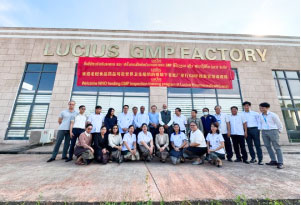
Lucius Pharmaceuticals (Lao) LTD. (Lucius Pharmaceuticals), with its manufacturing campus in Laos located in the capital city of Vientiane in 2020, officially begins its great journey to make effective and affordable medicines available to people in need around the world...More

Lucius Pharmaceutical Co., Ltd., was established in 2020 in Vientiane, the capital of Laos. It aims to offer safe, effective, and affordable medicines globally. With a factory spanning 25,000 square meters, the company manufactures 200+ generic drugs in diverse therapeutic fields.
Address: No.26 Thongmang village, Xaythany district, Vientiane Capital, Laos
E-mail:laoslucius@gmail.com

Name: Lucius

Telegram name: Vira
No.:0085253923643
Telegram name: Vira
No.:0085253923643