Your Health, We Care
Please read the following precautions carefully, including important safety information, clinical indicators requiring monitoring, and usage recommendations for special populations, to ensure rational drug use and reduce potential risks.
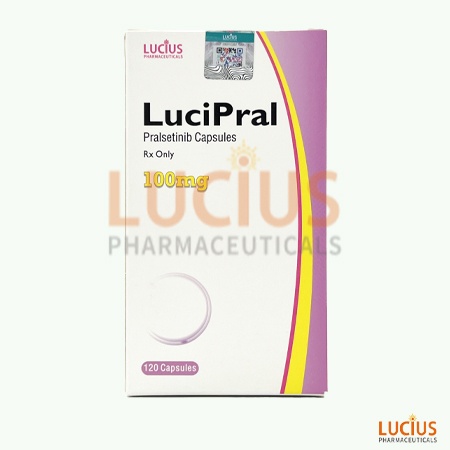
Patients receiving pralsetinib treatment may develop severe, life-threatening, or even fatal ILD/pneumonitis. Among patients treated with pralsetinib, the incidence of pneumonitis is 12%, of which 3.3% are grade 3–4 cases and 0.2% are fatal reactions. Pulmonary symptoms suggestive of ILD/pneumonitis should be monitored. For patients presenting with acute or worsening respiratory symptoms (e.g., dyspnea, cough, fever), pralsetinib administration should be suspended, and ILD-related examinations should be performed promptly. Depending on the severity of confirmed ILD, pralsetinib may be withheld, dose-reduced, or permanently discontinued.
The incidence of hypertension is 35%, with grade 3 hypertension accounting for 18%. Overall, 8% of patients had treatment interrupted due to hypertension, and 4.8% had their dose reduced. Hypertension occurring during treatment is most commonly managed with antihypertensive medications. Patients with uncontrolled hypertension should not initiate pralsetinib treatment. Blood pressure control should be optimized prior to starting pralsetinib. Monitor blood pressure 1 week after treatment initiation, then at least once monthly thereafter, and as clinically indicated. Initiate or adjust antihypertensive therapy as appropriate. Depending on the severity of hypertension, pralsetinib may be withheld, dose-reduced, or permanently discontinued.
Among patients receiving pralsetinib, 1.5% experienced severe hepatic adverse reactions. The incidence of aspartate aminotransferase (AST) elevation is 49% (7% of which are grade 3 or 4), and the incidence of alanine aminotransferase (ALT) elevation is 37% (4.8% of which are grade 3 or 4). The median time to first AST elevation is 15 days (range: 5 days to 2.5 years), and the median time to first ALT elevation is 24 days (range: 7 days to 3.7 years). Monitor AST and ALT before starting pralsetinib, every 2 weeks during the first 3 months of treatment, then monthly thereafter, and as clinically indicated. Depending on the severity of hepatotoxicity, pralsetinib may be withheld, dose-reduced, or permanently discontinued.
Severe, even fatal, hemorrhagic events may occur with pralsetinib use. Among patients treated with pralsetinib, the incidence of grade ≥3 events is 4.1%, including 1 fatal hemorrhagic event. Patients with severe or life-threatening bleeding should permanently discontinue pralsetinib.
Cases of TLS have been reported in patients with medullary thyroid carcinoma receiving pralsetinib treatment. TLS risk may exist in patients with rapidly proliferating tumors, high tumor burden, renal insufficiency, or dehydration. High-risk patients should be closely monitored; appropriate preventive measures (including hydration) should be considered, and treatment should be administered as clinically indicated.
Impaired wound healing may occur in patients treated with drugs that inhibit the vascular endothelial growth factor (VEGF) signaling pathway. Therefore, pralsetinib may adversely affect wound healing. Pralsetinib should be withheld for at least 5 days before elective surgery. Administration should not resume for at least 2 weeks after major surgery or until the wound is fully healed. The safety of resuming pralsetinib after resolution of wound healing complications has not been established.
Based on animal study findings and its mechanism of action, pralsetinib may cause fetal harm when administered to pregnant women. Pregnant women should be informed of the potential risks to the fetus. Females of reproductive potential are advised to use effective non-hormonal contraception during pralsetinib treatment and for 2 weeks after the last dose. Males with female partners of reproductive potential are advised to use effective contraception during pralsetinib treatment and for 1 week after the last dose.
from FDA,2024.03
Please keep all scheduled appointments with your doctor and the laboratory on time. Your doctor will···【more】
Recommended:632026-16-01
Pralsetinib may interfere with the efficacy of hormonal contraceptives (including birth control pill···【more】
Recommended:722026-16-01
Please keep all scheduled appointments with your doctor and the laboratory on time. Your doctor will conduct laboratory tests before treatment to determine whether your cancer is e···【more】
Article source:Lucius LaosRelease date:2026-01-16Recommended:63
Pralsetinib may interfere with the efficacy of hormonal contraceptives (including birth control pills, patches, vaginal rings, implants, or injections). These should not be used as···【more】
Article source:Lucius LaosRelease date:2026-01-16Recommended:72

Lucius Pharmaceuticals (Lao) LTD. (Lucius Pharmaceuticals), with its manufacturing campus in Laos located in the capital city of Vientiane in 2020, officially begins its great journey to make effective and affordable medicines available to people in need around the world...More

Lucius Pharmaceutical Co., Ltd., was established in 2020 in Vientiane, the capital of Laos. It aims to offer safe, effective, and affordable medicines globally. With a factory spanning 25,000 square meters, the company manufactures 200+ generic drugs in diverse therapeutic fields.
Address:No.26 Thongmang village, Xaythany district, Vientiane Capital, Laos
E-mail:laoslucius@gmail.com
Whatsapp: