Your Health, We Care
Release date: 2026-07-09 17:36:50 Article From: Lucius Laos Recommended: 336
During treatment with pirtobrutinib, infections are a relatively common and potentially fatal serious adverse reaction. Due to the drug's impact on the immune system, the patient's ability to fight off pathogens is reduced, which may lead to new infections or reactivation of latent infections. These infections can involve multiple sites such as the respiratory tract, urinary tract, and skin, and in severe cases progress to sepsis or pneumonia, even becoming life‑threatening. To reduce risk, your doctor may administer specific vaccines (e.g., pneumococcal vaccine, influenza vaccine) before or during treatment, and may also prescribe prophylactic antiviral or antibacterial agents as appropriate. You yourself should closely monitor your condition and contact your medical team immediately if any of the following signs appear:
1. Elevated body temperature (fever) or chills, even without other discomfort;
2. General fatigue, muscle aches, or flu‑like symptoms;
3. Sore throat, cough, sputum production, or pain on urination, suggesting local infection.
Especially when these symptoms continue to worsen, do not wait, because early anti‑infective intervention can significantly improve outcomes. Your doctor will also regularly monitor white blood cell counts in your complete blood count as an auxiliary indicator of infection risk. Be sure to complete all preventive measures as prescribed and report any abnormalities promptly.
Pirtobrutinib can interfere with platelet function and the coagulation process, leading to varying degrees of bleeding events, ranging from mild skin ecchymosis to severe internal hemorrhage that may be fatal. If you are concurrently taking anticoagulants (e.g., warfarin, rivaroxaban, apixaban) or antiplatelet agents (e.g., aspirin, clopidogrel), the bleeding risk is further increased and requires extra caution. Your doctor will assess your coagulation status before treatment and may adjust the concomitant medication regimen. You should learn to recognise the following urgent bleeding signs and keep them in mind:
1. Bright red blood or tarry black stools during bowel movements, or urine that turns pink or dark tea‑colored;
2. Unexplained nosebleeds, gingival oozing, or persistent bleeding after minor trauma;
3. Vomiting bright red or coffee‑ground‑like material, or coughing up blood or clots;
4. Sudden severe headache, confusion, slurred speech, or visual changes (which may indicate intracranial hemorrhage);
5. Extensive ecchymosis on the skin, or rapid enlargement of existing bruises.
If any of the above symptoms occur, seek medical attention immediately, even if symptoms seem mild, because bleeding can deteriorate rapidly. Before planning surgery or dental procedures, inform your doctor in advance, as pirtobrutinib usually needs to be temporarily withheld to reduce perioperative bleeding risk.
Pirtobrutinib suppresses bone marrow hematopoietic function, and decreases in white blood cells, platelets, and red blood cells are very common in clinical practice, sometimes reaching severe grades. Leukopenia weakens the anti‑infective defense, thrombocytopenia increases bleeding tendency, and anemia leads to fatigue, shortness of breath, and reduced exercise tolerance related to low red cell mass. Therefore, regular blood draws for complete blood counts must be performed as ordered so that dose adjustments or supportive therapies (e.g., growth factors, transfusions) can be given in a timely manner. In addition to blood cells, liver safety also requires high attention – some patients may experience elevated transaminases, elevated bilirubin, or even severe liver injury manifesting as liver failure or hepatic encephalopathy. For this reason, your doctor will regularly monitor liver function parameters before the first dose and throughout the entire treatment course. If you experience any of the following warning symptoms of liver injury, seek medical help immediately:
1. Persistent distending pain or tenderness in the right upper abdomen;
2. Noticeably darkening of urine color (deep brown or tea‑colored);
3. Yellowing of the sclera or skin, or pruritus;
4. Nausea, vomiting, marked loss of appetite accompanied by fatigue.
Any abnormal laboratory values or symptoms may signal the need for dose adjustment or treatment interruption; do not continue taking the drug on your own.
On November 21, 2025, the U.S. Food and Drug Administration (FDA) approved the regimen of pembrolizu···【more】
Recommended:[list:visits]2025-17-12
Lung cancer is the most rapidly increasing malignant tumor with the fastest increasing morbidity and···【more】
Recommended:[list:visits]2024-09-07
Lucius Pharmaceuticals Version of Vibegron Now Available1.Basic Drug InformationVibegron (generic na···【more】
Recommended:[list:visits]2026-06-08
In recent years, leveraging the World Trade Organization (WTO) patent waiver for least-developed cou···【more】
Recommended:[list:visits]2026-05-08
How Can Chinese Patients Access Generic Drugs from Laos?In recent years, generic drugs from Laos hav···【more】
Recommended:[list:visits]2026-04-08
Lucius Pharmaceuticals version of Ibrutinib is now availableIn a randomized controlled trial of 269 ···【more】
Recommended:[list:visits]2026-03-08
Leveraging the WTO patent waiver for least-developed countries (extended to 2033), Laos has seen rap···【more】
Recommended:[list:visits]2026-31-07
Alectinib Has Been Launched in LaosAlectinib is an oral targeted therapeutic drug belonging to the c···【more】
Recommended:[list:visits]2026-30-07
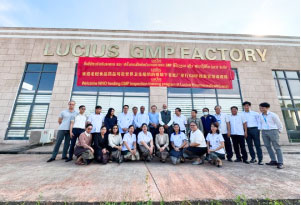
Lucius Pharmaceuticals (Lao) LTD. (Lucius Pharmaceuticals), with its manufacturing campus in Laos located in the capital city of Vientiane in 2020, officially begins its great journey to make effective and affordable medicines available to people in need around the world...More

Lucius Pharmaceutical Co., Ltd., was established in 2020 in Vientiane, the capital of Laos. It aims to offer safe, effective, and affordable medicines globally. With a factory spanning 25,000 square meters, the company manufactures 200+ generic drugs in diverse therapeutic fields.
Address: No.26 Thongmang village, Xaythany district, Vientiane Capital, Laos
E-mail:laoslucius@gmail.com

Name: Lucius

Telegram name: Vira
No.:0085253923643
Telegram name: Vira
No.:0085253923643