Your Health, We Care
Release date: 2026-01-27 09:04:48 Article From: Lucius Laos Recommended: 290
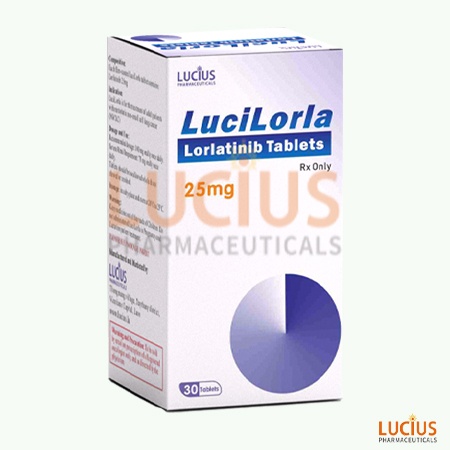
Lorlatinib is a third-generation ALK/ROS1 tyrosine kinase inhibitor, primarily indicated for the treatment of ALK-positive or ROS1-positive advanced non-small cell lung cancer (NSCLC). Its core mechanism of action lies in inhibiting the activity of abnormal gene fusion proteins, thereby blocking tumor cell proliferation signaling pathways and delaying disease progression. It exhibits particularly significant efficacy in patients with brain metastases and those with drug-resistant mutations.
For tumors harboring ALK gene rearrangement or ROS1 gene fusion, it precisely inhibits the activity of mutant proteins, reducing cancer cell growth and metastasis.
As a third-generation agent, it can overcome drug resistance associated with first-generation (e.g., crizotinib) and second-generation (e.g., alectinib) ALK inhibitors.
It can effectively cross the blood-brain barrier to enter the central nervous system, inhibit intracranial metastatic lesions, and reduce the risk of disease progression in patients with brain metastases.
Clinical data demonstrate that lorlatinib achieves a high control rate for lung cancer brain metastases.
It significantly prolongs progression-free survival (PFS) in clinical trials, with some patients achieving long-term disease stabilization.
It alleviates lung cancer-related symptoms such as cough and dyspnea, improving patients' quality of life.
Patients with ALK-positive advanced NSCLC, especially those who experience disease recurrence after prior treatment with other ALK inhibitors.
ROS1-positive patients (confirmation via genetic testing is required).
Common adverse reactions include hypercholesterolemia, edema, and weight gain. Severe cases may develop pneumonia or cardiac disorders, necessitating close clinical monitoring.
Long-term use may lead to new gene mutations (e.g., ALK L1196M mutation). Treatment regimens should be adjusted based on dynamic genetic testing results.
Concurrent use with certain antiepileptic drugs or antibiotics may impair therapeutic efficacy. Patients must inform their physicians of their complete medication history in advance.
Important Note: Lorlatinib is a prescription medication. Prior to administration, mutation status must be confirmed through genetic testing, and an individualized treatment plan should be formulated under the guidance of a physician. During treatment, regular re-evaluations including imaging scans, blood tests, and genetic status assessments are required to timely adjust the dosage or switch the treatment regimen.
On November 21, 2025, the U.S. Food and Drug Administration (FDA) approved the regimen of pembrolizu···【more】
Recommended:[list:visits]2025-17-12
Lung cancer is the most rapidly increasing malignant tumor with the fastest increasing morbidity and···【more】
Recommended:[list:visits]2024-09-07
Lucius Pharmaceuticals Version of Vibegron Now Available1.Basic Drug InformationVibegron (generic na···【more】
Recommended:[list:visits]2026-06-08
In recent years, leveraging the World Trade Organization (WTO) patent waiver for least-developed cou···【more】
Recommended:[list:visits]2026-05-08
How Can Chinese Patients Access Generic Drugs from Laos?In recent years, generic drugs from Laos hav···【more】
Recommended:[list:visits]2026-04-08
Lucius Pharmaceuticals version of Ibrutinib is now availableIn a randomized controlled trial of 269 ···【more】
Recommended:[list:visits]2026-03-08
Leveraging the WTO patent waiver for least-developed countries (extended to 2033), Laos has seen rap···【more】
Recommended:[list:visits]2026-31-07
Alectinib Has Been Launched in LaosAlectinib is an oral targeted therapeutic drug belonging to the c···【more】
Recommended:[list:visits]2026-30-07
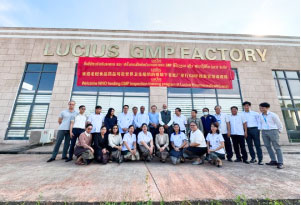
Lucius Pharmaceuticals (Lao) LTD. (Lucius Pharmaceuticals), with its manufacturing campus in Laos located in the capital city of Vientiane in 2020, officially begins its great journey to make effective and affordable medicines available to people in need around the world...More

Lucius Pharmaceutical Co., Ltd., was established in 2020 in Vientiane, the capital of Laos. It aims to offer safe, effective, and affordable medicines globally. With a factory spanning 25,000 square meters, the company manufactures 200+ generic drugs in diverse therapeutic fields.
Address: No.26 Thongmang village, Xaythany district, Vientiane Capital, Laos
E-mail:laoslucius@gmail.com

Name: Lucius

Telegram name: Vira
No.:0085253923643
Telegram name: Vira
No.:0085253923643