Your Health, We Care
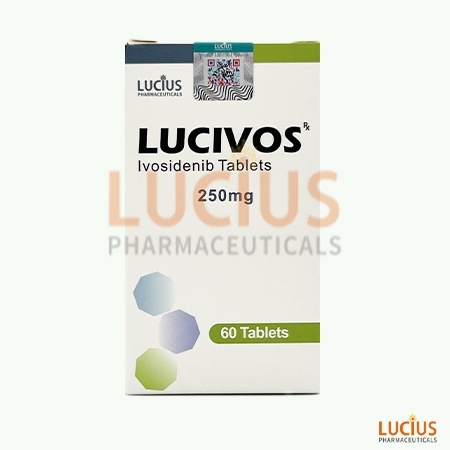
The metabolism of ivosidenib is susceptible to the effects of other drugs. Close monitoring is required when co-administering with CYP3A4 modulators and other relevant medications. Patients are advised to disclose all medications they are taking, including prescription drugs, over-the-counter drugs, and herbal products.
Ivosidenib is primarily metabolized by the CYP3A4 enzyme. In vitro studies have demonstrated that ivosidenib can induce CYP3A4, thereby facilitating its own metabolism. Additionally, ivosidenib may also induce the CYP2B6, CYP2C8, and CYP2C9 isoenzymes.
Ivosidenib can inhibit P-glycoprotein (P-gp) and organic anion transporter (OAT) 3, but it has no inhibitory effect on breast cancer resistance protein (BCRP), organic anion transporting polypeptide (OATP) 1B1, OATP1B3, organic anion transporter (OAT) 1, and organic cation transporter (OCT) 2. Ivosidenib is a substrate of P-gp, but not of BCRP, OATP1B1, or OATP1B3.
(1) Moderate or strong CYP3A4 inhibitors
May increase the systemic exposure of ivosidenib, thereby elevating the risk of toxicities (e.g., QT prolongation). It is recommended to consider alternative drugs with weaker CYP3A4 inhibitory effects.
If co-administration with a strong CYP3A4 inhibitor is unavoidable, the dose of ivosidenib should be reduced from 500 mg once daily to 250 mg once daily.
After discontinuation of the strong CYP3A4 inhibitor (after at least 5 elimination half-lives of the inhibitor), the dose of ivosidenib can be resumed to 500 mg once daily.
Patients receiving concomitant moderate or strong CYP3A4 inhibitors should be closely monitored for ivosidenib-related toxicities (e.g., QT prolongation).
(2) Strong CYP3A4 inducers
May decrease the exposure of ivosidenib. Co-administration should be avoided.
(1) Sensitive CYP3A4 substrates
Ivosidenib may decrease the exposure of such drugs, thereby reducing their efficacy. Co-administration should be avoided; alternative drugs that are not sensitive CYP3A4 substrates are recommended. If co-administration is unavoidable, monitor whether the efficacy of the substrate drug is reduced.
(2) Drugs that prolong QT interval
Co-administration with ivosidenib may produce an additive effect, further prolonging the QT interval. Co-administration should be avoided; alternative drugs that do not prolong the QT interval are recommended. If co-administration is unavoidable, more frequent monitoring of electrocardiogram (ECG) and electrolyte levels is required.
(1) Antacids:
No clinically significant pharmacokinetic differences were observed when co-administered with ivosidenib.
(2) Antiarrhythmic drugs:
Co-administration may increase the risk of QT prolongation. Concomitant use should be avoided, and alternative treatment regimens should be considered; if co-administration is unavoidable, more frequent monitoring of electrocardiogram (ECG) and serum electrolyte levels is required.
(3) Azole antifungal agents (e.g., fluconazole, itraconazole, ketoconazole)
Itraconazole is a strong CYP3A4 inhibitor, which can increase the area under the curve (AUC) of ivosidenib by 269% with no significant effect on its peak concentration.
Fluconazole is a moderate CYP3A4 inhibitor. Simulation results showed that a single dose of ivosidenib increased its AUC by 173% with unchanged peak concentration; at steady state, the AUC and peak concentration of ivosidenib were increased by 190% and 152%, respectively.
Conversely, as a CYP3A4 inducer, ivosidenib may significantly reduce the systemic exposure of CYP3A4 substrates such as itraconazole.
In view of the above interactions, for strong CYP3A4 inhibitors (e.g., itraconazole), it is recommended to prioritize alternative antifungal drugs with weaker CYP3A4 inhibitory effects; if co-administration is unavoidable, the dose of ivosidenib should be reduced from 500 mg once daily to 250 mg once daily, and the original dose should be resumed after discontinuation of the inhibitor for at least 5 elimination half-lives, with enhanced monitoring of ECG and electrolytes. For moderate inhibitors (e.g., fluconazole), alternative drugs should also be considered; if co-administration is necessary, close monitoring of ECG and electrolytes is required. In addition, since ivosidenib may reduce the efficacy of CYP3A4 substrates such as itraconazole or ketoconazole, co-administration with these drugs is not recommended.
Co-administration may increase the risk of QT prolongation. Concomitant use should be avoided, and alternative treatments should be considered; if unavoidable, more frequent monitoring of ECG and serum electrolytes is required.
Co-administration may increase the risk of QT prolongation. Concomitant use should be avoided, and alternative treatments should be considered; if unavoidable, more frequent monitoring of ECG and serum electrolytes is required.
(6) Histamine H2 receptor antagonists:
No clinically significant pharmacokinetic differences were observed when co-administered with ivosidenib.
(7) Hormonal contraceptives:
Ivosidenib may decrease the plasma concentrations of hormonal contraceptives, thereby reducing their contraceptive efficacy. Non-hormonal contraceptive methods are recommended.
(8) Proton pump inhibitors:
No clinically significant pharmacokinetic differences were observed when co-administered with ivosidenib.
(9) Rifampicin:
Simulation studies showed that co-administration with rifampicin can decrease the AUC and peak concentration of ivosidenib by 33% and 19%, respectively. Co-administration with rifampicin should be avoided.
from FDA,2023.10
Ivosidenib is mainly metabolized by the CYP3A4 enzyme. Co-administration with drugs that affect the ···【more】
Recommended:872026-04-01
Ivosidenib is mainly metabolized by the CYP3A4 enzyme. Co-administration with drugs that affect the activity of this enzyme may significantly alter the plasma concentration of ivos···【more】
Article source:Lucius LaosRelease date:2026-01-04Recommended:87
Ivosidenib has interactions with a variety of drugs, which may affect its efficacy or increase the risk of adverse reactions. Close monitoring and dosage adjustment are required wh···【more】
Article source:Lucius LaosRelease date:2026-01-04Recommended:59

Lucius Pharmaceuticals (Lao) LTD. (Lucius Pharmaceuticals), with its manufacturing campus in Laos located in the capital city of Vientiane in 2020, officially begins its great journey to make effective and affordable medicines available to people in need around the world...More

Lucius Pharmaceutical Co., Ltd., was established in 2020 in Vientiane, the capital of Laos. It aims to offer safe, effective, and affordable medicines globally. With a factory spanning 25,000 square meters, the company manufactures 200+ generic drugs in diverse therapeutic fields.
Address:No.26 Thongmang village, Xaythany district, Vientiane Capital, Laos
E-mail:laoslucius@gmail.com
Whatsapp: