Your Health, We Care
Release date: 2026-01-04 13:48:57 Article From: Lucius Laos Recommended: 278
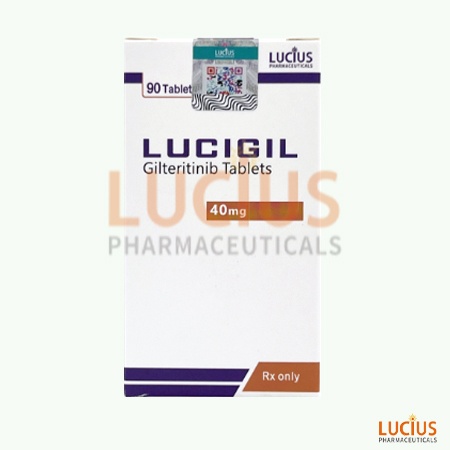
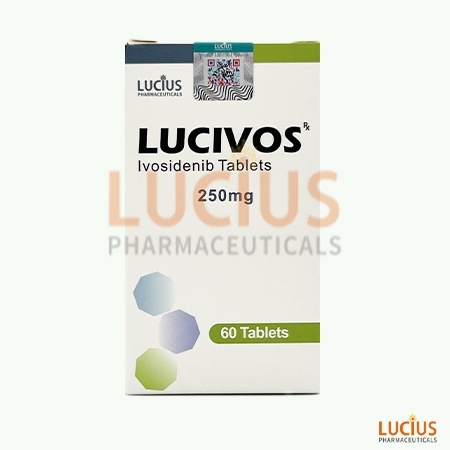
Ivosidenib is mainly metabolized by the CYP3A4 enzyme. Co-administration with drugs that affect the activity of this enzyme may significantly alter the plasma concentration of ivosidenib, requiring careful evaluation and the implementation of appropriate management measures.
Listed below are some examples of clinically significant interactions (with a focus on the risk of QT interval prolongation):
Ivosidenib, a drug with the highest risk of QT interval prolongation, may enhance the QTc-prolonging effect of chloroquine.
Management Recommendations: Consider alternative drug combinations. If co-administration is unavoidable, monitor for QTc interval prolongation and ventricular arrhythmias. Patients with other risk factors for QT prolongation may be at a higher risk. Consider adjusting the treatment regimen.
Ivosidenib, a drug with the highest risk of QT interval prolongation, may enhance the QTc-prolonging effect of citalopram. Co-administration should be avoided.
Ivosidenib, a drug with the highest risk of QT interval prolongation, may enhance the QTc-prolonging effect of clarithromycin. Co-administration should be avoided.
Ivosidenib, a drug with the highest risk of QT interval prolongation, may enhance the QTc-prolonging effect of clofazimine.
Management Recommendations: Consider alternative drug combinations. If co-administration is unavoidable, monitor for QTc interval prolongation and ventricular arrhythmias. Patients with other risk factors for QT prolongation may be at a higher risk. Consider adjusting the treatment regimen.
The above are only typical examples. Actual drug interactions may involve a broader range of drug classes (e.g., antacids, hormonal drugs, etc.). During treatment with ivosidenib, patients should proactively inform their physicians of all medications they are taking (including prescription drugs, over-the-counter drugs, traditional Chinese medicines and dietary supplements), and strictly follow the doctor's advice for dosage adjustment and monitoring.
Contact your healthcare provider immediately if you experience any of the following symptoms:
Differentiation Syndrome (applicable only to patients with AML or MDS): Fever, sudden weight gain, difficulty breathing, chest pain, swelling of the legs.
Cardiac Arrhythmias: Irregular heartbeat, blurred vision, dizziness, fainting, loss of consciousness.
1. For the treatment of acute myeloid leukemia (AML) with IDH1 mutation:
2. Applicable to newly diagnosed adult patients aged 75 years or older, or adult patients who cannot tolerate intensive chemotherapy.
3. Applicable to adult patients with relapsed cancer after prior treatment (relapsed or refractory AML).
4. For the treatment of relapsed or refractory myelodysplastic syndromes (MDS) with IDH1 mutation in adult patients.
5. For the treatment of advanced or metastatic cholangiocarcinoma with IDH1 mutation in adult patients who have received prior treatment.
On November 21, 2025, the U.S. Food and Drug Administration (FDA) approved the regimen of pembrolizu···【more】
Recommended:[list:visits]2025-17-12
Lung cancer is the most rapidly increasing malignant tumor with the fastest increasing morbidity and···【more】
Recommended:[list:visits]2024-09-07
Lucius Pharmaceuticals Version of Vibegron Now Available1.Basic Drug InformationVibegron (generic na···【more】
Recommended:[list:visits]2026-06-08
In recent years, leveraging the World Trade Organization (WTO) patent waiver for least-developed cou···【more】
Recommended:[list:visits]2026-05-08
How Can Chinese Patients Access Generic Drugs from Laos?In recent years, generic drugs from Laos hav···【more】
Recommended:[list:visits]2026-04-08
Lucius Pharmaceuticals version of Ibrutinib is now availableIn a randomized controlled trial of 269 ···【more】
Recommended:[list:visits]2026-03-08
Leveraging the WTO patent waiver for least-developed countries (extended to 2033), Laos has seen rap···【more】
Recommended:[list:visits]2026-31-07
Alectinib Has Been Launched in LaosAlectinib is an oral targeted therapeutic drug belonging to the c···【more】
Recommended:[list:visits]2026-30-07
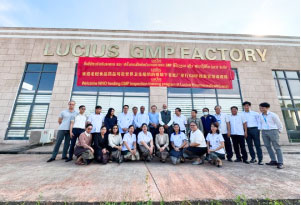
Lucius Pharmaceuticals (Lao) LTD. (Lucius Pharmaceuticals), with its manufacturing campus in Laos located in the capital city of Vientiane in 2020, officially begins its great journey to make effective and affordable medicines available to people in need around the world...More

Lucius Pharmaceutical Co., Ltd., was established in 2020 in Vientiane, the capital of Laos. It aims to offer safe, effective, and affordable medicines globally. With a factory spanning 25,000 square meters, the company manufactures 200+ generic drugs in diverse therapeutic fields.
Address: No.26 Thongmang village, Xaythany district, Vientiane Capital, Laos
E-mail:laoslucius@gmail.com

Name: Lucius

Telegram name: Vira
No.:0085253923643
Telegram name: Vira
No.:0085253923643