Your Health, We Care
Healthcare professionals and patients must carefully read and fully understand the following precautions before initiating treatment, which contain critical safety information and essential clinical management guidelines.
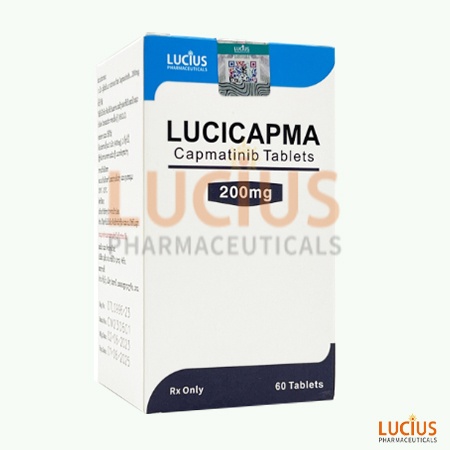
Patients treated with capmatinib may develop fatal interstitial lung disease (ILD)/pneumonitis. In the GEOMETRY mono-1 study, ILD/pneumonitis occurred in 4.8% of patients receiving capmatinib, including 1.9% of patients with grade 3 ILD/pneumonitis and 1 patient (0.3%) who died from the condition. Nine patients (2.4%) discontinued capmatinib due to ILD/pneumonitis.
Patients should be monitored for the emergence or worsening of pulmonary symptoms suggestive of ILD/pneumonitis (e.g., dyspnea, cough, fever). Capmatinib should be immediately withheld in patients with suspected ILD/pneumonitis; permanent discontinuation of capmatinib is required if no other underlying cause is identified.
Hepatotoxicity may occur in patients treated with capmatinib. In the GEOMETRY mono-1 study, elevations in alanine aminotransferase (ALT)/aspartate aminotransferase (AST) were observed in 15% of patients receiving capmatinib. Grade 3 or 4 ALT/AST elevations occurred in 7% of patients. Three patients (0.8%) discontinued capmatinib due to ALT/AST elevations.
Liver function tests (including ALT, AST, and total bilirubin) should be monitored before the initiation of capmatinib, every 2 weeks during the first 3 months of treatment, monthly thereafter, or as clinically indicated. For patients with elevated transaminases or bilirubin, the frequency of monitoring should be increased. Capmatinib should be withheld, dose-reduced, or permanently discontinued based on the severity of the adverse reaction.
Elevations in amylase and lipase levels may occur in patients treated with capmatinib. In the GEOMETRY mono-1 study, amylase/lipase elevations were reported in 14% of patients receiving capmatinib. Grade 3 or 4 amylase elevations and lipase elevations occurred in 7% and 1.9% of patients, respectively. Three patients (0.8%) discontinued capmatinib due to amylase/lipase elevations. One patient (0.3%) developed pancreatitis (grade 3), which resulted in permanent discontinuation of capmatinib.
Amylase and lipase levels should be monitored at baseline and periodically during capmatinib treatment. Capmatinib should be temporarily withheld, dose-reduced, or permanently discontinued based on the severity of the adverse reaction.
Severe hypersensitivity reactions have been reported in patients treated with capmatinib in clinical trials outside of GEOMETRY mono-1. Signs and symptoms of hypersensitivity reactions include fever, chills, pruritus, rash, hypotension, nausea, and vomiting. Capmatinib should be temporarily withheld or permanently discontinued based on the severity of the adverse reaction.
Based on animal studies, capmatinib has the potential to cause photosensitivity reactions. In the GEOMETRY mono-1 study, patients were advised to take sun protection measures (e.g., using sunscreen or wearing protective clothing) during capmatinib treatment. Patients are recommended to limit direct exposure to ultraviolet (UV) light while receiving capmatinib.
Based on animal study findings and its mechanism of action, capmatinib may cause fetal harm if administered to pregnant women. Pregnant women should be informed of the potential risk to the fetus. Females of reproductive potential are advised to use effective contraception during capmatinib treatment and for 1 week after the last dose. Males with female partners of reproductive potential are advised to use effective contraception during capmatinib treatment and for 1 week after the last dose.
The most common adverse reactions (incidence ≥ 20%) were: edema (59%), nausea (46%), musculoskeletal pain (40%), fatigue (34%), vomiting (28%), dyspnea (25%), cough (21%), and decreased appetite (21%). The most common grade 3 adverse reactions (incidence ≥ 2%) were: edema (13%), fatigue (8%), dyspnea (7%), pneumonitis (6%), musculoskeletal pain (4.3%), nausea (2.4%), and vomiting (2.4%). Grade 4 dyspnea and pneumonitis were reported in 0.5% of patients, respectively.
Clinically relevant adverse reactions observed in < 10% of patients included: pruritus (including allergic pruritus), interstitial lung disease/pneumonitis, cellulitis, acute kidney injury (including renal failure), urticaria, and acute pancreatitis.
Selected laboratory abnormalities that worsened from baseline (incidence ≥ 20%) in patients receiving capmatinib included: decreased albumin (72%), increased creatinine (65%), decreased lymphocytes (45%), increased ALT (39%), increased amylase (34%), increased alkaline phosphatase (32%), increased gamma-glutamyl transferase (30%), increased lipase (29%), increased AST (28%), decreased phosphate (26%), decreased leukocytes (25%), increased potassium (25%), decreased hemoglobin (24%), decreased sodium (24%), and decreased glucose (23%).
from FDA,2023.03
Camatinib is indicated for the treatment of specific types of non-small cell lung cancer that has sp···【more】
Recommended:582026-09-01
During treatment with capmatinib, your doctor will need to regularly monitor your disease progressio···【more】
Recommended:612026-09-01
Camatinib is indicated for the treatment of specific types of non-small cell lung cancer that has spread to other parts of the body. Belonging to the class of kinase inhibitors, ca···【more】
Article source:Lucius LaosRelease date:2026-01-09Recommended:58
During treatment with capmatinib, your doctor will need to regularly monitor your disease progression to ensure the medication works effectively as intended. Blood tests may be req···【more】
Article source:Lucius LaosRelease date:2026-01-09Recommended:61
Capmatinib is a lung cancer drug that targets specific genetic mutations, especially for patients with non-small cell lung cancer with METex14 skipping mutations. The drug helps to···【more】
Article source:Lucius LaosRelease date:2024-08-09Recommended:301
Capmatinib is a targeted therapy for the treatment of non-small cell lung cancer harboring mutations in MET exon 14. It helps patients control the spread of pathological cells by i···【more】
Article source:Lucius LaosRelease date:2024-08-09Recommended:296
Capmatinib is a targeted therapy for the treatment of non-small cell lung cancer (NSCLC) in patients with mutations in the MET gene, particularly MET exon 14 skipping mutations.Wha···【more】
Article source:Lucius LaosRelease date:2024-08-08Recommended:263

Lucius Pharmaceuticals (Lao) LTD. (Lucius Pharmaceuticals), with its manufacturing campus in Laos located in the capital city of Vientiane in 2020, officially begins its great journey to make effective and affordable medicines available to people in need around the world...More

Lucius Pharmaceutical Co., Ltd., was established in 2020 in Vientiane, the capital of Laos. It aims to offer safe, effective, and affordable medicines globally. With a factory spanning 25,000 square meters, the company manufactures 200+ generic drugs in diverse therapeutic fields.
Address:No.26 Thongmang village, Xaythany district, Vientiane Capital, Laos
E-mail:laoslucius@gmail.com
Whatsapp: