Your Health, We Care
Release date: 2026-06-16 16:46:13 Article From: Lucius Laos Recommended: 245
Tepotinib must be taken strictly as prescribed by your doctor; do not change the dose or stop treatment on your own. The standard dosing regimen is 450 mg once daily, taken with food (i.e., with a meal) to optimize drug absorption and potentially reduce certain gastrointestinal discomfort. The tablet should be swallowed whole, and must not be chewed, crushed, or split. For patients who have difficulty swallowing solids, the tablet can be dissolved in 1 ounce (about 30 mL) of non-carbonated water, wait until the tablet breaks into small pieces (note that the tablet will not completely dissolve), and then drink the mixture within one hour. If administration via a nasogastric tube is required, dissolve the tablet in the same manner and complete the tube infusion within one hour after dissolution. It is recommended to take the medication at approximately the same time each day to maintain stable blood concentrations. If you forget a dose, take it as soon as you remember; however, if it is less than 8 hours until your next scheduled dose, skip the missed dose and take the next dose at the regular time. Do not take a double dose to make up for a missed one. If vomiting occurs after taking a dose of Tepotinib, do not take a replacement dose; just wait and take the next dose at the regular time. For storage, Tepotinib should be kept at room temperature (20°C to 25°C) in the original package (child-resistant blister card), and all medicines should be stored out of the reach of children.
The efficacy of Tepotinib was validated in the VISION clinical trial. This trial enrolled two distinct groups of patients with metastatic non-small cell lung cancer harboring MET exon 14 skipping mutations: the first group was the "treatment-naïve" group, meaning patients who had not received any prior systemic therapy for their metastatic disease before taking Tepotinib; the second group was the "previously treated" group, meaning patients who had received one or more other treatments (such as chemotherapy, immunotherapy, etc.) before taking Tepotinib. The trial measured two key endpoints: objective response rate and duration of response. Objective response rate is the percentage of patients whose tumors shrank significantly or disappeared completely; duration of response is the length of time from the first confirmed tumor response until tumor regrowth or spread. Results showed that Tepotinib helped a significant proportion of patients achieve tumor shrinkage or delay in growth. Specifically, among 164 treatment-naïve patients and among 149 previously treated patients, Tepotinib demonstrated consistent anti-tumor activity. It must be clearly stated that Tepotinib cannot cure cancer, and the above results are from clinical trial data; not all patients will achieve the same benefit. Each patient's treatment response may vary due to individual differences.
Based on the clinical trial design and results, Tepotinib is indicated for two specific groups of patients with metastatic non-small cell lung cancer. The first group is "treatment-naïve" patients, i.e., individuals who, after initial diagnosis of METex14-mutated mNSCLC, have not received any prior systemic anticancer therapy (such as chemotherapy, targeted therapy, or immunotherapy) for their metastatic disease. For these patients, Tepotinib can be used as a first-line treatment option. The second group is "previously treated" patients, i.e., individuals who have received other treatment regimens for mNSCLC (e.g., platinum-based chemotherapy, immune checkpoint inhibitors, etc.) but whose disease has progressed. In both groups, Tepotinib has shown effects in helping to shrink or slow tumor growth. However, regardless of which group a patient belongs to, the absolute prerequisite for initiating Tepotinib treatment is: the presence of MET exon 14 skipping mutation must be confirmed in tumor tissue through a validated biomarker test. Patients without this specific genetic alteration should not use this drug. Furthermore, the safety and efficacy of Tepotinib in children have not been established, so it is limited to adult use only. If you or your loved one fall into either of the above groups and test positive for METex14, it is recommended to have an in-depth discussion with your doctor about whether Tepotinib is suitable as your current treatment option.
On November 21, 2025, the U.S. Food and Drug Administration (FDA) approved the regimen of pembrolizu···【more】
Recommended:[list:visits]2025-17-12
Lung cancer is the most rapidly increasing malignant tumor with the fastest increasing morbidity and···【more】
Recommended:[list:visits]2024-09-07
Lucius Pharmaceuticals Version of Vibegron Now Available1.Basic Drug InformationVibegron (generic na···【more】
Recommended:[list:visits]2026-06-08
In recent years, leveraging the World Trade Organization (WTO) patent waiver for least-developed cou···【more】
Recommended:[list:visits]2026-05-08
How Can Chinese Patients Access Generic Drugs from Laos?In recent years, generic drugs from Laos hav···【more】
Recommended:[list:visits]2026-04-08
Lucius Pharmaceuticals version of Ibrutinib is now availableIn a randomized controlled trial of 269 ···【more】
Recommended:[list:visits]2026-03-08
Leveraging the WTO patent waiver for least-developed countries (extended to 2033), Laos has seen rap···【more】
Recommended:[list:visits]2026-31-07
Alectinib Has Been Launched in LaosAlectinib is an oral targeted therapeutic drug belonging to the c···【more】
Recommended:[list:visits]2026-30-07
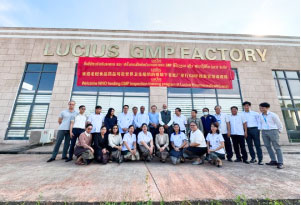
Lucius Pharmaceuticals (Lao) LTD. (Lucius Pharmaceuticals), with its manufacturing campus in Laos located in the capital city of Vientiane in 2020, officially begins its great journey to make effective and affordable medicines available to people in need around the world...More

Lucius Pharmaceutical Co., Ltd., was established in 2020 in Vientiane, the capital of Laos. It aims to offer safe, effective, and affordable medicines globally. With a factory spanning 25,000 square meters, the company manufactures 200+ generic drugs in diverse therapeutic fields.
Address: No.26 Thongmang village, Xaythany district, Vientiane Capital, Laos
E-mail:laoslucius@gmail.com

Name: Lucius

Telegram name: Vira
No.:0085253923643
Telegram name: Vira
No.:0085253923643