Your Health, We Care
Lorlatinib May Cause Severe Adverse Reactions, Including the Following Categories:
Before administration, it is imperative to identify the types of drugs that are contraindicated for concurrent use with lorlatinib.
Cognitive impairment (e.g., forgetfulness, confusion), mood changes (e.g., depression, suicidal ideation), psychiatric abnormalities (e.g., hallucinations such as visual or auditory hallucinations), seizures, and alterations in language function or sleep patterns may occur. If new or worsening symptoms of the above CNS adverse reactions appear, immediately inform healthcare professionals.
Most patients experience increased blood cholesterol and triglyceride levels during lorlatinib treatment.
If hyperlipidemia develops during treatment, healthcare professionals may prescribe lipid-lowering medications. For patients already taking such drugs, dosage adjustments may be required.
Healthcare providers should arrange routine blood tests to monitor lipid levels before treatment initiation, 1–2 months after treatment starts, and throughout the entire course of therapy.
Severe bradycardia or arrhythmias may occur. Healthcare professionals need to monitor patients’ cardiac rhythm via electrocardiogram (ECG) before treatment and during the treatment period. If symptoms such as dizziness, syncope, or arrhythmia manifest, promptly notify healthcare providers. In some cases, cardiac adverse reactions may be severe, and healthcare professionals may recommend treatment suspension or implantation of a cardiac pacemaker.
Severe, even life-threatening, pulmonary inflammation may develop during treatment. Swelling caused by inflammation can be fatal, with symptoms similar to those of lung cancer. If new or worsening pulmonary symptoms arise—such as dyspnea, shortness of breath, cough, or fever—immediately consult healthcare professionals.
Healthcare providers must monitor blood pressure before treatment initiation, 2 weeks after treatment starts, and at least once monthly during treatment. If hypertension occurs, antihypertensive medications may be prescribed or dosage adjustments made. Should symptoms like headache, dizziness, blurred vision, chest pain, or shortness of breath appear, promptly inform healthcare professionals.
Elevated blood glucose levels may occur in patients. Healthcare professionals should monitor blood glucose via blood tests before and during treatment, and may prescribe or adjust antidiabetic medications as needed to control glucose levels. If new or worsening hyperglycemic symptoms emerge—including extreme thirst, polyuria, unusual hunger, nausea, fatigue, or confusion—immediately notify healthcare providers.
In the event of severe adverse reactions during treatment, healthcare professionals may adjust the dosage, suspend treatment, or permanently discontinue lorlatinib.
FDA,2021.03
Lorlatinib is a targeted therapy indicated for the treatment of ALK-positive non-small cell lung can···【more】
Recommended:632026-26-01
Lorlatinib is a targeted therapy indicated for the treatment of specific ALK or ROS1-positive advanc···【more】
Recommended:782026-26-01
Lorlatinib is a targeted therapy indicated for the treatment of ALK-positive non-small cell lung cancer (NSCLC). Its dietary restrictions primarily aim to avoid foods that may inte···【more】
Article source:Lucius LaosRelease date:2026-01-26Recommended:63
Lorlatinib is a targeted therapy indicated for the treatment of specific ALK or ROS1-positive advanced non-small cell lung cancer (NSCLC). It must be administered strictly in accor···【more】
Article source:Lucius LaosRelease date:2026-01-26Recommended:78
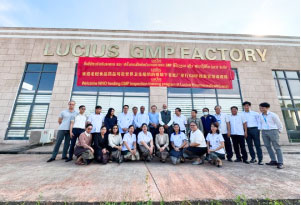
Lucius Pharmaceuticals (Lao) LTD. (Lucius Pharmaceuticals), with its manufacturing campus in Laos located in the capital city of Vientiane in 2020, officially begins its great journey to make effective and affordable medicines available to people in need around the world...More

Lucius Pharmaceutical Co., Ltd., was established in 2020 in Vientiane, the capital of Laos. It aims to offer safe, effective, and affordable medicines globally. With a factory spanning 25,000 square meters, the company manufactures 200+ generic drugs in diverse therapeutic fields.
Address:No.26 Thongmang village, Xaythany district, Vientiane Capital, Laos
E-mail:laoslucius@gmail.com
Whatsapp: