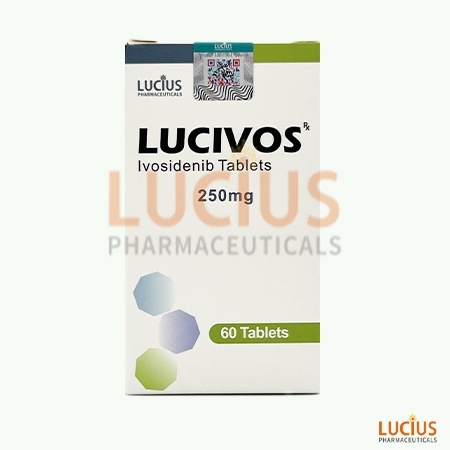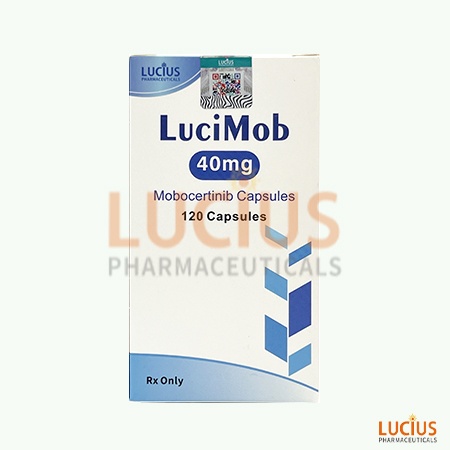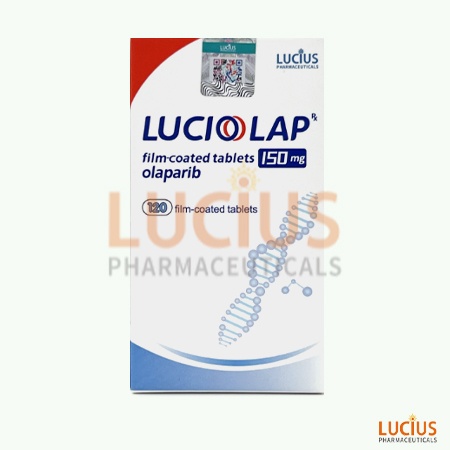
Your Health, We Care
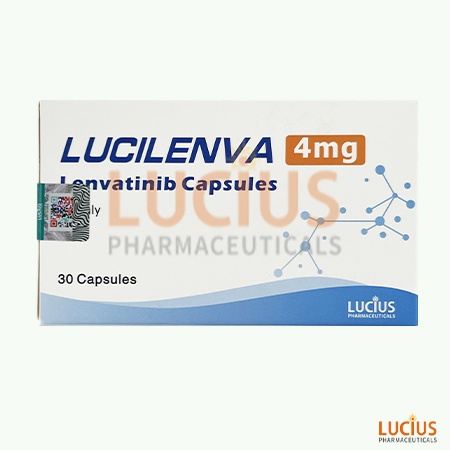
Lenvatinib is mainly metabolized via CYP3A4.
It can inhibit CYP isozymes 2C8, 1A2, 2B6, 2C9, 2C19, 2D6 and 3A, as well as UGT1A1, 1A4 and 1A9. It does not inhibit CYP isozymes 2A6 or 2E1, nor does it inhibit UGT1A6, 2B7, or aldehyde oxidase. Lenvatinib can induce CYP3A; it does not induce CYP isozymes 1A1, 1A2, 2B6 or 2C9, nor does it induce UGT1A1, 1A4, 1A6, 1A9 or 2B7.
In vitro, lenvatinib is a substrate of P-glycoprotein (P-gp) and breast cancer resistance protein (BCRP), but not a substrate of organic anion transporter (OAT) 1, OAT3, organic cation transporter (OCT) 1, OCT2, organic anion transporting polypeptide (OATP) 1B1, OATP1B3, multidrug and toxin extrusion (MATE) 1, MATE2-K, or bile salt export pump (BSEP). In vivo, it has no potential to inhibit MATE1, MATE2-K, OCT1, OCT2, OAT1, OAT3, BSEP, OATP1B1 or OATP1B3.
Drugs Affecting Hepatic Microsomal Enzymes and/or Efflux Transport Systems
CYP3A, P-gp and BCRP Inhibitors: Clinically significant pharmacokinetic interactions are unlikely to occur.
CYP3A and P-gp Inducers: Clinically significant pharmacokinetic interactions are unlikely to occur.
Drugs Metabolized via Hepatic Microsomal Enzymes
CYP3A4 Substrates: No clinically significant pharmacokinetic interactions are expected.
CYP2C8 Substrates: No clinically significant pharmacokinetic interactions are expected.
Pharmacological interactions (additive effects on QT interval prolongation) may occur. Concomitant use of lenvatinib with drugs known to prolong the QT/QTc interval should be avoided. Electrocardiogram (ECG) monitoring is recommended during combination therapy; meanwhile, any electrolyte abnormalities should be monitored and corrected regularly at baseline and during treatment.
Antiarrhythmic Drugs (Class IA, e.g., quinidine, procainamide; and Class III, e.g., amiodarone, sotalol): Additive effects on QT interval prolongation may occur. ECG monitoring should be performed regularly; electrolyte abnormalities should be monitored and corrected regularly at baseline and during treatment.
Ketoconazole: Ketoconazole increases the peak concentration (Cmax) and area under the curve (AUC) of lenvatinib by 19% and 15%, respectively.
Midazolam: Clinically significant pharmacokinetic interactions are unlikely to occur.
Repaglinide: Clinically significant pharmacokinetic interactions are unlikely to occur.
Rifampicin: A single dose of rifampicin increases the Cmax and AUC of lenvatinib by 33% and 31%, respectively. When rifampicin is administered once daily for 21 days with a single dose of lenvatinib on Day 15, it decreases the AUC of lenvatinib by 18%, with no change in plasma Cmax.
from FDA,2024.06

Lucius Pharmaceuticals (Lao) LTD. (Lucius Pharmaceuticals), with its manufacturing campus in Laos located in the capital city of Vientiane in 2020, officially begins its great journey to make effective and affordable medicines available to people in need around the world...More

Lucius Pharmaceutical Co., Ltd., was established in 2020 in Vientiane, the capital of Laos. It aims to offer safe, effective, and affordable medicines globally. With a factory spanning 25,000 square meters, the company manufactures 200+ generic drugs in diverse therapeutic fields.
Address:No.26 Thongmang village, Xaythany district, Vientiane Capital, Laos
E-mail:laoslucius@gmail.com
Whatsapp: