Your Health, We Care
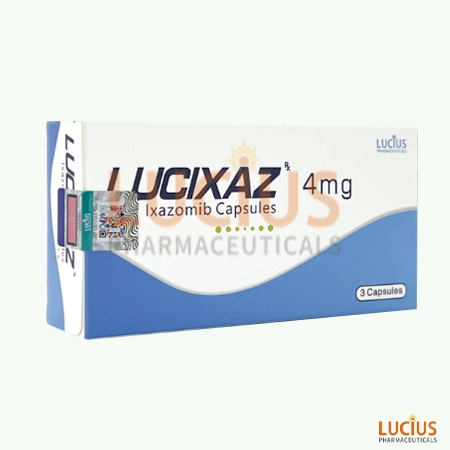
This product is for oral administration, with a frequency of once weekly. A fixed weekly administration day and time must be set. The treatment cycle is 4 weeks, with administration required for the first 3 weeks of each cycle.
When this product needs to be administered on the same day as dexamethasone, they must not be taken simultaneously. Dexamethasone should be taken with meals, while this product must be taken on an empty stomach.
The capsules should be taken with water and swallowed whole. They must not be crushed, chewed, or opened.
If vomiting occurs after administration, no additional dose is required, and subsequent treatment should be continued according to the original administration schedule.
In case of delayed or missed administration, a missed dose may only be supplemented if the interval until the next scheduled administration is ≥ 72 hours. If the interval is less than 72 hours, the missed dose must not be supplemented, and the dose must not be doubled at the next administration.
Patients must be instructed to take ixazomib strictly as prescribed by a physician. Prior to the start of treatment, patients must be fully informed of all administration-related instructions. Overdose of ixazomib may result in death.
The recommended initial dosage regimen is a 28-day treatment cycle: ixazomib is administered once weekly at a dose of 4 mg on Days 1, 8, and 15 of each cycle; the combined lenalidomide is administered once daily at a dose of 25 mg on Days 1–21 of each cycle; the combined dexamethasone is administered at a dose of 40 mg on Days 1, 8, 15, and 22 of each cycle.
Treatment should be continued until disease progression or the occurrence of intolerable toxic reactions.
For detailed dosage information on lenalidomide and dexamethasone, refer to their respective package inserts.
Adverse drug reactions may require temporary suspension of administration, dose reduction, or permanent discontinuation of treatment. When adjusting the dose due to toxic reactions, the dose can be reduced a maximum of 2 times.
If the recommended dose (4 mg weekly) needs to be reduced, the first adjustment should be to 3 mg weekly; if further reduction is required, the dose can be adjusted to 2.3 mg weekly. Doses lower than 2.3 mg weekly are not recommended.
If the absolute neutrophil count (ANC) is < 500/mm³, administration of ixazomib and lenalidomide must be suspended until ANC recovers to ≥ 500/mm³. Granulocyte colony-stimulating factor (G-CSF) may be considered according to clinical practice guidelines.
After ANC recovers to ≥ 500/mm³, the dose of ixazomib should be reduced by one level (i.e., from the original 4 mg to 3 mg, or from 3 mg to 2.3 mg), while lenalidomide should be resumed at the original dose.
If neutropenia recurs, dose adjustments should be alternated between ixazomib and lenalidomide. If the absolute neutrophil count remains < 500/mm³ after two dose reductions of ixazomib, treatment must be discontinued.
If the platelet count is < 30,000/mm³, administration of ixazomib and lenalidomide must be suspended until the platelet count recovers to ≥ 30,000/mm³.
After the platelet count recovers to ≥ 30,000/mm³, ixazomib should be resumed at the original dose, while lenalidomide should be reduced by one dose level in accordance with its package insert. If the platelet count drops below 30,000/mm³ again, administration must be suspended; once the platelet count recovers to ≥ 30,000/mm³, the dose of ixazomib should be reduced by one level (i.e., from the original 4 mg to 3 mg, or from 3 mg to 2.3 mg), and lenalidomide should be resumed at the original dose.
If thrombocytopenia occurs multiple times, dose adjustments should be alternated between ixazomib and lenalidomide. If the platelet count remains < 30,000/mm³ after two dose reductions of ixazomib, treatment must be discontinued.
If a patient develops Grade 1 peripheral neuropathy with pain or Grade 2 peripheral neuropathy, administration of ixazomib must be suspended until the toxic reaction resolves to Grade 1 without pain or returns to baseline, after which treatment can be resumed at the original dose. If Grade 1 peripheral neuropathy with pain or Grade 2 peripheral neuropathy recurs after two dose reductions of ixazomib, treatment must be discontinued.
If a patient develops Grade 2 peripheral neuropathy with pain or Grade 3 peripheral neuropathy, administration of ixazomib must be suspended. Treatment is generally resumed only after the toxic reaction resolves to baseline or Grade 1 or lower (as determined by the physician), with the dose reduced by one level (i.e., from the original 4 mg to 3 mg, or from 3 mg to 2.3 mg).
If Grade 2 peripheral neuropathy with pain or Grade 3 peripheral neuropathy recurs after two dose reductions of ixazomib, treatment must be discontinued.
If a patient develops peripheral neuropathy of any Grade 4 severity, treatment must be discontinued immediately.
If a patient develops Grade 2 or Grade 3 rash, the dose of lenalidomide should be reduced by one level (specifically in accordance with its package insert).
If Grade 2 or Grade 3 rash recurs, administration of ixazomib and lenalidomide must be suspended until the rash resolves to Grade 1 or lower. When resuming treatment, the dose of ixazomib should be reduced by one level (i.e., from the original 4 mg to 3 mg, or from 3 mg to 2.3 mg), and lenalidomide should be resumed at the original dose.
If the rash occurs multiple times, dose adjustments should be alternated between ixazomib and lenalidomide. If Grade 2 or Grade 3 rash persists after two dose reductions of ixazomib, treatment must be discontinued.
If a patient develops a rash of any Grade 4 severity, treatment must be discontinued immediately.
If a patient develops Grade 3 or Grade 4 other non-hematological toxicity, administration of ixazomib must be suspended. Treatment is generally resumed only after the toxic reaction resolves to baseline or Grade 1 or lower (as determined by the physician). If the non-hematological toxicity is clearly associated with ixazomib, the dose should be reduced by one level upon resumption (i.e., from the original 4 mg to 3 mg, or from 3 mg to 2.3 mg).
If Grade 3 or Grade 4 other non-hematological toxicity persists after two dose reductions of ixazomib, treatment must be discontinued.
For patients with moderate hepatic impairment (total bilirubin > 1.5–3 × upper limit of normal [ULN]) or severe hepatic impairment (total bilirubin > 3 × ULN), the initial dose of ixazomib should be adjusted to 3 mg weekly. For specific dosage recommendations of lenalidomide in patients with hepatic impairment, refer to its package insert.
For patients with severe renal impairment (creatinine clearance < 30 mL/min) or end-stage renal disease (ESRD) requiring dialysis, the initial dose of ixazomib should be adjusted to 3 mg weekly. Ixazomib cannot be removed by dialysis, and the timing of administration does not need to consider dialysis schedules. For specific dosage recommendations of lenalidomide in patients with renal impairment, refer to its package insert.
The pharmaceutical manufacturer has not established special dosage recommendations for geriatric patients.
from FDA,2024.07
Ixazomib is indicated for the treatment of multiple myeloma. Its mechanism of action involves blocki···【more】
Recommended:532026-07-01
Ixazomib is a medication indicated for the treatment of multiple myeloma, exerting its therapeutic e···【more】
Recommended:592026-07-01
Ixazomib is indicated for the treatment of multiple myeloma. Its mechanism of action involves blocking a protein that promotes the growth and proliferation of cancer cells, thereby···【more】
Article source:Lucius LaosRelease date:2026-01-07Recommended:53
Ixazomib is a medication indicated for the treatment of multiple myeloma, exerting its therapeutic effect by inhibiting the growth of cancer cells. This malignancy may affect the b···【more】
Article source:Lucius LaosRelease date:2026-01-07Recommended:59
Multiple myeloma is a relatively rare hematologic malignancy, and the dosage of ixazomib as an important drug for the treatment of this disease is very important for patients. This···【more】
Article source:Lucius LaosRelease date:2024-12-03Recommended:230

Lucius Pharmaceuticals (Lao) LTD. (Lucius Pharmaceuticals), with its manufacturing campus in Laos located in the capital city of Vientiane in 2020, officially begins its great journey to make effective and affordable medicines available to people in need around the world...More

Lucius Pharmaceutical Co., Ltd., was established in 2020 in Vientiane, the capital of Laos. It aims to offer safe, effective, and affordable medicines globally. With a factory spanning 25,000 square meters, the company manufactures 200+ generic drugs in diverse therapeutic fields.
Address:No.26 Thongmang village, Xaythany district, Vientiane Capital, Laos
E-mail:laoslucius@gmail.com
Whatsapp: