Your Health, We Care
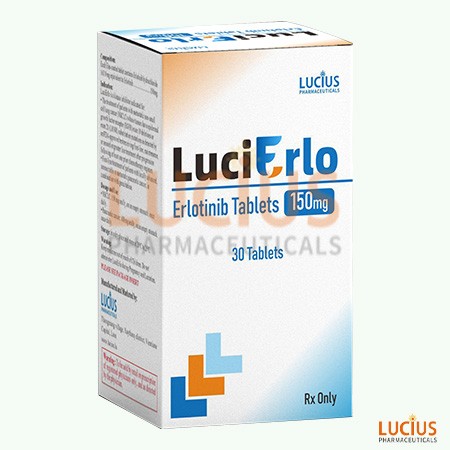
The safety and effectiveness of erlotinib as a first-line monotherapy for patients with metastatic non-small cell lung cancer (NSCLC) harboring epidermal growth factor receptor (EGFR) exon 19 deletions or exon 21 (L858R) substitution mutations were demonstrated in Study 1, a randomized, open-label clinical trial conducted in Europe. One hundred seventy-four (174) White patients were randomized 1:1 to receive erlotinib 150 mg once daily until disease progression (n=86) or four cycles of standard platinum-based doublet chemotherapy (n=88); the standard chemotherapy regimens included cisplatin plus gemcitabine, cisplatin plus docetaxel, carboplatin plus gemcitabine, and carboplatin plus docetaxel. The primary efficacy endpoint was investigator-assessed progression-free survival (PFS). Randomization was stratified by EGFR mutation type (exon 19 deletion or exon 21 (L858R) substitution) and Eastern Cooperative Oncology Group Performance Status (ECOG PS) (0 vs. 1 vs. 2). EGFR mutation status for patient screening and enrollment was determined by a Clinical Trial Assay (CTA). Tumor samples from 134 patients (69 in the erlotinib group and 65 in the chemotherapy group) were retrospectively tested using the FDA-approved companion diagnostic test, cobas® EGFR Mutation Test.
The baseline demographic characteristics of the overall study population were: female (72%), White (99%), aged ≥65 years (51%), ECOG PS 1 (53%), ECOG PS 0 (33%), ECOG PS 2 (14%), current smokers (11%), former smokers (20%), and never smokers (69%). Disease characteristics were: 93% Stage IV, 7% Stage IIIb (with pleural effusion) (per American Joint Committee on Cancer (AJCC), 6th Edition classification), 93% adenocarcinoma histology, 66% exon 19 deletion mutations, and 34% exon 21 (L858R) point mutations as detected by CTA.
Compared with patients randomized to chemotherapy, patients randomized to erlotinib showed a statistically significant improvement in investigator-assessed PFS (based on RECIST 1.0 or clinical progression) (see Table 6 and Figure 1). Similar results in PFS (based on RECIST 1.0) were observed in the subgroup assessed by an Independent Review Committee (approximately 75% of patients in Study 1) and in the subgroup of 134 patients (77% of the Study 1 population) with EGFR mutations confirmed by the cobas® EGFR Mutation Test.
A protocol-specified overall survival (OS) analysis conducted at the time of the final PFS analysis showed no statistically significant difference between the erlotinib and chemotherapy groups. At data cutoff, 84% of patients in the chemotherapy group had received at least one subsequent line of therapy, with 97% of these patients receiving an EGFR-tyrosine kinase inhibitor. Sixty-six percent of patients in the erlotinib group had received at least one subsequent line of therapy.
In exploratory subgroup analyses based on EGFR mutation subtype, the hazard ratio (HR) for PFS was 0.27 (95% confidence interval [CI] 0.17 to 0.43) in patients with exon 19 deletions and 0.52 (95% CI 0.29 to 0.95) in patients with exon 21 (L858R) substitutions. The HR for OS was 0.94 (95% CI 0.57 to 1.54) in the exon 19 deletion subgroup and 0.99 (95% CI 0.56 to 1.76) in the exon 21 (L858R) substitution subgroup.
FDA,2016.10
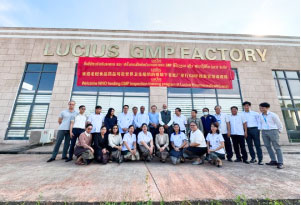
Lucius Pharmaceuticals (Lao) LTD. (Lucius Pharmaceuticals), with its manufacturing campus in Laos located in the capital city of Vientiane in 2020, officially begins its great journey to make effective and affordable medicines available to people in need around the world...More

Lucius Pharmaceutical Co., Ltd., was established in 2020 in Vientiane, the capital of Laos. It aims to offer safe, effective, and affordable medicines globally. With a factory spanning 25,000 square meters, the company manufactures 200+ generic drugs in diverse therapeutic fields.
Address:No.26 Thongmang village, Xaythany district, Vientiane Capital, Laos
E-mail:laoslucius@gmail.com
Whatsapp: