Your Health, We Care
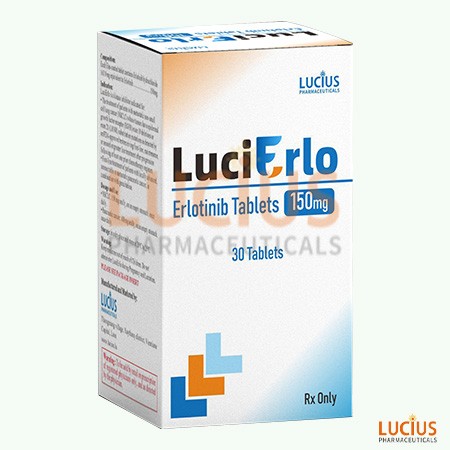
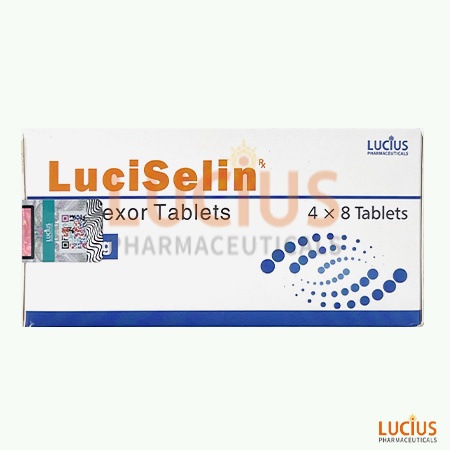
Patients with metastatic NSCLC for treatment with erlotinib should be selected based on the presence of EGFR exon 19 deletions or exon 21 (L858R) substitution mutations in tumor or plasma samples. If these mutations are not detected in plasma samples and tumor tissue is available, tumor tissue should be tested.
The recommended daily dosage of erlotinib for NSCLC is 150 mg, administered on an empty stomach (at least 1 hour before or 2 hours after eating). Treatment should continue until disease progression or unacceptable toxicity occurs.
The recommended daily dosage of erlotinib for pancreatic cancer is 100 mg, administered once daily in combination with gemcitabine. Erlotinib should be taken on an empty stomach (at least 1 hour before or 2 hours after eating). Treatment should continue until disease progression or unacceptable toxicity occurs.
Pulmonary: Permanently discontinue erlotinib if interstitial lung disease (ILD) is confirmed. Suspend erlotinib during the diagnostic evaluation of suspected ILD.
Hepatic: Permanently discontinue erlotinib if severe hepatotoxicity does not improve or resolve significantly within 3 weeks. For patients with pre-existing hepatic impairment or biliary obstruction, suspend erlotinib and consider permanent discontinuation if bilirubin doubles or transaminase levels increase threefold from baseline. For patients without prior hepatic impairment, suspend erlotinib and consider permanent discontinuation if total bilirubin levels exceed 3 times the upper limit of normal (ULN) or transaminases exceed 5 times the ULN.
Renal: Suspend erlotinib and consider permanent discontinuation for severe (CTCAE Grade 3 to 4) renal toxicity.
Gastrointestinal: Permanently discontinue erlotinib if gastrointestinal perforation occurs. Suspend erlotinib for persistent severe diarrhea unresponsive to medical management (e.g., loperamide).
Dermatological: Permanently discontinue erlotinib if severe bullous, blistering, or exfoliative skin disorders occur. Suspend erlotinib for severe rash unresponsive to medical management.
Ocular: Permanently discontinue erlotinib if corneal perforation or severe ulceration occurs. Suspend erlotinib for Grade 3-4 keratitis (per NCI-CTC Version 4.0) or Grade 2 keratitis lasting more than 2 weeks. Suspend erlotinib and consider permanent discontinuation for acute/worsening ocular disorders (e.g., eye pain).
After suspending treatment due to dose-limiting toxicity, if the toxic effect has resolved to baseline or ≤ Grade 1, resume erlotinib at a reduced dose of 50 mg.
CYP3A4 Inhibitors: If severe reactions occur when coadministered with strong CYP3A4 inhibitors (e.g., atazanavir, clarithromycin, indinavir, itraconazole, ketoconazole, nefazodone, nelfinavir, ritonavir, saquinavir, telithromycin, troleandomycin, voriconazole, or grapefruit/grapefruit juice) or dual CYP3A4 and CYP1A2 inhibitors (e.g., ciprofloxacin), reduce the erlotinib dose by 50 mg; avoid coadministration if possible.
CYP3A4 Inducers: When coadministered with CYP3A4 inducers (e.g., rifampin, rifabutin, rifapentine, phenytoin, carbamazepine, phenobarbital, or St. John's Wort), increase the erlotinib dose in 50 mg increments every 2 weeks, up to a maximum of 450 mg (based on tolerability); avoid coadministration if possible.
Concurrent Smoking: For patients who smoke concurrently, increase the erlotinib dose in 50 mg increments every 2 weeks, up to a maximum of 300 mg. Immediately reduce the erlotinib dose to the recommended dosage (150 mg or 100 mg daily) once smoking is discontinued.
Proton Pump Inhibitors (PPIs): Dose separation may not eliminate the interaction, as PPIs affect upper gastrointestinal pH for an extended period; avoid coadministration if possible.
H2 Receptor Antagonists: If H2 receptor antagonists (e.g., ranitidine) are required, administer separately. Erlotinib must be taken 10 hours after H2 receptor antagonist administration and at least 2 hours before the next dose of H2 receptor antagonist.
Antacids: The effect of antacids on erlotinib pharmacokinetics has not been evaluated. If antacids are required, separate the doses of antacid and erlotinib by several hours.
FDA,2016.10

Lucius Pharmaceuticals (Lao) LTD. (Lucius Pharmaceuticals), with its manufacturing campus in Laos located in the capital city of Vientiane in 2020, officially begins its great journey to make effective and affordable medicines available to people in need around the world...More

Lucius Pharmaceutical Co., Ltd., was established in 2020 in Vientiane, the capital of Laos. It aims to offer safe, effective, and affordable medicines globally. With a factory spanning 25,000 square meters, the company manufactures 200+ generic drugs in diverse therapeutic fields.
Address:No.26 Thongmang village, Xaythany district, Vientiane Capital, Laos
E-mail:laoslucius@gmail.com
Whatsapp: