Your Health, We Care
Release date: 2026-02-02 17:06:34 Article From: Lucius Laos Recommended: 278
Elacestrant is the world’s first approved oral selective estrogen receptor degrader (SERD), indicated for the treatment of adult patients with estrogen receptor-positive (ER+), human epidermal growth factor receptor 2-negative (HER2-) advanced or metastatic breast cancer harboring ESR1 gene mutations, particularly those with resistance to prior endocrine therapy.
Dose adjustments for oral elacestrant (once daily) are rarely required. Dosage modifications may be made in accordance with the guidelines below based on the severity of adverse reactions (ARs):
For Grade 1 adverse reactions, continue treatment at the current dose. In the event of Grade 2 adverse reactions, temporary treatment interruption is recommended until symptoms resolve to ≤ Grade 1 or baseline levels, after which treatment may be resumed at the original dose.
If Grade 3 adverse reactions occur, discontinue treatment until symptoms resolve to ≤ Grade 1 or baseline levels, then resume treatment at a one dose level reduction. If Grade 3 toxicities recur, interrupt treatment again until recovery and resume at a further one dose level reduction.
In the case of Grade 4 adverse reactions, discontinue treatment until symptoms resolve to ≤ Grade 1 or baseline levels, then resume treatment at a one dose level reduction. If Grade 4 or intolerable adverse reactions recur, permanent discontinuation of elacestrant is required.
Severe adverse reactions occurred in 12% of patients receiving elacestrant. Severe adverse reactions with an incidence of >1% included musculoskeletal pain (1.7%) and nausea (1.3%). Fatal adverse reactions occurred in 1.7% of patients treated with elacestrant, including cardiac arrest, septic shock, diverticulitis, and unknown cause (one case each).
The most common adverse reactions (including laboratory abnormalities) with an incidence of ≥10% were: musculoskeletal pain (41%), nausea (35%), increased cholesterol (30%), increased aspartate aminotransferase (29%), increased triglycerides (27%), fatigue (26%), decreased hemoglobin (26%), vomiting (19%), increased alanine aminotransferase (17%), decreased sodium (16%), increased creatinine (16%), decreased appetite (15%), diarrhea (13%), headache (12%), constipation (12%), abdominal pain (11%), hot flush (11%), and dyspepsia (10%).
Lactating women are advised to discontinue breastfeeding during elacestrant treatment and for 1 week after the last dose.
Elacestrant is not recommended for use in patients with severe hepatic impairment (Child-Pugh Class C). A dose reduction is required for patients with moderate hepatic impairment (Child-Pugh Class B).
The safety and efficacy of elacestrant in pediatric patients have not been established.
On November 21, 2025, the U.S. Food and Drug Administration (FDA) approved the regimen of pembrolizu···【more】
Recommended:[list:visits]2025-17-12
Lung cancer is the most rapidly increasing malignant tumor with the fastest increasing morbidity and···【more】
Recommended:[list:visits]2024-09-07
Lucius Pharmaceuticals Version of Vibegron Now Available1.Basic Drug InformationVibegron (generic na···【more】
Recommended:[list:visits]2026-06-08
In recent years, leveraging the World Trade Organization (WTO) patent waiver for least-developed cou···【more】
Recommended:[list:visits]2026-05-08
How Can Chinese Patients Access Generic Drugs from Laos?In recent years, generic drugs from Laos hav···【more】
Recommended:[list:visits]2026-04-08
Lucius Pharmaceuticals version of Ibrutinib is now availableIn a randomized controlled trial of 269 ···【more】
Recommended:[list:visits]2026-03-08
Leveraging the WTO patent waiver for least-developed countries (extended to 2033), Laos has seen rap···【more】
Recommended:[list:visits]2026-31-07
Alectinib Has Been Launched in LaosAlectinib is an oral targeted therapeutic drug belonging to the c···【more】
Recommended:[list:visits]2026-30-07
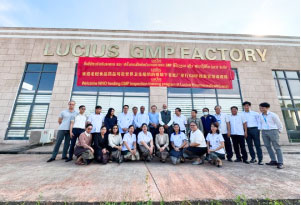
Lucius Pharmaceuticals (Lao) LTD. (Lucius Pharmaceuticals), with its manufacturing campus in Laos located in the capital city of Vientiane in 2020, officially begins its great journey to make effective and affordable medicines available to people in need around the world...More

Lucius Pharmaceutical Co., Ltd., was established in 2020 in Vientiane, the capital of Laos. It aims to offer safe, effective, and affordable medicines globally. With a factory spanning 25,000 square meters, the company manufactures 200+ generic drugs in diverse therapeutic fields.
Address: No.26 Thongmang village, Xaythany district, Vientiane Capital, Laos
E-mail:laoslucius@gmail.com

Name: Lucius

Telegram name: Vira
No.:0085253923643
Telegram name: Vira
No.:0085253923643