Your Health, We Care
Release date: 2026-01-13 17:20:07 Article From: Lucius Laos Recommended: 425
Capivasertib is an oral kinase inhibitor that targets all three isoforms of the AKT enzyme (AKT1, AKT2, and AKT3).
The CAPItello-291 study is a phase Ⅲ, double-blind, randomized controlled clinical trial designed to evaluate the efficacy of Truqap (capivasertib) in combination with fulvestrant, compared with placebo plus fulvestrant, for the treatment of patients with locally advanced (unresectable) or metastatic hormone receptor (HR)-positive, human epidermal growth factor receptor 2 (HER2)-low or negative breast cancer (defined as immunohistochemistry (IHC) score 0 or 1+, or IHC 2+/in situ hybridization (ISH)-negative by testing).
This global clinical trial enrolled a total of 708 adult patients with histologically confirmed HR-positive, HER2-low or negative breast cancer. All enrolled patients experienced disease recurrence or progression during or after aromatase inhibitor therapy; among them, some had previously received cyclin-dependent kinase 4/6 (CDK4/6) inhibitor treatment while others had not. In addition, all patients had received no more than one chemotherapy regimen for advanced disease.
Based on animal study findings and its mechanism of action, capivasertib may cause fetal harm if administered to pregnant women. Pregnant women and females of reproductive potential should be informed of the potential fetal risks. Confirm the pregnancy status of females of reproductive potential before initiating treatment.
Use effective contraceptive measures during treatment and for 1 month after the last dose of capivasertib.
Use effective contraceptive measures during treatment and for 4 months after the last dose of capivasertib.
There are no data available regarding the presence of capivasertib or its metabolites in human milk, as well as their effects on milk production or breastfed infants. It is recommended that women discontinue breastfeeding during capivasertib treatment.
AKT is a serine/threonine kinase involved in numerous cellular processes, including cell division, apoptosis, as well as glucose and fatty acid metabolism. In cancer cells, AKT may be hyperactivated due to stimulation from upstream signaling pathway activation, AKT1 gene mutations, loss of PTEN function (PTEN is a protein that normally inhibits AKT activity), or PIK3CA gene mutations. The PIK3CA gene encodes a component of phosphatidylinositol 3-kinase (PI3K), an enzyme that activates AKT. By inhibiting AKT, capivasertib can interfere with these pro-cancer signals, thereby slowing or inhibiting tumor growth.
On November 21, 2025, the U.S. Food and Drug Administration (FDA) approved the regimen of pembrolizu···【more】
Recommended:8542025-17-12
Lung cancer is the most rapidly increasing malignant tumor with the fastest increasing morbidity and···【more】
Recommended:10522024-09-07
Recently, Lao Lucius Pharmaceutical (Lucius Pharmaceuticals) issued a solemn statement regarding cou···【more】
Recommended:3402026-10-10
Lucius Pharmaceuticals Version of Vibegron Now Available1.Basic Drug InformationVibegron (generic na···【more】
Recommended:4182026-06-08
In recent years, leveraging the World Trade Organization (WTO) patent waiver for least-developed cou···【more】
Recommended:6152026-05-08
How Can Chinese Patients Access Generic Drugs from Laos?In recent years, generic drugs from Laos hav···【more】
Recommended:5982026-04-08
Lucius Pharmaceuticals version of Ibrutinib is now availableIn a randomized controlled trial of 269 ···【more】
Recommended:4732026-03-08
Leveraging the WTO patent waiver for least-developed countries (extended to 2033), Laos has seen rap···【more】
Recommended:6202026-31-07
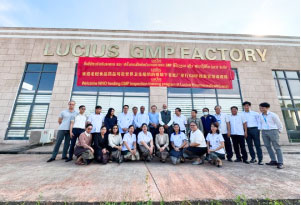
Lucius Pharmaceuticals (Lao) LTD. (Lucius Pharmaceuticals), with its manufacturing campus in Laos located in the capital city of Vientiane in 2020, officially begins its great journey to make effective and affordable medicines available to people in need around the world...More

Lucius Pharmaceutical Co., Ltd., was established in 2020 in Vientiane, the capital of Laos. It aims to offer safe, effective, and affordable medicines globally. With a factory spanning 25,000 square meters, the company manufactures 200+ generic drugs in diverse therapeutic fields.
Address: No.26 Thongmang village, Xaythany district, Vientiane Capital, Laos
E-mail:laoslucius@gmail.com

Name: Lucius

Telegram name: Vira
No.:0085253923643
Telegram name: Vira
No.:0085253923643