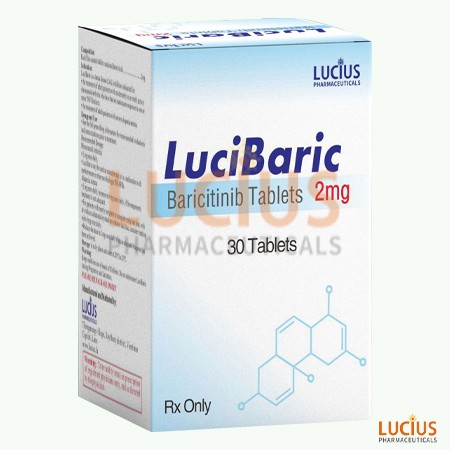
Your Health, We Care
Patients aged 65 years and older;
Patients with a history of atherosclerotic cardiovascular disease or other cardiovascular risk factors (e.g., current or past long-term smoking);
Patients with risk factors for malignancy (e.g., current malignancy or history of malignancy).
Given the increased risk of major adverse cardiovascular events (MACE), malignancy, serious infections, and all-cause mortality observed in patients aged 65 years and older in a large randomized study of tofacitinib (another JAK inhibitor), baricitinib may be used in these patients only when no suitable alternative treatment options are available.
Serious and sometimes fatal infections have been reported in patients treated with other JAK inhibitors.
Compared with placebo, baricitinib is associated with an increased incidence of infections (e.g., upper respiratory tract infections). In rheumatoid arthritis clinical studies, combination with methotrexate resulted in a higher frequency of infections compared with baricitinib monotherapy.
Before initiating baricitinib treatment, the risks and benefits of treatment should be carefully considered in patients with active, chronic, or recurrent infections. If an infection occurs, patients should be closely monitored; if the patient does not respond to standard treatment, treatment should be temporarily interrupted. Treatment may be resumed only after the infection has resolved.
Since the incidence of infections is generally higher in elderly patients and patients with diabetes, caution should be exercised when treating these populations. For patients aged 65 years and older, baricitinib may be used only when no suitable alternative treatment options are available.
Patients should be screened for tuberculosis before starting treatment. Baricitinib should not be administered to patients with active tuberculosis. For patients with previously untreated latent tuberculosis, anti-tuberculosis treatment should be considered before initiating baricitinib therapy.
Cases of absolute neutrophil count (ANC) <1×10^9 cells/L, absolute lymphocyte count (ALC) <0.5×10^9 cells/L, and hemoglobin <8 g/dL have been reported in clinical trials.
Patients with ANC <1×10^9 cells/L, ALC <0.5×10^9 cells/L, or hemoglobin <8 g/dL identified during routine patient management should not start treatment or should have treatment temporarily interrupted.
Elderly patients with rheumatoid arthritis have an increased risk of lymphocytosis. Rare cases of lymphoproliferative disorders have been reported.
Viral reactivation, including cases of herpes virus reactivation (e.g., herpes zoster, herpes simplex), has been reported in clinical studies. In rheumatoid arthritis clinical studies, herpes zoster was more commonly reported in patients aged ≥65 years who had previously received concurrent treatment with biologic and synthetic conventional disease-modifying antirheumatic drugs (DMARDs). If a patient develops herpes zoster, treatment should be temporarily interrupted until the episode resolves.
Before initiating baricitinib treatment, screening for viral hepatitis should be performed in accordance with clinical guidelines. Patients with evidence of active hepatitis B or C infection were excluded from clinical trials. Patients positive for hepatitis C antibody but negative for hepatitis C virus RNA were permitted to participate. Patients positive for hepatitis B surface antibody and hepatitis B core antibody but negative for hepatitis B surface antigen were also permitted to participate; such patients should be monitored for hepatitis B virus DNA expression. If hepatitis B virus DNA is detected, a liver specialist should be consulted to determine whether treatment interruption is necessary.
No data are available on the response to live vaccines in patients receiving baricitinib. The use of live-attenuated vaccines is not recommended during baricitinib treatment or immediately before treatment initiation. Before starting treatment, all patients—especially pediatric patients—should complete all vaccinations in accordance with current immunization guidelines.
Dose-dependent increases in lipid parameters have been reported in pediatric and adult patients receiving baricitinib. In adults, elevations in low-density lipoprotein cholesterol returned to pre-treatment levels following treatment with statins. In both pediatric and adult patients, lipid parameters should be assessed approximately 12 weeks after starting treatment, and patients should be managed thereafter in accordance with international clinical guidelines for hyperlipidemia.
Dose-dependent increases in serum alanine transaminase (ALT) and aspartate transaminase (AST) activities have been reported in patients receiving baricitinib.
Cases of ALT and AST elevations to ≥5× and ≥10× the upper limit of normal (ULN) have been reported in clinical trials. In rheumatoid arthritis clinical studies, combination with methotrexate resulted in a higher frequency of liver transaminase elevations compared with baricitinib monotherapy.
If elevations in ALT or AST are identified during routine patient management and drug-induced liver injury is suspected, treatment should be temporarily interrupted until this diagnosis is ruled out.
Immunomodulatory drugs may increase the risk of malignancy, including lymphoma. Cases of lymphoma and other malignancies have been reported in patients treated with JAK inhibitors, including baricitinib.
In a large randomized active-controlled study of rheumatoid arthritis patients aged 50 years and older with at least one additional cardiovascular risk factor, tofacitinib (another JAK inhibitor) was associated with a higher incidence of malignancies (particularly lung cancer, lymphoma, and non-melanoma skin cancer) compared with TNF inhibitors.
For patients aged 65 years and older, current or past long-term smokers, or those with other risk factors for malignancy (e.g., current malignancy or history of malignancy), baricitinib may be used only when no suitable alternative treatment options are available.
Regular skin examinations are recommended for all patients, especially those with risk factors for skin cancer.
In a retrospective observational study of rheumatoid arthritis patients treated with baricitinib, the incidence of venous thromboembolism (VTE) events was higher than in patients treated with TNF inhibitors.
In a large randomized active-controlled study of rheumatoid arthritis patients aged 50 years and older with at least one additional cardiovascular risk factor, tofacitinib (another JAK inhibitor) was associated with a dose-dependent increase in the incidence of VTE (including deep vein thrombosis and pulmonary embolism) compared with TNF inhibitors.
For patients with cardiovascular or malignancy risk factors, baricitinib may be used only when no suitable alternative treatment options are available.
Caution should be exercised when using baricitinib in patients with known VTE risk factors other than cardiovascular or malignancy risk factors. Such additional VTE risk factors include a history of VTE, patients undergoing major surgery, use of combined hormonal contraceptives or hormone replacement therapy, and inherited coagulation disorders.
During baricitinib treatment, patients should be reassessed regularly to evaluate changes in VTE risk.
Patients presenting with signs or symptoms of VTE should be evaluated immediately, and baricitinib should be discontinued in patients with suspected VTE, regardless of dose or indication.
FDA,2025.01

Lucius Pharmaceuticals (Lao) LTD. (Lucius Pharmaceuticals), with its manufacturing campus in Laos located in the capital city of Vientiane in 2020, officially begins its great journey to make effective and affordable medicines available to people in need around the world...More

Lucius Pharmaceutical Co., Ltd., was established in 2020 in Vientiane, the capital of Laos. It aims to offer safe, effective, and affordable medicines globally. With a factory spanning 25,000 square meters, the company manufactures 200+ generic drugs in diverse therapeutic fields.
Address:No.26 Thongmang village, Xaythany district, Vientiane Capital, Laos
E-mail:laoslucius@gmail.com
Whatsapp: