Your Health, We Care
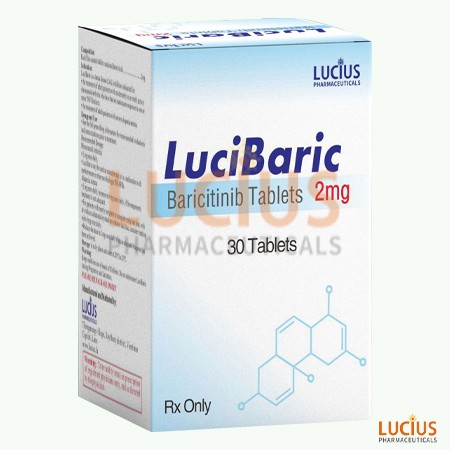
The efficacy and safety of baricitinib administered once daily were evaluated in 4 Phase III randomized, double-blind, multicenter studies involving adult patients with moderate to severe active rheumatoid arthritis diagnosed according to the ACR/EULAR 2010 criteria. At baseline, patients were required to have at least 6 tender joints and 6 swollen joints. All patients who completed these studies were eligible to participate in a long-term extension study, receiving additional treatment for up to 7 years.
In all studies, patients treated with baricitinib 4 mg once daily had statistically significantly higher ACR20, ACR50, and ACR70 response rates at Week 12 compared with those receiving placebo, methotrexate, or adalimumab (Table 4). The onset of action was rapid, with significantly higher responses first observed as early as Week 1 for various endpoints. Sustained and durable response rates were observed, with ACR20/50/70 responses maintained for at least 2 years, including in the long-term extension study.
Compared with placebo, methotrexate, or adalimumab, treatment with baricitinib 4 mg (either alone or in combination with conventional disease-modifying antirheumatic drugs [DMARDs]) resulted in significant improvements in all individual American College of Rheumatology (ACR) components. These components include tender and swollen joint counts, patient’s and physician’s global assessments, Health Assessment Questionnaire-Disability Index (HAQ-DI), pain assessment, and C-reactive protein (CRP).
No relevant differences in efficacy or safety were observed across subgroups defined by the type of concomitant DMARDs used in combination with baricitinib.
At Weeks 12 and 24, patients treated with baricitinib 4 mg had statistically significantly higher proportions of achieving remission (Simplified Disease Activity Index [SDAI] ≤ 3.3 and Clinical Disease Activity Index [CDAI] ≤ 2.8) or low disease activity or remission (28-joint Disease Activity Score based on erythrocyte sedimentation rate [DAS28-ESR] or 28-joint Disease Activity Score based on high-sensitivity C-reactive protein [DAS28-hsCRP] ≤ 3.2, and DAS28-ESR or DAS28-hsCRP < 2.6) compared with those receiving placebo or methotrexate (Table 4).
Higher remission rates compared with placebo were first observed as early as Week 4. Rates of remission and low disease activity were maintained for at least 2 years. Data from the long-term extension study with up to 6 years of follow-up demonstrated durable rates of low disease activity/remission.
FDA,2025.01
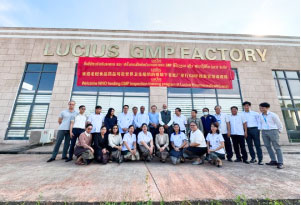
Lucius Pharmaceuticals (Lao) LTD. (Lucius Pharmaceuticals), with its manufacturing campus in Laos located in the capital city of Vientiane in 2020, officially begins its great journey to make effective and affordable medicines available to people in need around the world...More

Lucius Pharmaceutical Co., Ltd., was established in 2020 in Vientiane, the capital of Laos. It aims to offer safe, effective, and affordable medicines globally. With a factory spanning 25,000 square meters, the company manufactures 200+ generic drugs in diverse therapeutic fields.
Address:No.26 Thongmang village, Xaythany district, Vientiane Capital, Laos
E-mail:laoslucius@gmail.com
Whatsapp: