Your Health, We Care
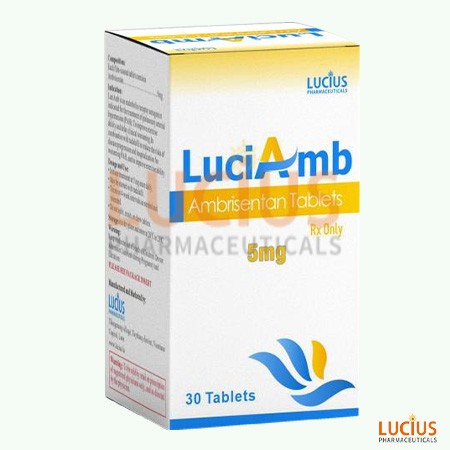
Two 12-week, randomized, double-blind, placebo-controlled, multicenter studies were conducted in 393 patients with PAH (WHO Group 1). The two studies had the same design, except for the dose of ambrisentan and the geographic regions of the study centers. ARIES-1 compared ambrisentan 5 mg once daily and 10 mg once daily with placebo, while ARIES-2 compared ambrisentan 2.5 mg once daily and 5 mg once daily with placebo. In both studies, ambrisentan or placebo was added to the current treatment, which might include a combination of anticoagulants, diuretics, calcium channel blockers, or digoxin, but excluded epoprostenol, treprostinil, iloprost, bosentan, or sildenafil. The primary study endpoint was the 6-minute walk distance (6MWD). In addition, clinical deterioration, WHO Functional Class, dyspnea, and the SF-36® Health Survey were also assessed.
Patients had idiopathic or heritable PAH (64%), PAH associated with connective tissue diseases (32%), HIV infection (3%), or appetite suppressant use (1%). There were no patients with PAH associated with congenital heart disease.
At baseline, patients had WHO Functional Class I (2%), II (38%), III (55%), or IV (5%) symptoms. The mean age of patients was 50 years, 79% were female, and 77% were White.
The 6MWD results at Week 12 in the ARIES-1 and ARIES-2 studies are described below.
In the ARIES-1 study, the mean baseline walk distances were similar (approximately 342 meters) in the placebo group, ambrisentan 5 mg group, and ambrisentan 10 mg group. The mean change from baseline was -8 meters in the placebo group, 23 meters in the 5 mg group, and 44 meters in the 10 mg group. The placebo-adjusted mean changes were 31 meters in the 5 mg group and 51 meters in the 10 mg group. The improvements in both dose groups were statistically significant compared with placebo.
In the ARIES-2 study, the mean baseline walk distances were also similar (approximately 343–355 meters) in the placebo group, ambrisentan 2.5 mg group, and ambrisentan 5 mg group. The mean change from baseline was -10 meters in the placebo group, 22 meters in the 2.5 mg group, and 49 meters in the 5 mg group. The placebo-adjusted mean changes were 32 meters in the 2.5 mg group and 59 meters in the 5 mg group. The improvements in both dose groups were also statistically significant compared with placebo.
In both studies, ambrisentan treatment resulted in a significant improvement in 6MWD across all dose groups, with the magnitude of improvement increasing with dose. An increase in 6MWD was observed after 4 weeks of ambrisentan treatment, and a dose response was observed after 12 weeks of treatment. The improvement in walk distance was smaller in elderly patients (aged ≥65 years) and patients with secondary PAH than in younger patients and those with idiopathic or heritable PAH. The results of such subgroup analyses must be interpreted with caution.
Time to clinical deterioration in PAH was defined as the first occurrence of death, lung transplantation, hospitalization due to PAH, atrial septostomy, withdrawal from the study due to the addition of other PAH treatment drugs, or withdrawal due to early escape. Early escape was defined as meeting two or more of the following criteria: a 20% decrease in 6MWD; an increase in WHO Functional Class; worsening right ventricular failure; rapidly progressive cardiogenic, hepatic, or renal failure; or refractory systolic hypotension. Clinical deterioration events during the 12-week treatment period in ambrisentan clinical trials are described below.
In the ARIES-1 study, the incidence of clinical deterioration was 10% in the placebo group and 3% in the ambrisentan group, with a hazard ratio (HR) of 0.28. In the ARIES-2 study, the incidence of clinical deterioration was 22% in the placebo group and 6% in the ambrisentan group, with an HR of 0.30. Compared with placebo, patients receiving ambrisentan had a significant delay in time to clinical deterioration. The results were also favorable in subgroups such as elderly patients.
In a randomized, double-blind, active-controlled trial (AMBITION), 605 patients with PAH (WHO Functional Class II or III) were randomly assigned in a 2:1:1 ratio to receive ambrisentan plus tadalafil once daily, ambrisentan monotherapy, or tadalafil monotherapy. Treatment was initiated with ambrisentan 5 mg and tadalafil 20 mg. If tolerated, tadalafil was increased to 40 mg at Week 4, and ambrisentan was increased to 10 mg at Week 8.
The primary endpoint was the time to the first occurrence of any of the following events: (a) death, (b) hospitalization due to PAH exacerbation, (c) a >15% decrease in 6MWD from baseline combined with WHO Functional Class III or IV symptoms lasting more than 14 days (short-term clinical deterioration), or (d) a decrease in 6MWD lasting more than 14 days combined with WHO Functional Class III or IV symptoms lasting more than 6 months (long-term inadequate clinical response).
Patients had idiopathic PAH (55%), heritable PAH (3%), or PAH associated with connective tissue diseases, congenital heart disease, stable HIV infection, or drugs/toxins (APAH, 43%). The median time from diagnosis to the first administration of the study drug was 25 days. Approximately 32% and 68% of patients were WHO Functional Class II and III, respectively. The mean age of patients was 55.7 years (34% aged ≥65 years). Most patients were White (90%) and female (76%); 45% were from North America.
Compared with ambrisentan monotherapy, the HR for the primary endpoint event in the combination therapy group was 0.51, indicating a 49% reduction in risk. Compared with tadalafil monotherapy, the HR for the primary endpoint event in the combination therapy group was 0.55, indicating a 45% reduction in risk. These risk reductions were statistically significant.
The first occurrence of primary endpoint events and their individual components showed that the combination therapy group was superior to both monotherapies in terms of any event (primary endpoint), hospitalization due to PAH exacerbation, and short-term clinical deterioration. The combination therapy also showed a numerical advantage in terms of death and long-term inadequate clinical response.
The treatment effect of ambrisentan plus tadalafil on the time to the first primary endpoint event was consistent across subgroups compared with each monotherapy.
The 6MWD results at Week 24 in the AMBITION study are described below.
The median baseline walk distances were 356 meters, 366 meters, and 352 meters in the combination therapy group, ambrisentan monotherapy group, and tadalafil monotherapy group, respectively. The median change from baseline was 43 meters in the combination therapy group, 23 meters in the ambrisentan monotherapy group, and 22 meters in the tadalafil monotherapy group. The median difference between the combination therapy group and the ambrisentan monotherapy group was 24 meters, and the median difference between the combination therapy group and the tadalafil monotherapy group was 20 meters. These differences were statistically significant.
In long-term follow-up of patients (N=383) who received ambrisentan (2.5 mg, 5 mg, or 10 mg once daily) in two pivotal studies and their open-label extensions, the Kaplan-Meier estimated survival rates at 1 year, 2 years, and 3 years were 93%, 85%, and 79%, respectively. Most patients who continued ambrisentan for up to 3 years did not receive other PAH treatments. These uncontrolled observational results cannot be compared with groups not receiving ambrisentan, nor can they be used to determine the long-term effect of ambrisentan on mortality.
A randomized controlled study was conducted in IPF patients with or without pulmonary arterial hypertension (WHO Group 3), comparing ambrisentan (N=329) with placebo (N=163). The study was terminated after 34 weeks due to lack of efficacy, and ambrisentan was found to increase the risk of disease progression or death. More patients taking ambrisentan died (8% vs. 4%), had more respiratory hospitalizations (13% vs. 6%), and had a greater decrease in FVC/DLCO (17% vs. 12%) compared with placebo.
FDA,2025.04

Lucius Pharmaceuticals (Lao) LTD. (Lucius Pharmaceuticals), with its manufacturing campus in Laos located in the capital city of Vientiane in 2020, officially begins its great journey to make effective and affordable medicines available to people in need around the world...More

Lucius Pharmaceutical Co., Ltd., was established in 2020 in Vientiane, the capital of Laos. It aims to offer safe, effective, and affordable medicines globally. With a factory spanning 25,000 square meters, the company manufactures 200+ generic drugs in diverse therapeutic fields.
Address:No.26 Thongmang village, Xaythany district, Vientiane Capital, Laos
E-mail:laoslucius@gmail.com
Whatsapp: