Your Health, We Care
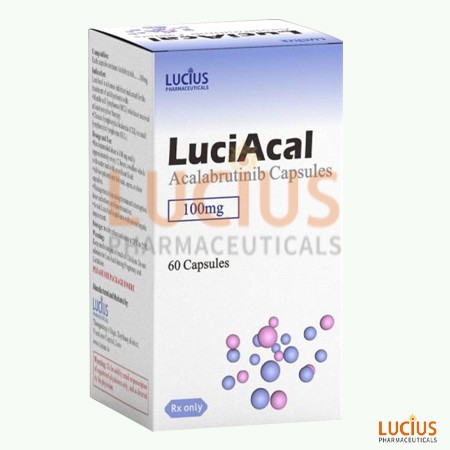
The efficacy of acalabrutinib in patients with previously untreated mantle cell lymphoma (MCL) was evaluated in a randomized, double-blind, placebo-controlled, multicenter study (ECHO). This study enrolled 598 patients aged ≥ 65 years who had no intention of undergoing transplantation. Patients with total bilirubin > 1.5 times the upper limit of normal (ULN), AST or ALT > 2.5 times ULN, or estimated creatinine clearance ≤ 50 mL/min were excluded from the study. Patients were randomly assigned in a 1:1 ratio to receive either acalabrutinib in combination with bendamustine and rituximab, or placebo in combination with bendamustine and rituximab. Dosing in both groups was administered in 28-day cycles, as specified below:
Acalabrutinib + BR (bendamustine + rituximab) was administered for a maximum of 6 treatment cycles. Acalabrutinib was given at a dose of 100 mg orally twice daily starting from Day 1 of Cycle 1. Bendamustine was administered intravenously over 30 minutes at a dose of 90 mg/m² on Days 1 and 2 of each of the 6 cycles. Rituximab was administered intravenously at a dose of 375 mg/m² on Day 1 of each cycle for a total of 6 cycles.
Patients who achieved a response (partial response [PR] or complete response [CR]) continued to receive acalabrutinib 100 mg orally twice daily in combination with rituximab. Rituximab was administered at 375 mg/m² on Day 1 of every alternate cycle for a maximum of 12 additional doses, up to Cycle 30. After discontinuing rituximab, patients continued acalabrutinib monotherapy at 100 mg orally twice daily until disease progression or unacceptable toxicity occurred.
Patients in the control group received the same regimen, except that placebo was used in place of acalabrutinib. Patients in the placebo + BR group were allowed to cross over to acalabrutinib monotherapy upon disease progression.
Among all randomly assigned patients, the median age was 71 years (range: 65–86); 71% were male; 78% were White, 16% were Asian, and 0.5% were Black or African American. A total of 80% had classic histologic MCL, 7.7% had blastoid MCL, and 5.5% had pleomorphic MCL. According to the Simplified Mantle Cell Lymphoma International Prognostic Index (sMIPI), 33% were low-risk, 43% were intermediate-risk, and 24% were high-risk. A total of 38% of patients had a tumor burden ≥ 5 cm, and 86% had Ann Arbor Stage IV disease.
The primary efficacy outcome was progression-free survival (PFS) as assessed by an Independent Review Committee (IRC) using the Lugano Classification. Efficacy results are described below. The median follow-up time for PFS was 49.8 months in both groups.
Progression-Free Survival: The median PFS was 66.4 months in the acalabrutinib + BR group and 49.6 months in the placebo + BR group. The hazard ratio (HR) was 0.73, with a p-value of 0.016.
Overall Response Rate (ORR; CR + PR): The ORR was 91% in the acalabrutinib + BR group and 88% in the placebo + BR group. In the acalabrutinib + BR group, the CR rate was 67% and the PR rate was 24%; in the placebo + BR group, the CR rate was 54% and the PR rate was 34%. The p-value was 0.220.
At the time of the PFS analysis, the median overall survival (OS) had not been reached in either group, with a total of 203 deaths: 97 (32%) patients in the acalabrutinib + BR group and 106 (35%) patients in the placebo + BR group died.
The efficacy of acalabrutinib was based on the LY-004 trial, an open-label, Phase 2 study titled “A Study of ACP-196 in Subjects with Mantle Cell Lymphoma”. A total of 124 patients with MCL who had received at least one prior line of treatment were enrolled in the LY-004 trial.
The median age was 68 years (range: 42–90), 80% were male, and 74% were White. At baseline, 93% of patients had an Eastern Cooperative Oncology Group (ECOG) performance status of 0 or 1. The median time since diagnosis was 46.3 months, and the median number of prior treatments was 2 (range: 1–5), including 18% who had previously undergone stem cell transplantation. Patients with prior treatment with a Bruton’s Tyrosine Kinase (BTK) inhibitor were excluded. The most common prior regimens were CHOP-based regimens (52%) and cytarabine (ARA-C; 34%). At baseline, 37% of patients had at least one tumor with a maximum diameter ≥ 5 cm, and 73% had extranodal involvement (including 51% with bone marrow involvement). According to the sMIPI (which includes age, ECOG score, baseline lactate dehydrogenase [LDH], and white blood cell [WBC] count), 44% were intermediate-risk and 17% were high-risk.
Acalabrutinib was administered orally at 100 mg approximately every 12 hours until disease progression or unacceptable toxicity occurred. The median dose intensity was 98.5%. The primary efficacy outcome of the LY-004 trial was ORR, with a median follow-up time of 15.2 months.
The ORR was 81% as assessed by both the investigator and the IRC. The CR rate was 40% and the PR rate was 41% in both assessments. The median duration of response (DOR) could not be estimated in either assessment.
The median time to best response was 1.9 months.
After initiating acalabrutinib, 31.5% of patients in the LY-004 trial experienced a transient increase in lymphocyte count. The median time to onset of lymphocytosis was 1.1 weeks, and the median duration was 6.7 weeks.
FDA,2025.01
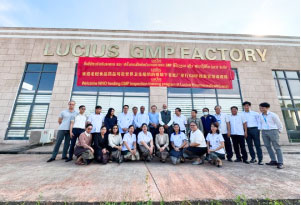
Lucius Pharmaceuticals (Lao) LTD. (Lucius Pharmaceuticals), with its manufacturing campus in Laos located in the capital city of Vientiane in 2020, officially begins its great journey to make effective and affordable medicines available to people in need around the world...More

Lucius Pharmaceutical Co., Ltd., was established in 2020 in Vientiane, the capital of Laos. It aims to offer safe, effective, and affordable medicines globally. With a factory spanning 25,000 square meters, the company manufactures 200+ generic drugs in diverse therapeutic fields.
Address:No.26 Thongmang village, Xaythany district, Vientiane Capital, Laos
E-mail:laoslucius@gmail.com
Whatsapp: