Your Health, We Care
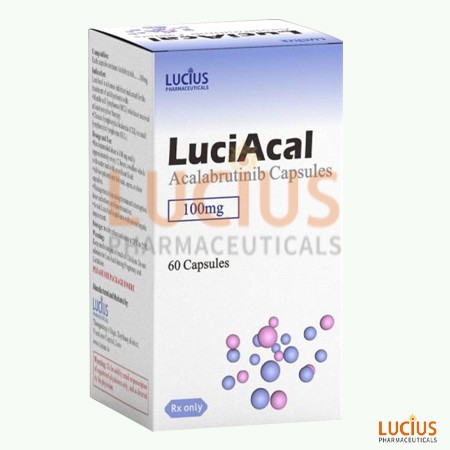
Patients are advised to swallow the capsules whole with water. Patients should not open, break, or chew the capsules. Acalabrutinib may be taken with or without food. If a dose of acalabrutinib is missed by more than 3 hours, the missed dose should be skipped, and the next dose should be taken at the regularly scheduled time. Do not take an extra capsule of acalabrutinib to make up for the missed dose.
For patients with mantle cell lymphoma (MCL), chronic lymphocytic leukemia (CLL), or small lymphocytic lymphoma (SLL), the recommended dose of acalabrutinib is 100 mg orally approximately every 12 hours, until disease progression or unacceptable toxicity occurs.
For patients with previously untreated mantle cell lymphoma (MCL), the recommended dose of acalabrutinib is 100 mg orally approximately every 12 hours, until disease progression or unacceptable toxicity occurs.
Initiate acalabrutinib on Day 1 of Cycle 1 (each cycle is 28 days) and administer until disease progression or unacceptable toxicity. Administer bendamustine at 90 mg/m² on Days 1 and 2 of Cycle 1, and rituximab at 375 mg/m² on Day 1 of Cycle 1, for a total of 6 cycles. Patients who achieve a response (partial response or complete response) after the first 6 cycles may receive rituximab maintenance therapy starting from Cycle 8 to Cycle 30, administered on Day 1 of every alternate cycle, for a maximum of 12 additional doses.
For patients with previously untreated chronic lymphocytic leukemia (CLL) or small lymphocytic lymphoma (SLL), the recommended dose of acalabrutinib is 100 mg orally approximately every 12 hours, until disease progression or unacceptable toxicity occurs. Initiate acalabrutinib in Cycle 1 (each cycle is 28 days). Initiate obinutuzumab in Cycle 2 for a total of 6 cycles; refer to the obinutuzumab prescribing information for the recommended dosage. When administered on the same day, acalabrutinib should be given prior to obinutuzumab.
Avoid the use of acalabrutinib in patients with severe hepatic impairment.
No dosage adjustment is required for patients with mild or moderate hepatic impairment.
Concomitant use with strong CYP3A inhibitors: Avoid concurrent use. If these inhibitors will be used short-term (e.g., anti-infective agents for up to 7 days), interrupt acalabrutinib.
Concomitant use with moderate CYP3A inhibitors: Adjust the acalabrutinib dose to 100 mg once daily.
Concomitant use with strong CYP3A inducers: Avoid concurrent use. If use of these inducers cannot be avoided, increase the acalabrutinib dose to 200 mg approximately every 12 hours.
Proton pump inhibitors: Avoid concurrent use.
H2-receptor antagonists: Take acalabrutinib 2 hours before administering H2-receptor antagonists.
Antacids: Administer acalabrutinib and antacids at least 2 hours apart.
For the first and second occurrence of Grade 3 or higher non-hematologic toxicity, or Grade 3 thrombocytopenia with bleeding: Interrupt acalabrutinib. Once toxicity resolves to Grade 1 or baseline, resume acalabrutinib at 100 mg approximately every 12 hours.
For the third occurrence of Grade 3 thrombocytopenia with bleeding: Interrupt acalabrutinib. Once toxicity resolves to Grade 1 or baseline, resume acalabrutinib at a reduced frequency of 100 mg once daily.
For the fourth occurrence of Grade 4 thrombocytopenia or thrombocytopenia lasting more than 7 days: Discontinue acalabrutinib.
Neutropenia (absolute neutrophil count < 0.5×10⁹/L and lasting more than 7 days): Interrupt acalabrutinib. Once toxicity resolves to Grade 2 or lower, resume acalabrutinib at the starting dose. For the second or third occurrence, reduce the acalabrutinib dose to 100 mg once daily. For the fourth occurrence, discontinue acalabrutinib. For bendamustine: Interrupt bendamustine. Once toxicity resolves to Grade 2 or lower, resume bendamustine and consider reducing the dose to 70 mg/m².
Thrombocytopenia (platelet count 25–50×10⁹/L with clinically significant bleeding, or platelet count < 25×10⁹/L): Interrupt acalabrutinib. Once toxicity resolves to Grade 2 or lower or baseline, resume acalabrutinib at the starting dose. If recurrence occurs, reduce the acalabrutinib dose to 100 mg once daily. Consider discontinuing acalabrutinib for the third occurrence. For bendamustine: Interrupt bendamustine. Once toxicity resolves to Grade 2 or lower or baseline, resume bendamustine and consider reducing the dose to 70 mg/m².
Grade 3 or higher non-hematologic adverse reactions: Interrupt acalabrutinib. Once toxicity resolves to Grade 2 or lower or baseline, resume acalabrutinib at the starting dose. If recurrence occurs, reduce the acalabrutinib dose to 100 mg once daily. For Grade 3 toxicity, consider the risks and benefits of continuing acalabrutinib. For Grade 4 toxicity, discontinue acalabrutinib for the third occurrence. For bendamustine: Interrupt bendamustine. Once toxicity resolves to Grade 2 or lower or baseline, resume bendamustine and consider reducing the dose to 70 mg/m².
Refer to the prescribing information for each product used in combination with acalabrutinib for additional information on managing toxicity.
FDA,2025.01

Lucius Pharmaceuticals (Lao) LTD. (Lucius Pharmaceuticals), with its manufacturing campus in Laos located in the capital city of Vientiane in 2020, officially begins its great journey to make effective and affordable medicines available to people in need around the world...More

Lucius Pharmaceutical Co., Ltd., was established in 2020 in Vientiane, the capital of Laos. It aims to offer safe, effective, and affordable medicines globally. With a factory spanning 25,000 square meters, the company manufactures 200+ generic drugs in diverse therapeutic fields.
Address:No.26 Thongmang village, Xaythany district, Vientiane Capital, Laos
E-mail:laoslucius@gmail.com
Whatsapp: