Your Health, We Care
VERZENIO in Combination with Standard Endocrine Therapy (monarchE)
Adult women and men with hormone receptor (HR)-positive, human epidermal growth factor receptor 2 (HER2)-negative, node-positive early breast cancer at high risk of recurrence.
monarchE is a randomized, open-label, two-cohort, multicenter study. Patients must have HR-positive, HER2-negative early breast cancer with involvement of at least one axillary lymph node.
To be enrolled in Cohort 1, patients must meet one of the following criteria: ≥4 positive axillary lymph nodes, or 1-3 positive axillary lymph nodes with at least one of the following: tumor grade 3, tumor size ≥5 cm, or Ki-67 index ≥20% (central laboratory testing).
Patients enrolled in Cohort 2 do not meet the eligibility criteria for Cohort 1. To be enrolled in Cohort 2, patients must have 1-3 positive axillary lymph nodes and a Ki-67 score ≥20%.
Patients were randomly assigned to receive 2 years of VERZENIO plus physician’s choice of standard endocrine therapy or standard endocrine therapy alone. After completion of the study treatment period, standard adjuvant endocrine therapy continued for at least 5 years if medically appropriate.
Invasive Disease-Free Survival (IDFS). Defined as the time from randomization to the first occurrence of any of the following events: ipsilateral invasive breast tumor recurrence, regional invasive breast cancer recurrence, distant recurrence, contralateral invasive breast cancer, second primary non-breast invasive cancer, or death from any cause. Overall Survival (OS) is an additional outcome measure.
A statistically significant difference in IDFS was observed in the intent-to-treat population, primarily attributed to patients treated in Cohort 1. While OS data for Cohort 2 remain immature, more deaths were observed in patients receiving VERZENIO plus standard endocrine therapy (10/253 vs. 5/264).
Of the 5,637 randomized patients, 5,120 (91%) were randomized in Cohort 1. The median age of patients was 51 years, 99% were female, 70% were White, 24% were Asian, 1.7% were Black or African American, 2.1% were American Indian or Alaska Native, and 0.1% were Native Hawaiian or Other Pacific Islander. Forty-three percent of patients were premenopausal. Most patients had received prior chemotherapy (37% neoadjuvant, 59% adjuvant) and prior radiotherapy (96%). Sixty-five percent of patients had 4 or more positive lymph nodes, of whom 22% had ≥10 positive lymph nodes, 41% had grade 3 tumors, and 24% had pathological tumor size ≥50 mm. Most patients (99%) had estrogen receptor-positive disease, and 87% had progesterone receptor-positive disease. Initial endocrine therapies received by patients included letrozole (39%), tamoxifen (31%), anastrozole (22%), or exemestane (8%).
Invasive Disease-Free Survival (IDFS): 317 patients (12%) in the VERZENIO plus endocrine therapy group and 474 patients (18%) in the endocrine therapy alone group experienced events. The hazard ratio was 0.65. IDFS rate at 48 months: 85.5% in the VERZENIO combination group vs. 78.6% in the endocrine therapy alone group.
VERZENIO in Combination with Aromatase Inhibitors (Anastrozole or Letrozole) (MONARCH3)
Postmenopausal women with HR-positive, HER2-negative advanced or metastatic breast cancer who have not received systemic therapy in this disease setting.
MONARCH3 is a randomized, double-blind, placebo-controlled, multicenter study evaluating VERZENIO in combination with a non-steroidal aromatase inhibitor as initial endocrine-based therapy in postmenopausal women. A total of 493 patients were randomly assigned to receive 150 mg VERZENIO or placebo orally twice daily, plus physician’s choice of letrozole (80% of patients) or anastrozole (20% of patients).
The median age of patients was 63 years, and most were White (58%) or Asian (30%). A total of 51% had received prior systemic therapy, 39% had received prior chemotherapy, 53% had visceral disease, and 22% had bone-only disease.
Progression-Free Survival (PFS): Median PFS was 28.2 months in the VERZENIO combination group vs. 14.8 months in the placebo combination group. The hazard ratio was 0.54.
Overall Survival (OS): Median OS was 66.8 months in the VERZENIO combination group vs. 53.7 months in the placebo combination group. The hazard ratio was 0.80.
Objective Response Rate (ORR): Among patients with measurable disease, ORR was 55% in the VERZENIO combination group vs. 40% in the placebo combination group.
Women with HR-positive, HER2-negative advanced or metastatic breast cancer whose disease progressed during or after prior adjuvant or metastatic endocrine therapy and who have not received chemotherapy in the metastatic setting.
MONARCH2 is a randomized, placebo-controlled, multicenter study. A total of 669 patients were randomly assigned to receive VERZENIO or placebo orally twice daily, plus 500 mg fulvestrant intramuscularly on Days 1 and 15 of Cycle 1, followed by Day 1 of each subsequent cycle. Premenopausal/perimenopausal women were enrolled and received the gonadotropin-releasing hormone (GnRH) agonist goserelin for at least 4 weeks prior to the start of MONARCH2 and throughout the study period.
The median age of patients was 60 years, and 37% of patients were older than 65 years. Most were White (56%), and 99% of patients had an Eastern Cooperative Oncology Group (ECOG) performance status of 0 or 1. Twenty percent of patients had de novo metastatic disease, 27% had bone-only disease, and 56% had visceral disease. Twenty-five percent of patients had primary endocrine resistance. Seventeen percent of patients were premenopausal or perimenopausal.
Progression-Free Survival (PFS): Median PFS was 16.4 months in the VERZENIO combination group vs. 9.3 months in the placebo combination group. The hazard ratio was 0.55.
Overall Survival (OS): Median OS was 46.7 months in the VERZENIO combination group vs. 37.3 months in the placebo combination group. The hazard ratio was 0.76.
Objective Response Rate (ORR): Among patients with measurable disease, ORR was 48% in the VERZENIO combination group vs. 21% in the placebo combination group.
Patients with HR-positive, HER2-negative breast cancer who have received prior endocrine therapy and 1-2 chemotherapy regimens in the metastatic setting.
MONARCH1 is a single-arm, open-label, multicenter study enrolling 132 women with measurable HR-positive, HER2-negative metastatic breast cancer whose disease progressed during or after endocrine therapy, who have received taxane therapy in any setting, and who have received 1 or 2 prior chemotherapy regimens in the metastatic setting. All patients received 200 mg VERZENIO orally twice daily, administered continuously until disease progression or unmanageable toxicity.
The median age of patients was 58 years, and most were White (85%). Patients had an Eastern Cooperative Oncology Group (ECOG) performance status of 0 (55%) or 1 (45%). The median duration of metastatic disease was 27.6 months. Ninety percent of patients had visceral metastases, and 51% had 3 or more metastatic sites. Fifty-one percent of patients had received first-line chemotherapy in the metastatic setting. Sixty-nine percent of patients had received a taxane-based regimen in the metastatic setting, and 55% had received capecitabine in the metastatic setting.
Objective Response Rate (ORR): 20% as assessed by investigators and 17% by independent review.
Median Duration of Response (DOR): 8.6 months as assessed by investigators and 7.2 months by independent review.
FDA,2025.02
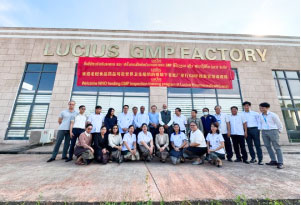
Lucius Pharmaceuticals (Lao) LTD. (Lucius Pharmaceuticals), with its manufacturing campus in Laos located in the capital city of Vientiane in 2020, officially begins its great journey to make effective and affordable medicines available to people in need around the world...More

Lucius Pharmaceutical Co., Ltd., was established in 2020 in Vientiane, the capital of Laos. It aims to offer safe, effective, and affordable medicines globally. With a factory spanning 25,000 square meters, the company manufactures 200+ generic drugs in diverse therapeutic fields.
Address:No.26 Thongmang village, Xaythany district, Vientiane Capital, Laos
E-mail:laoslucius@gmail.com
Whatsapp: