Your Health, We Care
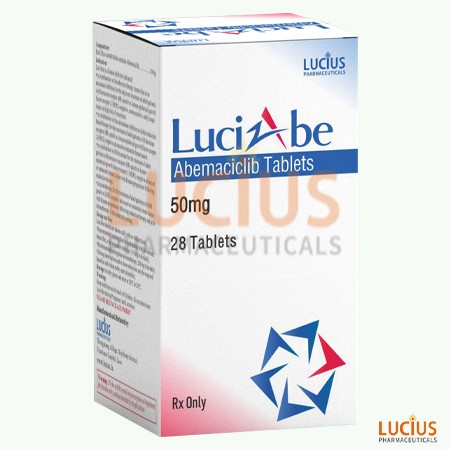
When used in combination with fulvestrant, tamoxifen, or aromatase inhibitors, the recommended dosage of abemaciclib is 150 mg orally twice daily. Refer to the full prescribing information for the recommended dosages of the concomitant fulvestrant, tamoxifen, or aromatase inhibitor.
Premenopausal/perimenopausal women and men receiving abemaciclib in combination with aromatase inhibitors should be treated with a gonadotropin-releasing hormone (GnRH) agonist in accordance with current clinical practice standards.
Premenopausal/perimenopausal women receiving abemaciclib in combination with fulvestrant should be treated with a GnRH agonist in accordance with current clinical practice standards.
When used as monotherapy, the recommended dosage of abemaciclib is 200 mg orally twice daily.
For early breast cancer, continue abemaciclib treatment until completion of 2 years of therapy, disease recurrence, or unacceptable toxicity.
For advanced or metastatic breast cancer, continue treatment until disease progression or unacceptable toxicity.
Abemaciclib may be taken with or without food.
Instruct patients to take abemaciclib at approximately the same times each day.
If a patient vomits or misses a dose of abemaciclib, instruct the patient to take the next dose at the scheduled time. Instruct patients to swallow abemaciclib tablets whole; do not chew, crush, or split the tablets before swallowing. Instruct patients not to take broken, cracked, or otherwise incomplete abemaciclib tablets.
Recommended dosage modifications of abemaciclib for adverse reactions are provided in Tables 1 to 7. Discontinue abemaciclib in patients who cannot tolerate the 50 mg twice daily dosage.
Recommended starting dose: 150 mg twice daily for combination therapy; 200 mg twice daily for monotherapy.
First dose reduction: 100 mg twice daily for combination therapy; 150 mg twice daily for monotherapy.
Second dose reduction: 50 mg twice daily for combination therapy; 100 mg twice daily for monotherapy.
Third dose reduction: 50 mg twice daily for monotherapy; not applicable for combination therapy.
Monitor complete blood counts (CBC) prior to starting abemaciclib, every 2 weeks for the first 2 months of treatment, monthly for the next 2 months, and as clinically indicated.
Grade 1 or 2: No dosage adjustment required.
Grade 3: Withhold dosing until toxicity resolves to ≤ Grade 2. No dosage reduction needed.
Recurrent Grade 3 or Grade 4: Withhold dosing until toxicity resolves to ≤ Grade 2. Resume at the next lower dosage.
If hematopoietic growth factors are used, withhold abemaciclib for at least 48 hours after the last dose of hematopoietic growth factors until toxicity resolves to ≤ Grade 2. Resume at the next lower dosage unless a dosage reduction has already been made for the toxicity that necessitated the use of growth factors. Use of growth factors should follow current treatment guidelines.
Initiate antidiarrheal therapy and increase oral fluid intake at the first sign of loose stools.
Grade 1: No dosage adjustment required.
Grade 2: If toxicity does not resolve to ≤ Grade 1 within 24 hours, withhold dosing until resolution. No dosage reduction needed.
Persistent Grade 2 or recurrence after resuming the same dosage (despite maximum supportive measures): Withhold dosing until toxicity resolves to ≤ Grade 1. Resume at the next lower dosage.
Grade 3 or 4 or requiring hospitalization: Withhold dosing until toxicity resolves to ≤ Grade 1. Resume at the next lower dosage.
Monitor alanine transaminase (ALT), aspartate transaminase (AST), and serum bilirubin prior to starting abemaciclib, every 2 weeks for the first 2 months of treatment, monthly for the next 2 months, and as clinically indicated.
Grade 1 or 2 ALT/AST with total bilirubin not elevated to > 2 × upper limit of normal (ULN): No dosage adjustment required.
Persistent or recurrent Grade 2, or Grade 3 ALT/AST with total bilirubin not elevated to > 2 × ULN: Withhold dosing until toxicity resolves to baseline or Grade 1. Resume at the next lower dosage.
AST and/or ALT elevation > 3 × ULN with total bilirubin > 2 × ULN without cholestasis: Discontinue abemaciclib.
Grade 4: Discontinue abemaciclib.
Grade 1 or 2: No dosage adjustment required.
Persistent or recurrent Grade 2 toxicity that does not resolve to baseline or Grade 1 within 7 days despite maximum supportive measures: Withhold dosing until toxicity resolves to baseline or ≤ Grade 1. Resume at the next lower dosage.
Grade 3 or 4: Discontinue abemaciclib.
Early breast cancer: Any grade: Withhold dosing and initiate clinical treatment. Resume abemaciclib when the patient is clinically stable.
Advanced or metastatic breast cancer:
Grade 1 or 2: No dosage adjustment required.
Grade 3 or 4: Withhold dosing and initiate clinical treatment. Resume abemaciclib when the patient is clinically stable.
(Excluding diarrhea, hematologic toxicity, hepatotoxicity, ILD/pneumonitis, and venous thromboembolism)
Grade 1 or 2: No dosage adjustment required.
Persistent or recurrent Grade 2 toxicity that does not resolve to baseline or Grade 1 within 7 days despite maximum supportive measures: Withhold dosing until toxicity resolves to baseline or ≤ Grade 1. Resume at the next lower dosage.
Grade 3 or 4: Withhold dosing until toxicity resolves to baseline or ≤ Grade 1. Resume at the next lower dosage.
Refer to the full prescribing information for concomitant fulvestrant, tamoxifen, or aromatase inhibitors for their dosage adjustments and other relevant safety information.
Avoid concurrent use of ketoconazole, a strong CYP3A inhibitor.
If the recommended starting dosage is 200 mg twice daily or 150 mg twice daily, reduce the abemaciclib dosage to 100 mg twice daily.
For patients who have already had their dosage reduced to 100 mg twice daily due to adverse reactions, further reduce the abemaciclib dosage to 50 mg twice daily.
If a patient taking abemaciclib discontinues a CYP3A inhibitor, increase the abemaciclib dosage (after 3-5 half-lives of the inhibitor) to the dosage used prior to initiating the strong inhibitor.
For patients receiving moderate CYP3A inhibitors, monitor for adverse reactions and consider reducing the abemaciclib dosage in 50 mg increments as shown in Table 1 if necessary.
For patients with severe hepatic impairment, reduce the frequency of abemaciclib administration to once daily.
Refer to the full prescribing information for concomitant fulvestrant, tamoxifen, or aromatase inhibitors for their dosage adjustment requirements in severe hepatic impairment.
FDA,2025.02

Lucius Pharmaceuticals (Lao) LTD. (Lucius Pharmaceuticals), with its manufacturing campus in Laos located in the capital city of Vientiane in 2020, officially begins its great journey to make effective and affordable medicines available to people in need around the world...More

Lucius Pharmaceutical Co., Ltd., was established in 2020 in Vientiane, the capital of Laos. It aims to offer safe, effective, and affordable medicines globally. With a factory spanning 25,000 square meters, the company manufactures 200+ generic drugs in diverse therapeutic fields.
Address:No.26 Thongmang village, Xaythany district, Vientiane Capital, Laos
E-mail:laoslucius@gmail.com
Whatsapp: