Your Health, We Care
Release date: 2026-04-07 14:41:31 Article From: Lucius Laos Recommended: 246
Any effective medication inevitably carries a certain risk of side effects, and belumosudil is no exception. According to patient-reported data from two clinical studies, the most common side effects of belumosudil include: infections, fatigue or weakness, nausea, diarrhea, shortness of breath, cough, swelling, bleeding, abdominal pain, muscle or bone pain, headache, and high blood pressure. The frequency and severity of these side effects vary from person to person. Your healthcare provider will decide whether dose adjustment, temporary interruption, or permanent discontinuation of belumosudil is needed based on your specific situation. One particular concern is that belumosudil may affect fertility in both men and women. If you have plans for future pregnancy or have concerns about fertility, be sure to discuss them in detail with your doctor.
Regarding safety monitoring, several noteworthy findings emerged from the studies: no new cases of cytomegalovirus (CMV) infection occurred, and only one case of recurrent infection was reported—CMV being a common and serious infection after stem cell transplantation. In addition, approximately 4% of patients (i.e., one in 25) developed significant cytopenia, characterized by decreased levels of certain blood cells. Therefore, during treatment with belumosudil, your doctor will regularly perform blood tests, including monitoring your liver function at least once a month, to ensure safe use of the medication.
The therapeutic effects of belumosudil are not limited to a single organ or specific symptoms. Systematic evaluations from clinical studies have shown that the drug produces clear treatment responses across multiple organs affected by chronic GVHD. Specifically, improvements have been observed in: the skin (reduction of rash, hardening, pigment changes), eyes (relief of dry eye symptoms), mouth (improvement in mucosal dryness, irritation, and difficulty eating), joints and muscles (reduced stiffness, improved mobility), gastrointestinal tract (reduction in nausea, diarrhea, abdominal pain), liver (normalization or improvement of liver function tests), lungs (relief of cough and shortness of breath), and esophagus (improvement in swallowing difficulties). This broad, multi-organ response profile is important because chronic GVHD often involves multiple sites simultaneously, causing compounded suffering for patients. The ability of belumosudil to work across multiple organ systems suggests it may offer a more holistic advantage over traditional treatments that target only single symptoms. In addition, clinical studies observed that some patients were able to reduce their steroid use, and exploratory analyses reported improvements in quality of life—although these findings are not yet definitive, they provide valuable clues for further research.
The efficacy and safety of belumosudil were systematically evaluated in two clinical studies involving a total of 186 patients with chronic GVHD. One study, called ROCKstar, included 132 patients, and the other, KD025-208, included 54 patients. All these patients had previously tried at least two other types of systemic treatments (including immunosuppressants and steroids) without adequate control of their symptoms. The results showed that in the ROCKstar study, up to 75% of patients (i.e., three out of four) experienced a significant improvement in their chronic GVHD after treatment with belumosudil. Even more encouragingly, more than half of those who improved did so between weeks 4 and 8 after starting treatment, and nearly all responders achieved a response by week 24. Of course, the speed of response may vary from person to person, and patients with more severe disease due to extensive fibrosis may take longer to see results. These data indicate that belumosudil can provide meaningful clinical benefit to patients with chronic GVHD who have failed to control their disease despite multiple lines of prior therapy.
On November 21, 2025, the U.S. Food and Drug Administration (FDA) approved the regimen of pembrolizu···【more】
Recommended:[list:visits]2025-17-12
Lung cancer is the most rapidly increasing malignant tumor with the fastest increasing morbidity and···【more】
Recommended:[list:visits]2024-09-07
Lucius Pharmaceuticals Version of Vibegron Now Available1.Basic Drug InformationVibegron (generic na···【more】
Recommended:[list:visits]2026-06-08
In recent years, leveraging the World Trade Organization (WTO) patent waiver for least-developed cou···【more】
Recommended:[list:visits]2026-05-08
How Can Chinese Patients Access Generic Drugs from Laos?In recent years, generic drugs from Laos hav···【more】
Recommended:[list:visits]2026-04-08
Lucius Pharmaceuticals version of Ibrutinib is now availableIn a randomized controlled trial of 269 ···【more】
Recommended:[list:visits]2026-03-08
Leveraging the WTO patent waiver for least-developed countries (extended to 2033), Laos has seen rap···【more】
Recommended:[list:visits]2026-31-07
Alectinib Has Been Launched in LaosAlectinib is an oral targeted therapeutic drug belonging to the c···【more】
Recommended:[list:visits]2026-30-07
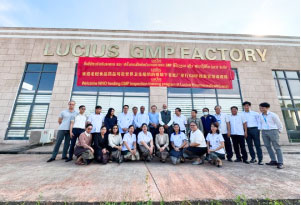
Lucius Pharmaceuticals (Lao) LTD. (Lucius Pharmaceuticals), with its manufacturing campus in Laos located in the capital city of Vientiane in 2020, officially begins its great journey to make effective and affordable medicines available to people in need around the world...More

Lucius Pharmaceutical Co., Ltd., was established in 2020 in Vientiane, the capital of Laos. It aims to offer safe, effective, and affordable medicines globally. With a factory spanning 25,000 square meters, the company manufactures 200+ generic drugs in diverse therapeutic fields.
Address: No.26 Thongmang village, Xaythany district, Vientiane Capital, Laos
E-mail:laoslucius@gmail.com

Name: Lucius

Telegram name: Vira
No.:0085253923643
Telegram name: Vira
No.:0085253923643