Your Health, We Care
Release date: 2026-04-01 16:14:18 Article From: Lucius Laos Recommended: 237
Ponatinib is a prescription medication. Patients must not adjust their dosage or discontinue treatment on their own. All dosage modifications should be made under close supervision by a hematologist.
The initial dose is 45 mg orally once daily.
When a patient achieves BCR-ABL1 ≤ 1% (standardized to international scale), the dosage should be adjusted to 15 mg orally once daily.
In the event of loss of response, the dosage may be re-escalated to the previously tolerated dose (30 mg or 45 mg orally once daily).
Duration of treatment shall be determined on an individual basis:
Discontinue treatment if loss of response or unacceptable toxicity occurs despite dose escalation;
Consider discontinuation if no response is observed after 3 months of therapy.
The initial dose is 45 mg orally once daily.
The optimal dosage for patients with AP-CML, BP-CML, and Ph+ALL has not been established. Dose reduction may be considered for AP-CML patients who have achieved a major cytogenetic response.
Duration of treatment is consistent with that for CP-CML:
Discontinue treatment if loss of response or unacceptable toxicity occurs despite dose escalation;
Consider discontinuation if no response is observed after 3 months of therapy.
Ponatinib is not indicated for patients with newly diagnosed chronic phase chronic myeloid leukemia (CP-CML) and is not recommended for use in this population.
For the treatment of adult patients with chronic phase chronic myeloid leukemia (CP-CML) who are resistant or intolerant to at least two prior kinase inhibitors;
For the treatment of adult patients with accelerated phase chronic myeloid leukemia (AP-CML), blast phase chronic myeloid leukemia (BP-CML), or Philadelphia chromosome-positive acute lymphoblastic leukemia (Ph+ALL) for whom no other kinase inhibitors are appropriate;
For the treatment of adult patients with T315I-positive chronic myeloid leukemia (chronic phase, accelerated phase, blast phase) or T315I-positive Philadelphia chromosome-positive acute lymphoblastic leukemia (Ph+ALL).
Dosage, dose adjustment methods, treatment duration, notes, and indications for corresponding disease phases (CP-CML, AP-CML, BP-CML, Ph+ALL) are identical to those detailed in Section I, “Usual Dosage for Adult Chronic Myeloid Leukemia”. Refer to the relevant content above for specifics.
There are insufficient data to support dosage adjustment in patients with renal impairment.
For patients with pre-existing hepatic impairment (Child-Pugh A, B, C), the initial dose should be reduced to 30 mg orally once daily, and adverse reactions should be monitored.
No multiple-dose or safety studies of doses exceeding 30 mg have been conducted in patients with hepatic impairment.
If transaminase elevations exceed 3 times the upper limit of normal (ULN) at a current dose of 45 mg:
Withhold treatment and monitor liver function;
Resume treatment at 30 mg once liver function recovers to Grade 1 or lower (transaminase elevation < 3 × ULN).
If AST or ALT ≥ 3 × ULN and bilirubin > 2 × ULN and alkaline phosphatase < 2 × ULN:
Discontinue treatment permanently.
Dose reduction may be considered for CP-CML patients who achieve BCR-ABL1 ≤ 1% (international scale) or AP-CML patients who achieve a major cytogenetic response;
Consider treatment discontinuation if no response is observed after 3 months of therapy.
Concomitant use with strong CYP450 3A inducers
Concomitant use should be avoided unless the benefit outweighs the risk. If co-administration is necessary, monitor for reduced efficacy and prefer concomitant medications with no or minimal CYP450 3A induction potential.
Concomitant use with strong CYP450 3A inhibitors
Concomitant use should be avoided. If unavoidable, reduce dosage as follows:
Current 45 mg once daily → reduce to 30 mg once daily;
Current 30 mg once daily → reduce to 15 mg once daily;
Current 15 mg once daily → reduce to 10 mg once daily;
Current 10 mg once daily → contraindicated for concomitant use.
After discontinuation of the strong CYP450 3A inhibitor and a washout period of 3–5 elimination half-lives, the dose may be restored to the patient’s tolerated pre-concomitant dose.
1. General Adverse Reaction Dose Reduction Principles
First dose reduction: All patients with CP-CML, AP-CML, BP-CML, and Ph+ALL → 30 mg orally once daily;
Second dose reduction: All above patients → 15 mg orally once daily;
Third dose reduction: CP-CML patients → 10 mg orally once daily; AP-CML, BP-CML, and Ph+ALL patients intolerant of the second reduction → permanent discontinuation;
Further reduction: All above patients requiring additional dose reduction → permanent discontinuation.
2. Elevated Lipase / Pancreatitis
Serum lipase 1–1.5 × ULN: Consider treatment interruption; resume at original dose upon normalization;
Serum lipase 1.5–2 × ULN, 2–5 × ULN (asymptomatic), or asymptomatic radiologically confirmed pancreatitis: Interrupt treatment; resume at one dose level lower upon recovery to Grade 0 or 1 (lipase < 1.5 × ULN);
Serum lipase 2–5 × ULN (symptomatic), Grade 3 symptomatic pancreatitis, or serum lipase > 5 × ULN (asymptomatic): Interrupt treatment; resume at one dose level lower after complete symptom resolution and lipase recovery to Grade 0 or 1;
Symptomatic pancreatitis with serum lipase > 5 × ULN: Permanent discontinuation.
3. Myelosuppression
When absolute neutrophil count (ANC) < 1 × 10⁹/L or platelets < 50 × 10⁹/L:
First occurrence: Interrupt treatment; resume at original dose when ANC ≥ 1.5 × 10⁹/L and platelets ≥ 75 × 10⁹/L;
Recurrence: Interrupt treatment; resume at one dose level lower upon normalization.
4. Arterial Occlusive Events
Cardiovascular or Cerebrovascular Events
Grade 1: Interrupt treatment; resume at original dose after symptom resolution;
Grade 2: Interrupt treatment; resume at one dose level lower after recovery to Grade 0 or 1; permanent discontinuation if recurrence occurs;
Grade 3 or 4: Permanent discontinuation.
Peripheral Vascular and Other Arterial Occlusive Events or Venous Thromboembolism
Grade 1: Interrupt treatment; resume at original dose after symptom resolution;
Grade 2: Interrupt treatment; resume at original dose after recovery to Grade 0 or 1; if recurrent, interrupt until recovery to Grade 0/1 then resume at one dose level lower;
Grade 3: Interrupt treatment; resume at one dose level lower after recovery to Grade 0 or 1; permanent discontinuation if recurrence occurs;
Grade 4: Permanent discontinuation.
5. Heart Failure
Grade 2 or 3: Interrupt treatment; resume at one dose level lower after recovery to Grade 0 or 1; permanent discontinuation if recurrence occurs;
Grade 4: Permanent discontinuation.
6. Other Non-Hematologic Adverse Reactions
Grade 1: Interrupt treatment; resume at original dose after symptom resolution;
Grade 2: Interrupt treatment; resume at original dose after recovery to Grade 0 or 1; if recurrent, interrupt until recovery to Grade 0/1 then resume at one dose level lower;
Grade 3 or 4: Interrupt treatment; resume at one dose level lower after recovery to Grade 0 or 1; permanent discontinuation if recurrence occurs.
On November 21, 2025, the U.S. Food and Drug Administration (FDA) approved the regimen of pembrolizu···【more】
Recommended:[list:visits]2025-17-12
Lung cancer is the most rapidly increasing malignant tumor with the fastest increasing morbidity and···【more】
Recommended:[list:visits]2024-09-07
Lucius Pharmaceuticals Version of Vibegron Now Available1.Basic Drug InformationVibegron (generic na···【more】
Recommended:[list:visits]2026-06-08
In recent years, leveraging the World Trade Organization (WTO) patent waiver for least-developed cou···【more】
Recommended:[list:visits]2026-05-08
How Can Chinese Patients Access Generic Drugs from Laos?In recent years, generic drugs from Laos hav···【more】
Recommended:[list:visits]2026-04-08
Lucius Pharmaceuticals version of Ibrutinib is now availableIn a randomized controlled trial of 269 ···【more】
Recommended:[list:visits]2026-03-08
Leveraging the WTO patent waiver for least-developed countries (extended to 2033), Laos has seen rap···【more】
Recommended:[list:visits]2026-31-07
Alectinib Has Been Launched in LaosAlectinib is an oral targeted therapeutic drug belonging to the c···【more】
Recommended:[list:visits]2026-30-07
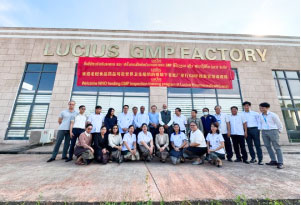
Lucius Pharmaceuticals (Lao) LTD. (Lucius Pharmaceuticals), with its manufacturing campus in Laos located in the capital city of Vientiane in 2020, officially begins its great journey to make effective and affordable medicines available to people in need around the world...More

Lucius Pharmaceutical Co., Ltd., was established in 2020 in Vientiane, the capital of Laos. It aims to offer safe, effective, and affordable medicines globally. With a factory spanning 25,000 square meters, the company manufactures 200+ generic drugs in diverse therapeutic fields.
Address: No.26 Thongmang village, Xaythany district, Vientiane Capital, Laos
E-mail:laoslucius@gmail.com

Name: Lucius

Telegram name: Vira
No.:0085253923643
Telegram name: Vira
No.:0085253923643