Your Health, We Care
Release date: 2026-01-20 17:47:27 Article From: Lucius Laos Recommended: 286
Ponatinib is a third-generation tyrosine kinase inhibitor (TKI) primarily indicated for the treatment of specific types of leukemia, such as Philadelphia chromosome-positive chronic myeloid leukemia (CML) or acute lymphoblastic leukemia (ALL), especially in patients who are resistant or intolerant to prior TKI therapies. Its core characteristic is the ability to inhibit a variety of BCR-ABL mutations, including the T315I mutation. The dosage should be adjusted based on the patient’s tolerance and treatment efficacy.
Recommended dosage: The usual starting dose is 45 mg orally once daily, which can be taken with or without food.
Dosage adjustment: In case of severe adverse reactions (e.g., arterial embolism, hepatotoxicity, etc.), the dose may need to be reduced to 30 mg or 15 mg, or treatment may be temporarily discontinued.
Treatment course: Long-term continuous treatment is required until disease progression or intolerable toxicity occurs.
Cardiovascular risk: Ponatinib may increase the risk of arterial thrombosis (e.g., myocardial infarction, stroke) and venous thrombosis. Close monitoring of blood pressure, blood lipids, and cardiovascular symptoms is necessary.
Liver function monitoring: Regular liver function tests should be performed before and during treatment. Dose adjustment or treatment discontinuation is required if abnormalities are detected.
Bleeding risk: It may induce intracranial hemorrhage or gastrointestinal bleeding. Caution is advised especially when co-administered with anticoagulant drugs.
Embryotoxicity: Patients of childbearing potential must use effective contraceptive measures. The drug is contraindicated during pregnancy.
Rash, fatigue, arthralgia, headache, etc. Generally, treatment discontinuation is not required, and symptoms can be relieved with symptomatic treatment.
Arterial/venous thrombosis: Immediate treatment discontinuation and risk assessment are required.
If abdominal pain or elevated amylase levels occur, treatment should be suspended and supportive care administered.
Regular monitoring is needed, and antihypertensive medications should be initiated.
On November 21, 2025, the U.S. Food and Drug Administration (FDA) approved the regimen of pembrolizu···【more】
Recommended:[list:visits]2025-17-12
Lung cancer is the most rapidly increasing malignant tumor with the fastest increasing morbidity and···【more】
Recommended:[list:visits]2024-09-07
Lucius Pharmaceuticals Version of Vibegron Now Available1.Basic Drug InformationVibegron (generic na···【more】
Recommended:[list:visits]2026-06-08
In recent years, leveraging the World Trade Organization (WTO) patent waiver for least-developed cou···【more】
Recommended:[list:visits]2026-05-08
How Can Chinese Patients Access Generic Drugs from Laos?In recent years, generic drugs from Laos hav···【more】
Recommended:[list:visits]2026-04-08
Lucius Pharmaceuticals version of Ibrutinib is now availableIn a randomized controlled trial of 269 ···【more】
Recommended:[list:visits]2026-03-08
Leveraging the WTO patent waiver for least-developed countries (extended to 2033), Laos has seen rap···【more】
Recommended:[list:visits]2026-31-07
Alectinib Has Been Launched in LaosAlectinib is an oral targeted therapeutic drug belonging to the c···【more】
Recommended:[list:visits]2026-30-07
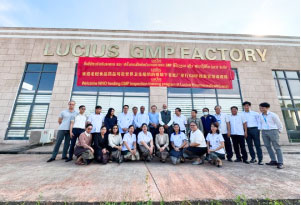
Lucius Pharmaceuticals (Lao) LTD. (Lucius Pharmaceuticals), with its manufacturing campus in Laos located in the capital city of Vientiane in 2020, officially begins its great journey to make effective and affordable medicines available to people in need around the world...More

Lucius Pharmaceutical Co., Ltd., was established in 2020 in Vientiane, the capital of Laos. It aims to offer safe, effective, and affordable medicines globally. With a factory spanning 25,000 square meters, the company manufactures 200+ generic drugs in diverse therapeutic fields.
Address: No.26 Thongmang village, Xaythany district, Vientiane Capital, Laos
E-mail:laoslucius@gmail.com

Name: Lucius

Telegram name: Vira
No.:0085253923643
Telegram name: Vira
No.:0085253923643