Your Health, We Care
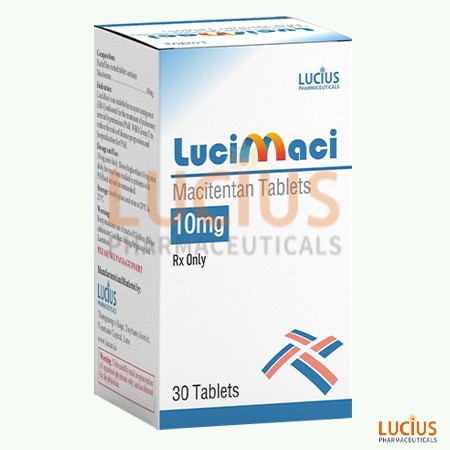
Based on data from animal reproductive studies, macitentan may cause fetal harm when administered to pregnant patients and is therefore contraindicated during pregnancy. Available human data on endothelin receptor antagonists have not confirmed whether macitentan use is associated with major birth defects. Patients who may become pregnant should be informed of the potential risks to the fetus. A pregnancy test should be performed prior to initiating macitentan treatment. Patients of reproductive potential are advised to use effective contraception before starting treatment, during treatment, and for one month after discontinuing macitentan. If pregnancy is detected, macitentan should be discontinued as soon as possible.
Endothelin receptor antagonists have been associated with elevations in aminotransferases, hepatotoxicity, and liver failure. In PAH studies of macitentan, the incidence of aminotransferase elevations was as follows: in the macitentan 10 mg group, 3.4% of patients had elevations greater than 3 times the upper limit of normal (ULN), and 2.1% had elevations greater than 8 times the ULN; in the placebo group, 4.5% of patients had elevations greater than 3 times the ULN, and 0.4% had elevations greater than 8 times the ULN.
In placebo-controlled studies of macitentan, the rate of discontinuation due to hepatic adverse events was 3.3% in the macitentan 10 mg group and 1.6% in the placebo group.
Liver enzyme testing should be obtained prior to initiating macitentan treatment and repeated during treatment based on clinical indication.
Patients should be advised to report symptoms suggestive of liver injury (e.g., nausea, vomiting, right upper abdominal pain, fatigue, anorexia, jaundice, dark urine, fever, or pruritus). Macitentan should be discontinued if clinically significant aminotransferase elevations occur, or if aminotransferase elevations are accompanied by bilirubin greater than 2 times the ULN, or if clinical symptoms of hepatotoxicity develop. For patients without clinical symptoms of hepatotoxicity, resumption of macitentan treatment may be considered when liver enzyme levels return to normal.
Peripheral edema and fluid retention are known clinical manifestations of PAH and also known effects of endothelin receptor antagonists. In placebo-controlled PAH studies of macitentan, the incidence of edema was 21.9% in the macitentan 10 mg group and 20.5% in the placebo group.
Patients with underlying left ventricular dysfunction may be at particular risk of developing significant fluid retention after initiating endothelin receptor antagonist therapy. In a small study of macitentan in patients with pulmonary hypertension due to left ventricular dysfunction, more patients in the macitentan group developed significant fluid retention and had more hospitalizations for worsening heart failure compared with patients randomized to placebo. Post-marketing case reports have described edema and fluid retention occurring within weeks of starting macitentan, with some cases requiring diuretic intervention or hospitalization for decompensated heart failure.
Signs of fluid retention should be monitored after initiating macitentan. If clinically significant fluid retention occurs, patients should be evaluated to determine the cause (e.g., macitentan or underlying heart failure) and whether discontinuation of macitentan may be necessary.
Decreases in hemoglobin concentration and hematocrit have been observed with other endothelin receptor antagonists, and this phenomenon was also noted in clinical studies of macitentan. These decreases occur early and then stabilize. In placebo-controlled PAH studies of macitentan, the mean decrease in hemoglobin from baseline to up to 18 months was approximately 1.0 g/dL in the macitentan 10 mg group, while there was no change in the placebo group. 8.7% of patients in the macitentan 10 mg group reported hemoglobin levels below 10.0 g/dL, compared with 3.4% in the placebo group. Hemoglobin decreases rarely require blood transfusion. Initiation of macitentan is not recommended in patients with severe anemia. Hemoglobin should be measured prior to starting treatment and repeated during treatment based on clinical indication.
If signs of pulmonary edema occur, the possibility of associated pulmonary venous occlusive disease should be considered. If confirmed, macitentan should be discontinued.
Like other endothelin receptor antagonists, macitentan may adversely affect spermatogenesis. Male patients should be informed of the potential impact on fertility.
FDA,2025.04

Lucius Pharmaceuticals (Lao) LTD. (Lucius Pharmaceuticals), with its manufacturing campus in Laos located in the capital city of Vientiane in 2020, officially begins its great journey to make effective and affordable medicines available to people in need around the world...More

Lucius Pharmaceutical Co., Ltd., was established in 2020 in Vientiane, the capital of Laos. It aims to offer safe, effective, and affordable medicines globally. With a factory spanning 25,000 square meters, the company manufactures 200+ generic drugs in diverse therapeutic fields.
Address:No.26 Thongmang village, Xaythany district, Vientiane Capital, Laos
E-mail:laoslucius@gmail.com
Whatsapp: