Your Health, We Care
Efficacy of Lusutrombopag in the Treatment of Thrombocytopenia in Patients with Chronic Liver Disease Scheduled for Surgery
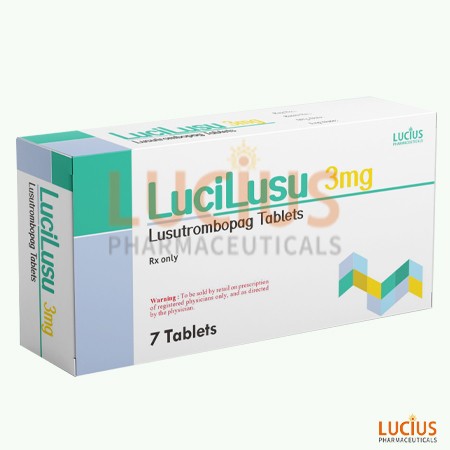
The efficacy of lusutrombopag for the treatment of thrombocytopenia in patients with chronic liver disease who were scheduled to undergo surgery was evaluated in two randomized, double-blind, placebo-controlled trials (L-PLUS1 (N=97) and L-PLUS2 (N=215; NCT02389621)).
Patients with chronic liver disease, planned to undergo invasive procedures, and with a platelet count below 50×10⁹/L were eligible for participation. Patients undergoing laparotomy, thoracotomy, cardiac surgery, craniotomy, or organ resection were excluded. Those with a history of splenectomy, partial splenic embolization, or thrombosis, as well as patients with Child-Pugh Class C liver disease, absence of hepatic blood inflow, or thrombophilia other than chronic liver disease, were not permitted to participate.
The patient populations in the lusutrombopag and placebo groups were similar, consisting of 60% males and 40% females; the median age was 60 years (range: 19-88). The racial and ethnic distribution was 55% White, 41% Asian, and 4% other races/ethnicities.
Patients were randomized in a 1:1 ratio to receive either lusutrombopag 3 mg or placebo once daily for up to 7 consecutive days. Randomization was stratified by the type of procedure (liver ablation/coagulation or other procedures) and platelet count at screening/baseline. In the L-PLUS1 trial, 57% of patients underwent procedures other than liver ablation/coagulation, while 43% underwent liver ablation/coagulation. In the L-PLUS2 trial, 98% of patients underwent procedures other than liver ablation/coagulation, and only 2% underwent liver ablation/coagulation. Procedures other than liver ablation/coagulation included liver-related procedures (transcatheter arterial chemoembolization, liver biopsy, etc.), upper and lower gastrointestinal endoscopy-related procedures (endoscopic variceal ligation, endoscopic injection sclerotherapy, polypectomy, and biopsy), and other procedures (tooth extraction, diagnostic paracentesis or abdominal tap, septoplasty, splenic artery aneurysm embolization, bone marrow biopsy, cervical polypectomy, and inguinal hernia repair (non-laparotomy)).
In the L-PLUS1 trial, the primary efficacy endpoint was the proportion of patients who did not require platelet transfusion prior to the major invasive procedure. In the L-PLUS2 trial, the primary efficacy endpoint was the proportion of patients who did not require platelet transfusion prior to the major invasive procedure and did not need rescue therapy for bleeding from randomization through 7 days after the major invasive procedure. In both trials, other efficacy endpoints included the proportion of patients who did not require platelet transfusion during the study period, the proportion of responders, the duration of platelet count increase (defined as the number of days the platelet count remained above 50×10⁹/L), and the time course of platelet counts.
In both L-PLUS1 and L-PLUS2 trials, a responder was defined as a patient whose platelet count reached ≥50×10⁹/L and increased by ≥20×10⁹/L from baseline.
Proportion of Patients Who Did Not Require Platelet Transfusion Prior to Invasive Procedure and Proportion of Responders
In the L-PLUS1 trial, 78% of patients in the lusutrombopag group did not require platelet transfusion before the invasive procedure, compared with 13% in the placebo group, with a statistically significant treatment difference of 64%. The proportion of responders in the lusutrombopag group during the study period was 76%, versus 6% in the placebo group, representing a statistically significant treatment difference of 68%.
Proportion of Patients Who Met the Primary Endpoint and Proportion of Responders
In the L-PLUS2 trial, 65% of patients in the lusutrombopag group achieved the primary endpoint (no platelet transfusion before the invasive procedure and no rescue therapy for bleeding from randomization to 7 days after the major invasive procedure), compared with 29% in the placebo group, with a statistically significant treatment difference of 37%. The proportion of responders in the lusutrombopag group during the study period was 65%, while that in the placebo group was 13%, with a statistically significant treatment difference of 52%.
In the L-PLUS1 trial, the median duration of platelet count elevation to at least 50×10⁹/L was 22 days for lusutrombopag-treated patients who did not receive platelet transfusions, compared with 1.8 days for placebo-treated patients who received platelet transfusions. In the L-PLUS2 trial, the median duration of platelet count elevation to at least 50×10⁹/L was 19 days for lusutrombopag-treated patients who did not receive platelet transfusions, versus 0.0 days for placebo-treated patients who received platelet transfusions.
FDA,2018.07
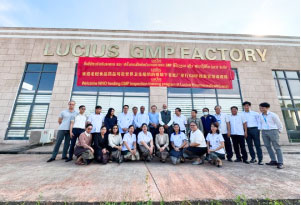
Lucius Pharmaceuticals (Lao) LTD. (Lucius Pharmaceuticals), with its manufacturing campus in Laos located in the capital city of Vientiane in 2020, officially begins its great journey to make effective and affordable medicines available to people in need around the world...More

Lucius Pharmaceutical Co., Ltd., was established in 2020 in Vientiane, the capital of Laos. It aims to offer safe, effective, and affordable medicines globally. With a factory spanning 25,000 square meters, the company manufactures 200+ generic drugs in diverse therapeutic fields.
Address:No.26 Thongmang village, Xaythany district, Vientiane Capital, Laos
E-mail:laoslucius@gmail.com
Whatsapp: