Your Health, We Care
Release date: 2025-04-24 10:37:40 Article From: Lucius Laos Recommended: 388
Understanding the characteristics of the drug and the details of its use can help optimize the treatment plan.
Drug combinations may affect efficacy or pose risks, and the following three types of interactions need to be focused.
When finerenone is combined with an ACE inhibitor, systolic blood pressure may be reduced by an additional 5 to 8 mmHg. Potassium fluctuations occur in approximately 12% of patients, and electrolyte levels are monitored every 4 weeks. Combination regimens can add about $180 to annual treatment costs.
Potent CYP3A4 inhibitors, such as itraconazole, can increase finerenone blood concentrations by 3.2 times. Clinical data showed that 23% of patients in the combination group experienced increased edema. It is recommended to interval dosing times or adjust the dose.
St. John's wort extract accelerates drug metabolism, resulting in a 67% reduction in finerenone exposure. The study showed a 28% reduction in treatment at 24 weeks in the combination group, and it was recommended to use it at intervals or choose an alternative treatment regimen.
Rational planning of healthcare expenditures requires multi-dimensional considerations.
The monthly cost of medication is about $120 at a standard dose, and the annual cost of treatment is about $2,000 when combined with the cost of routine check-ups. Some medical plans can cover 60%-80% of the cost, and the terms of the insurance policy need to be confirmed in advance.
Clinical studies have shown significant benefit in patients with an eGFR of ≥25 mL/min/1.73 m² and elevated proteinuria. After the use of this group, the incidence of major adverse events decreased by 31% in 3 years, and it is recommended to strictly follow the indication criteria.
Establishing a regular monitoring system can improve treatment outcomes. Assessment of renal function every 3 months and cardiovascular risk assessment every 6 months is recommended. The use of digital health management tools can improve the efficiency of follow-up by 40%.
The choice of medication needs to balance the effectiveness of treatment with the financial burden, and professional medical guidance can help develop an individualized plan. Regular monitoring and lifestyle modification are important supports for maintaining long-term efficacy.
On November 21, 2025, the U.S. Food and Drug Administration (FDA) approved the regimen of pembrolizu···【more】
Recommended:[list:visits]2025-17-12
Lung cancer is the most rapidly increasing malignant tumor with the fastest increasing morbidity and···【more】
Recommended:[list:visits]2024-09-07
Lucius Pharmaceuticals Version of Vibegron Now Available1.Basic Drug InformationVibegron (generic na···【more】
Recommended:[list:visits]2026-06-08
In recent years, leveraging the World Trade Organization (WTO) patent waiver for least-developed cou···【more】
Recommended:[list:visits]2026-05-08
How Can Chinese Patients Access Generic Drugs from Laos?In recent years, generic drugs from Laos hav···【more】
Recommended:[list:visits]2026-04-08
Lucius Pharmaceuticals version of Ibrutinib is now availableIn a randomized controlled trial of 269 ···【more】
Recommended:[list:visits]2026-03-08
Leveraging the WTO patent waiver for least-developed countries (extended to 2033), Laos has seen rap···【more】
Recommended:[list:visits]2026-31-07
Alectinib Has Been Launched in LaosAlectinib is an oral targeted therapeutic drug belonging to the c···【more】
Recommended:[list:visits]2026-30-07
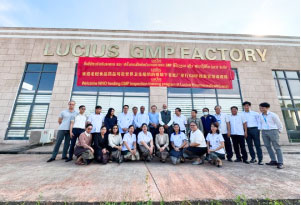
Lucius Pharmaceuticals (Lao) LTD. (Lucius Pharmaceuticals), with its manufacturing campus in Laos located in the capital city of Vientiane in 2020, officially begins its great journey to make effective and affordable medicines available to people in need around the world...More

Lucius Pharmaceutical Co., Ltd., was established in 2020 in Vientiane, the capital of Laos. It aims to offer safe, effective, and affordable medicines globally. With a factory spanning 25,000 square meters, the company manufactures 200+ generic drugs in diverse therapeutic fields.
Address: No.26 Thongmang village, Xaythany district, Vientiane Capital, Laos
E-mail:laoslucius@gmail.com

Name: Lucius

Telegram name: Vira
No.:0085253923643
Telegram name: Vira
No.:0085253923643